

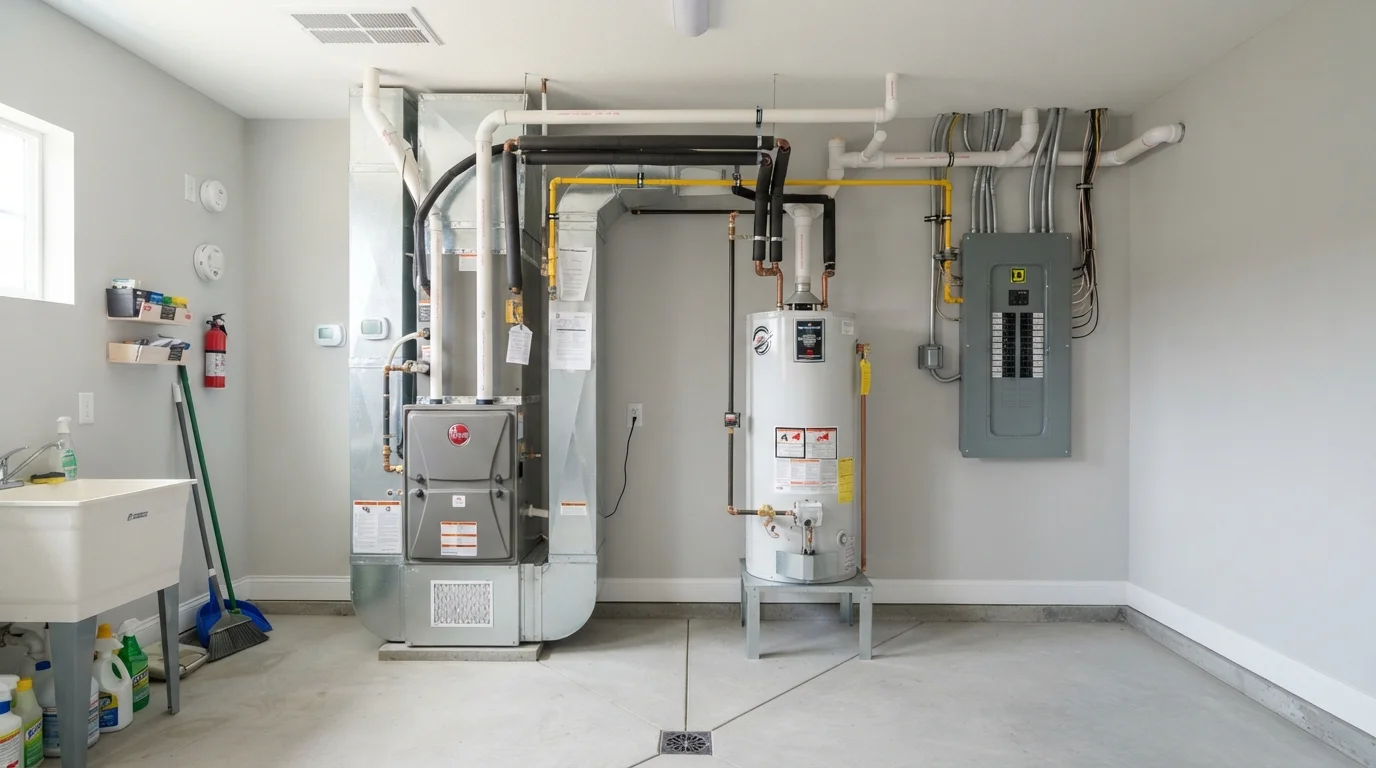
Key Takeaways
- Seasonal walkthroughs catch small problems before they become expensive emergencies.
- HVAC, plumbing, and electrical systems each have distinct seasonal stress points.
- Many checklist items are simple DIY inspections; others require a licensed professional.
- Permits or inspections may be required for any repair work that follows your findings.
- Consistent seasonal maintenance extends the lifespan of your home's core systems.
Summary
24 items · 1-2 hours per seasonal transition
Why Seasonal System Checks Matter
Your home's mechanical systems - heating, cooling, plumbing, and electrical - don't fail on a predictable schedule. They fail when demand surges: on the first brutally cold morning, during a summer heat wave, or after a hard freeze. A seasonal walkthrough gives you a structured window to catch wear, blockages, and inefficiencies before conditions test your systems to their limits.
This checklist covers the four major transition points of the year - spring, summer, fall, and winter - and organizes tasks by system rather than by room. It's designed for homeowners with basic familiarity with their homes, not for licensed trades. Wherever a task involves your electrical panel, gas lines, or structural components, this guide will direct you to a qualified professional rather than attempt to walk you through regulated or hazardous work.
For broader home project planning, see our homeowner's planning checklist before scheduling any follow-up repairs. And if you're also prepping your vehicle for the season, the seasonal vehicle prep guide covers that side-by-side process.
Flashlight or headlamp
Illuminate dark utility spaces, crawl spaces, and attic areas during inspection.
HVAC air filter (correct size for your system)
Replace the existing filter as part of the seasonal HVAC check.
Non-contact voltage tester
Verify power is off before inspecting any accessible wiring - a basic safety tool for any electrical visual check.
Garden hose (for water heater flush)
Connect to the water heater's drain valve to flush sediment buildup.
Pipe insulation foam
Wrap exposed pipes in unheated areas before winter to reduce freeze risk.
Hygrometer
Measure indoor relative humidity to guide ventilation and humidifier settings.
Caulk gun and appropriate caulk
Reseal gaps around windows, doors, and exterior penetrations discovered during the envelope inspection.
How to Use This Checklist
Run this walkthrough approximately two to four weeks before each season begins - that buffer gives you time to schedule a technician if you discover a problem. Work through each system group in order, noting any items that need follow-up. Items marked must are non-negotiable for safety or system function; should items are strongly recommended; nice-to-have items are optional enhancements.
Keep a simple log - a notes app or a dedicated notebook works fine - so you can track changes year over year. A furnace filter that lasted four months last year but needs replacement after two months this year is telling you something worth knowing.
For a deeper understanding of how your home's water system is laid out, the anatomy of a home plumbing system is a useful companion reference. Likewise, HVAC maintenance tasks every homeowner should know expands on several items in the checklist below.
HVAC System
Plumbing System
Electrical System
Building Envelope and Ventilation
Some Repairs Require Licensed Professionals
This checklist is an inspection guide, not a repair manual. Tasks involving your gas lines, electrical panel, structural elements, or any work that requires a permit under your local building code must be performed by a licensed contractor. Always verify local permit and code requirements before authorizing repairs discovered during your walkthrough - unpermitted work can affect your homeowner's insurance coverage and your ability to sell the property.
Envelope, Ventilation, and Supporting Systems
Your home's mechanical systems don't operate in isolation - they're affected by how well your building envelope (windows, doors, insulation, and seals) manages heat transfer and air movement. A leaking window seal, for example, forces your HVAC system to work harder regardless of how well-maintained it is.
Each season, inspect window and door caulking and weatherstripping for cracking or gaps. Our caulking primer covers when and how to re-seal. In energy-efficient or tightly built homes, ventilation strategy also becomes critical - trapped moisture and indoor air pollutants are a real concern. The guide to whole-house ventilation explains how mechanical ventilation addresses these issues.
If your home includes a smart thermostat or automated lighting, updating seasonal schedules and routines at the start of each season is a worthwhile step. See how smart home automation is organized for a plain-language overview of setting those up efficiently.
Finally, if your walkthrough surfaces anything that looks like an electrical concern - flickering lights, warm outlets, or a breaker that trips repeatedly - stop and call a licensed electrician. Our overview of what happens during a home electrical inspection explains what a professional will assess and why each check matters.
Carbon Monoxide Is a Silent Hazard
A malfunctioning furnace, water heater, or gas appliance can produce carbon monoxide (CO) without any visible sign. Ensure working CO detectors are installed on every level of your home and near sleeping areas. If a detector sounds, leave the home immediately and call emergency services - do not attempt to locate the source yourself.