

Key Takeaways
- Engine air filters, cabin filters, and spark plugs are low-cost items that significantly affect vehicle performance.
- Most manufacturers recommend replacing engine air filters every 15,000-30,000 miles, though driving conditions matter.
- Cabin air filters improve air quality inside the vehicle and are often overlooked at routine service visits.
- Worn spark plugs can reduce fuel efficiency, cause rough idling, and make starting harder in cold weather.
- Some of these replacements are DIY-friendly, but always consult your owner's manual for your vehicle's specific intervals.
Small Parts, Real Consequences
Not every maintenance item requires a lift, a specialty tool, or an hour at the shop. Some of the most impactful service tasks involve parts that cost relatively little, take minutes to inspect, and are easy to understand - yet they're among the most frequently neglected items on a vehicle.
Engine air filters, cabin air filters, and spark plugs fall into this category. They don't generate warning lights when they're failing (usually), and they degrade gradually enough that most drivers don't notice until performance has already slipped. Understanding what each component does, how to recognize wear, and when replacement makes sense puts you in a stronger position every time you talk to a technician. For broader context on how these items fit into your vehicle's overall schedule, see your car's maintenance schedule explained.
Engine Air Filter: Your Engine's First Line of Defense
The engine air filter sits between the outside air and your engine's intake system. Its job is to trap dust, dirt, pollen, insects, and debris before they can enter the combustion chamber. An engine drawing in contaminated air can experience accelerated wear on cylinders and pistons over time.
A clogged filter restricts airflow, which forces the engine to work harder and can reduce fuel efficiency. You may notice slightly sluggish throttle response or a modest drop in power, though these changes are subtle enough that many drivers adapt without realizing what's happening.
Typical replacement interval: Most manufacturers suggest every 15,000 to 30,000 miles, but drivers in dusty or rural environments may need more frequent changes. Inspect the filter annually at minimum - a visual check takes under a minute once you locate the airbox.
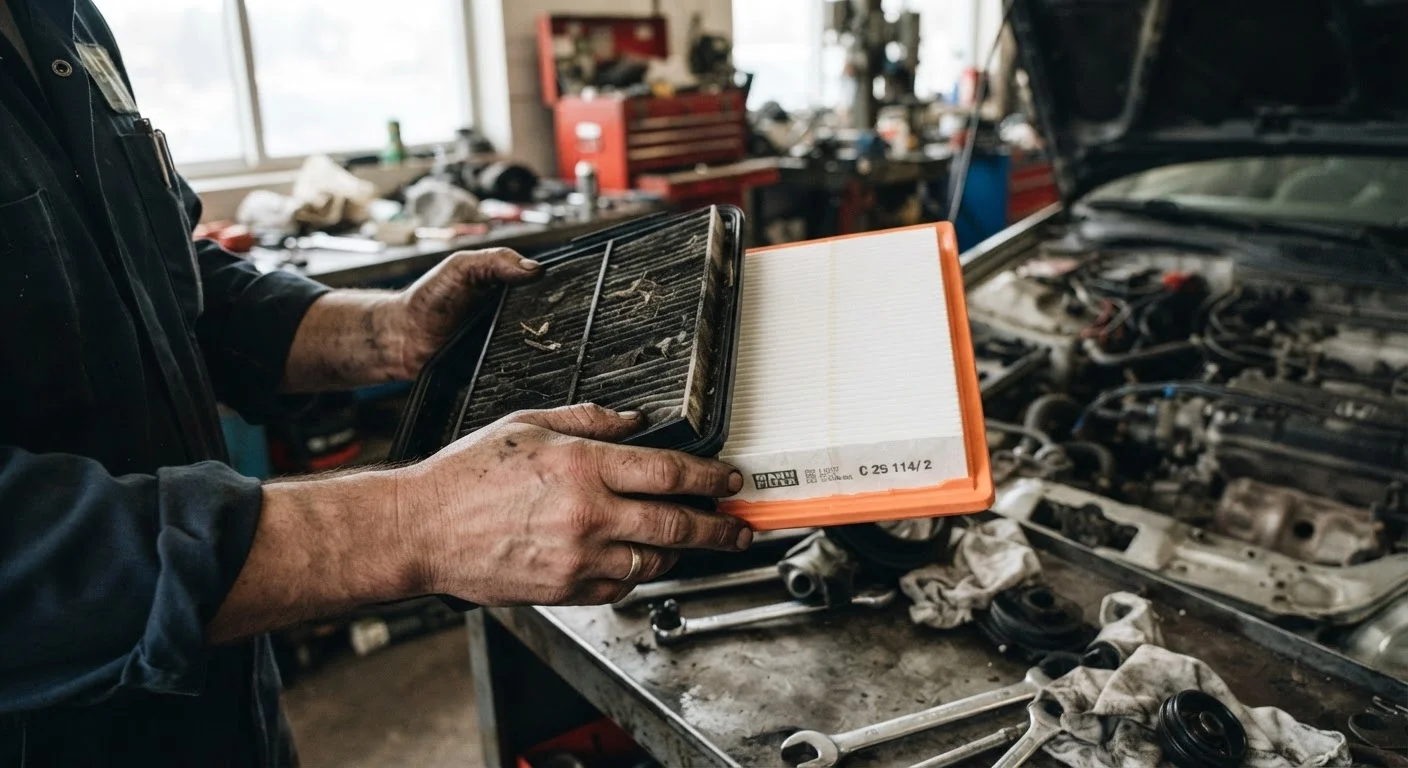
A clogged engine air filter restricts airflow and forces the engine to work harder than necessary.
Cabin Air Filter: The Air You Actually Breathe
The cabin air filter cleans the air that flows through your vehicle's heating, ventilation, and air conditioning (HVAC) system - the air you and your passengers breathe. It captures pollen, dust, mold spores, exhaust particulates, and other airborne material before they circulate through the interior.
When a cabin filter is saturated, airflow through the vents decreases noticeably. You might find the defroster less effective in winter or the A/C struggling to cool efficiently in summer. A musty smell from the vents is another common indicator. Drivers or passengers with allergies often notice the difference most acutely.
Typical replacement interval: Roughly every 15,000 to 25,000 miles, or once a year - whichever comes first. This is one of the most frequently skipped items at routine service visits, largely because it's out of sight.
A saturated cabin filter reduces airflow, strains your HVAC system, and affects the air quality inside your car.
Spark Plugs: Ignition at the Heart of the Engine
Spark plugs deliver the electrical spark that ignites the air-fuel mixture inside each cylinder. That combustion event is what drives the pistons and ultimately moves the vehicle. Every cylinder in your engine has one spark plug, and they fire thousands of times per minute under normal driving conditions.
Over time, the electrode at the tip of a spark plug erodes. As the gap widens or deposits accumulate, the plug fires less reliably. The effects include rough idling, harder cold starts, reduced fuel economy, and in more advanced cases, engine misfires that may trigger a check-engine light.
Typical replacement interval: Conventional copper spark plugs often require replacement around every 30,000 miles. Iridium and platinum plugs - now common in many vehicles - can last 60,000 to 100,000 miles or more. Your owner's manual will specify the correct type and interval for your engine.
Worn spark plugs can quietly reduce fuel efficiency and cause rough idling long before a warning light appears.
Putting It Together
These three components share a common trait: their failure is gradual, quiet, and cumulative. By the time you notice the symptom - sluggish acceleration, stale cabin air, a rough idle - the underlying wear has usually been building for some time. Staying ahead of that curve is exactly the logic behind preventive maintenance.
If you're comfortable doing light vehicle work yourself, air filter swaps are generally straightforward on most modern vehicles. Spark plug replacement is manageable on many engines but can be more complex on others. Our guide to DIY car maintenance offers an honest assessment of where the line falls between what's reasonable at home and what's better left to a professional. Whatever your approach, ignoring these items entirely tends to cost more eventually - as skipping routine maintenance often does.
Check Your Owner's Manual First
Manufacturer-specified intervals for all three of these components vary significantly by vehicle make, model, and engine type. Your owner's manual is the most reliable source for the correct replacement schedule - not a general rule of thumb. If you've purchased a used vehicle without the manual, most automakers make digital versions available through their official websites.