

Key Takeaways
- Inspectors examine the main electrical panel for proper breaker sizing, labeling, and signs of overheating.
- All outlets in kitchens, bathrooms, and other wet areas must have ground fault circuit interrupter (GFCI) protection.
- Older wiring types such as aluminum branch wiring or knob-and-tube may require remediation even if still functional.
- An electrical inspection is separate from a general home inspection and goes into significantly more technical depth.
- Local jurisdictions may require a permit and inspection whenever electrical work is performed - always verify local rules.
Home Electrical Inspection
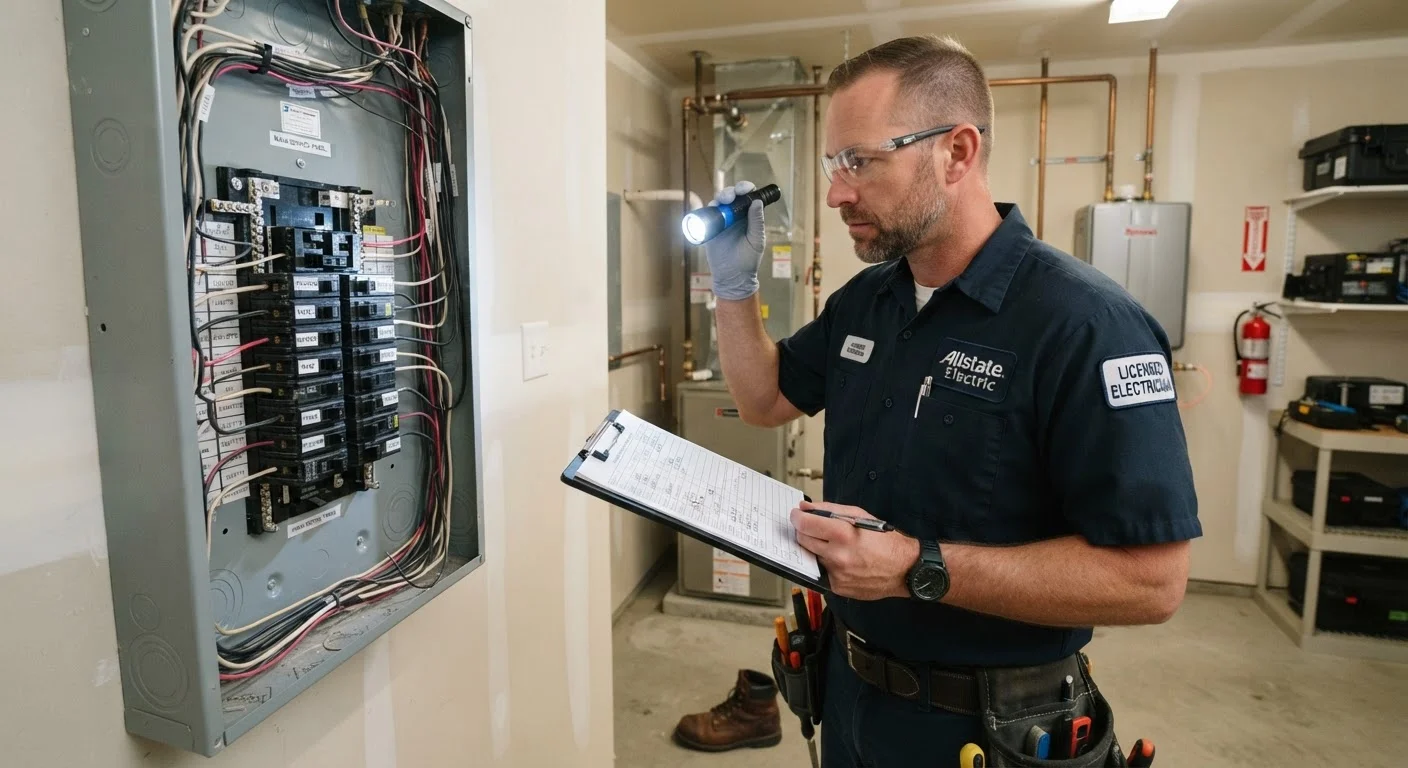
A home electrical inspection is a systematic evaluation performed by a licensed electrician or qualified inspector to assess the safety and condition of a home's electrical system. The inspector examines the main panel, wiring, outlets, switches, and protective devices to identify hazards, code violations, or components that need repair or upgrading. The goal is to confirm that the system operates safely and meets applicable electrical codes.
Electrical inspections reference the National Electrical Code (NEC), which is updated every three years and adopted - sometimes with amendments - by most U.S. jurisdictions. A home's wiring may be legal under the code in effect when it was installed yet still flagged for safety upgrades.
Starting at the Source: The Main Electrical Panel
Every electrical inspection begins at the main panel - also called the breaker box or load center - because it is the nerve center of the home's electrical system. The inspector looks at several key factors:
- Panel capacity: Is the panel rated for the home's current electrical demand? A 100-amp service was standard decades ago but may be undersized for modern homes with electric vehicles, heat pumps, or heavy appliances.
- Breaker condition: Breakers are checked for signs of overheating, corrosion, double-tapping (two wires on a single breaker terminal, which is generally a code violation), and proper amperage ratings relative to the wire gauge they protect.
- Labeling: Each circuit should be clearly labeled so occupants can safely shut off specific areas in an emergency.
- Grounding and bonding: The system ground and bonding connections are inspected to ensure fault current has a safe path.
If the home has a subpanel - common in detached garages or additions - that will be examined with the same level of scrutiny.
NEC Adoption Varies by Jurisdiction
The National Electrical Code sets the baseline standard for electrical installations across the U.S., but each state and municipality adopts it on its own schedule - and sometimes with local amendments. Your home may be inspected against a version of the NEC that differs from the most recent edition. Always ask your inspector which code version applies in your area.
Wiring Throughout the Home
After the panel, the inspector turns attention to the wiring that runs through walls, attics, and crawlspaces. The type and age of wiring can signal significant safety considerations:
- Knob-and-tube (K&T) wiring: Found in homes built before the 1950s, K&T lacks a ground conductor and is not compatible with modern three-pronged devices. Many insurers are reluctant to cover homes with active K&T wiring.
- Aluminum branch circuit wiring: Used in some homes built from the mid-1960s to mid-1970s, aluminum wiring can loosen at connections over time, creating a fire risk. Specific remediation methods - such as using approved connectors or pigtailing with copper - may be recommended.
- Romex (NM-B) cable: The standard in most modern homes. The inspector checks that it is routed properly, protected where it passes through framing, and not damaged or improperly spliced outside of junction boxes.
Wiring in unfinished spaces like attics and basements is easier to observe directly. Hidden wiring inside finished walls is assessed indirectly through outlet and switch behavior and any visible signs of heat or damage.
For homeowners preparing for a renovation, understanding the wiring condition early is critical. Our beginner's guide to home improvement priorities covers why electrical assessments belong at the top of the list.
Outlets, Switches, and Protective Devices
The inspector tests every accessible outlet and switch in the home. Key checkpoints include:
- GFCI protection: Ground fault circuit interrupters are required in kitchens, bathrooms, garages, outdoor locations, and anywhere near water. The inspector will test each GFCI outlet or breaker to verify it trips and resets correctly.
- AFCI protection: Arc fault circuit interrupters are required on most bedroom circuits in newer construction and in additional areas under recent NEC editions. They detect dangerous arcing conditions that standard breakers miss. To understand the difference between these two critical devices, see our article on GFCIs vs. AFCIs.
- Grounding: Three-prong outlets are tested to confirm they are actually grounded - not simply replaced without proper grounding, which is a common and unsafe shortcut in older homes.
- Polarity: Hot and neutral wires should be correctly connected. Reversed polarity is a code violation that can energize parts of a fixture that should be safe to touch.
Test Your GFCI Outlets Regularly
GFCI outlets have a built-in test button that homeowners can use to verify the device is functioning. Press the 'Test' button - the outlet should lose power - then press 'Reset' to restore it. If the outlet doesn't respond correctly, it may need to be replaced. Make this part of your regular home maintenance routine.
The inspector will also note the presence or absence of tamper-resistant outlets in areas required by current code - particularly important in homes with young children.
Smoke Detectors, Carbon Monoxide Alarms, and Exterior Equipment
Many electrical inspections include a check of life-safety devices tied to the electrical system:
- Hardwired smoke detectors: Inspectors verify that interconnected smoke alarms are present in required locations - typically inside each bedroom, outside sleeping areas, and on every level of the home.
- Carbon monoxide (CO) detectors: Required in homes with gas appliances or attached garages in most states. The inspector confirms placement and, where applicable, that hardwired units are functional.
- Exterior equipment: Outdoor outlets, the weatherhead (where the utility service enters the home), and any outdoor panels or disconnect switches are examined for weatherproofing and proper installation.
It's worth noting that an electrical inspection is a distinct service from a general home inspection. A general home inspector evaluates the electrical system at a surface level, while a licensed electrician goes considerably deeper. Our comparison of home inspections and appraisals helps clarify those distinctions in the home-buying context.
Electrical conditions can also change seasonally - for a broader look at what to evaluate throughout the year, the seasonal home systems walkthrough is a useful companion resource.
Finally, if an inspection uncovers work that needs to be done, remember that many electrical repairs and upgrades require a permit. Understanding what a building permit covers and when you need one can help you stay compliant and protect your home's resale value.