

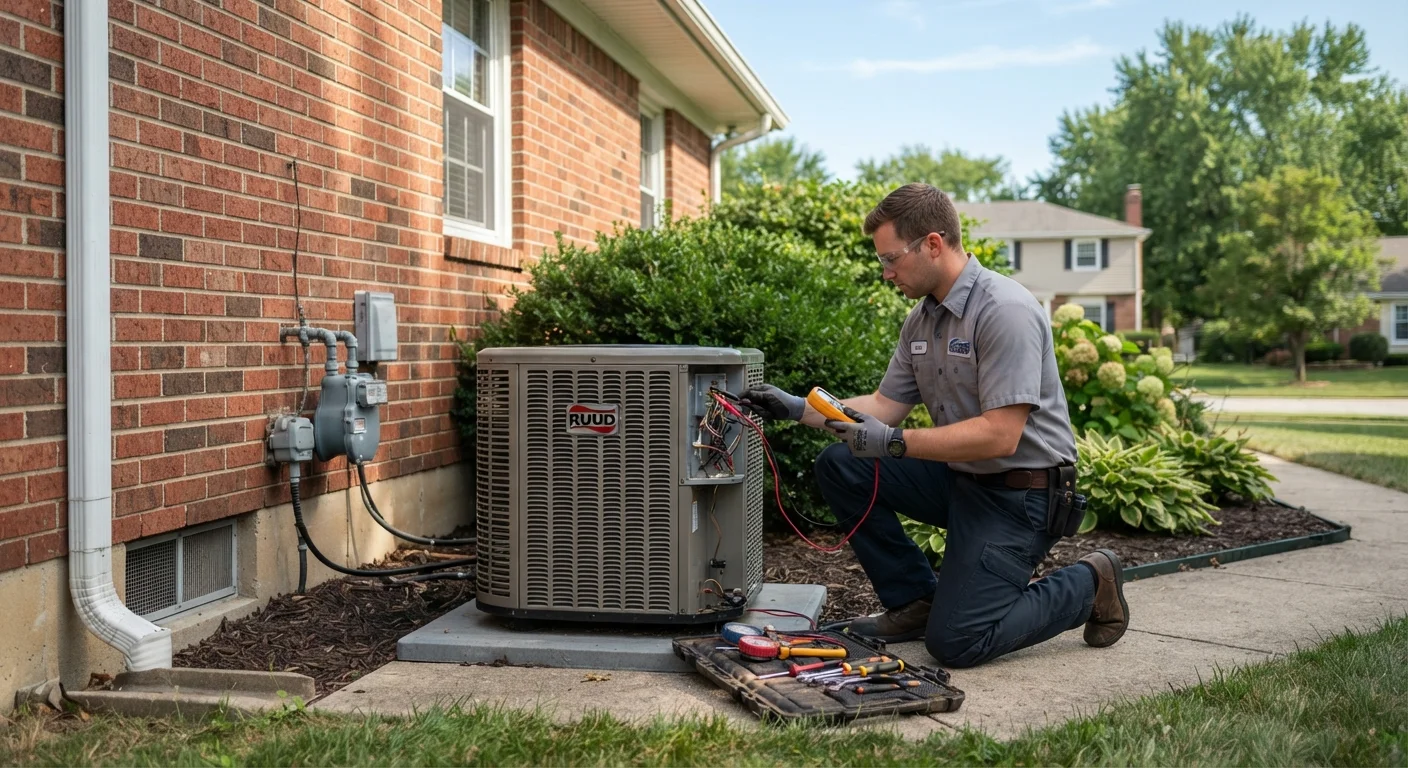
Key Takeaways
- Changing your air filter every 1-3 months is the single highest-impact DIY maintenance task.
- Outdoor condenser coils and indoor evaporator coils both need seasonal cleaning to maintain efficiency.
- Clogged condensate drains are a leading cause of water damage and system shutdowns.
- Annual professional tune-ups complement DIY tasks and catch problems homeowners can't safely inspect.
- Many HVAC tasks require licensed technicians - especially anything involving refrigerant or gas lines.
Summary
18 items · 30-60 minutes per seasonal review
Why HVAC Maintenance Belongs on Every Homeowner's Radar
Your HVAC system - the heating, ventilation, and air conditioning equipment that conditions your home year-round - is typically one of the most expensive systems in the house to replace. Yet it's also one of the most neglected when it comes to routine care. Many homeowners don't think about their system until something goes wrong, which is usually the most expensive time to act.
The good news is that a significant portion of HVAC upkeep is well within reach for the average homeowner. Tasks like filter changes, vent inspections, and outdoor unit cleaning require no special tools and can meaningfully extend system life and maintain efficiency. Other tasks - refrigerant checks, coil cleaning, electrical inspections - genuinely require a licensed professional, and knowing that boundary is equally important.
If you're newer to homeownership, this checklist pairs well with a broader look at priorities: see our first-time homeowner's guide to home improvement for context on where HVAC fits among other maintenance responsibilities. And because your HVAC system doesn't work in isolation, it's worth understanding how whole-house ventilation strategy affects air quality and moisture management throughout your home.
Replacement Air Filters
Used to swap out dirty filters monthly or quarterly - stock several matching your system's exact size and MERV rating.
Garden Hose with Adjustable Nozzle
Used to gently rinse condenser coil fins on the outdoor unit during seasonal cleaning.
Wet/Dry Vacuum
Useful for clearing debris from the condensate drain pan and the end of the drain line.
Flashlight or Headlamp
Helps you safely inspect air handlers, ductwork connections, and drain pans in low-light spaces.
Distilled White Vinegar
Diluted and poured through the condensate drain line seasonally to inhibit algae and mold growth.
Carbon Monoxide Detector
Essential safety device - confirms functioning status monthly and during any heating season startup.
How to Use This Checklist
This checklist is organized by frequency - monthly, seasonal, and annual - so you can build each task into a realistic routine rather than tackling everything at once. The seasonal tasks are best timed to fall and spring, giving your system a checkup before the heavy cooling and heating periods begin.
Items marked must are non-negotiable for safe, functional operation. Items marked should are strongly recommended for efficiency and longevity. Nice-to-have items offer real value but can be phased in over time. Use the safety and monitoring group year-round - these aren't seasonal; they're ongoing.
Never Attempt Refrigerant Work Yourself
Refrigerant handling - including checking charge levels, adding refrigerant, or repairing leaks - is regulated under federal law and requires EPA Section 608 certification. Improper handling can cause serious injury and is illegal. Always leave refrigerant-related work to a licensed HVAC technician.
Gas Furnace Inspections Require a Professional
A cracked heat exchanger can allow carbon monoxide to mix with conditioned air circulating through your home - a potentially life-threatening hazard. Do not attempt to inspect or service gas components yourself. Have a licensed technician evaluate the heat exchanger annually before heating season.
For a broader seasonal systems review that covers plumbing and electrical alongside HVAC, see our seasonal home systems walkthrough. If your home is tightly built or recently weatherized, also review attic ventilation considerations - poor attic airflow can affect how hard your system works year-round.
Monthly Tasks
Seasonal Tasks (Spring & Fall)
Annual Professional Tune-Up
Safety & Monitoring
Knowing When to Call a Technician
Even diligent DIY maintenance has clear limits. If your system is short-cycling (turning on and off rapidly), producing unusual odors, failing to reach set temperatures, or showing ice formation on any component, stop using it and contact a licensed HVAC technician. These symptoms often indicate refrigerant issues, airflow restriction, or electrical faults that are not safe to self-diagnose.
Annual professional tune-ups are worth budgeting for. Technicians have diagnostic tools - including manometers, refrigerant gauges, and combustion analyzers - that reveal problems invisible to the naked eye. Think of the annual visit as the complement to your own routine care, not a replacement for it.
The Right Filter MERV Rating Matters
Using a filter with too high a MERV rating (above what your system is designed for) can restrict airflow, strain the blower motor, and reduce efficiency. Check your system's documentation or ask an HVAC technician which MERV range is appropriate before upgrading your filter. A higher number is not always better.
Maintaining good envelope sealing also takes pressure off your HVAC system. Our guide to caulking windows and doors explains how seasonal re-caulking reduces drafts and energy loss that your system otherwise has to compensate for.
This article is for general informational purposes only. HVAC systems vary by type, age, and installation. Always consult a licensed HVAC professional before performing or scheduling work that involves electrical components, gas lines, or refrigerant. Verify local permit and code requirements with your municipality.