

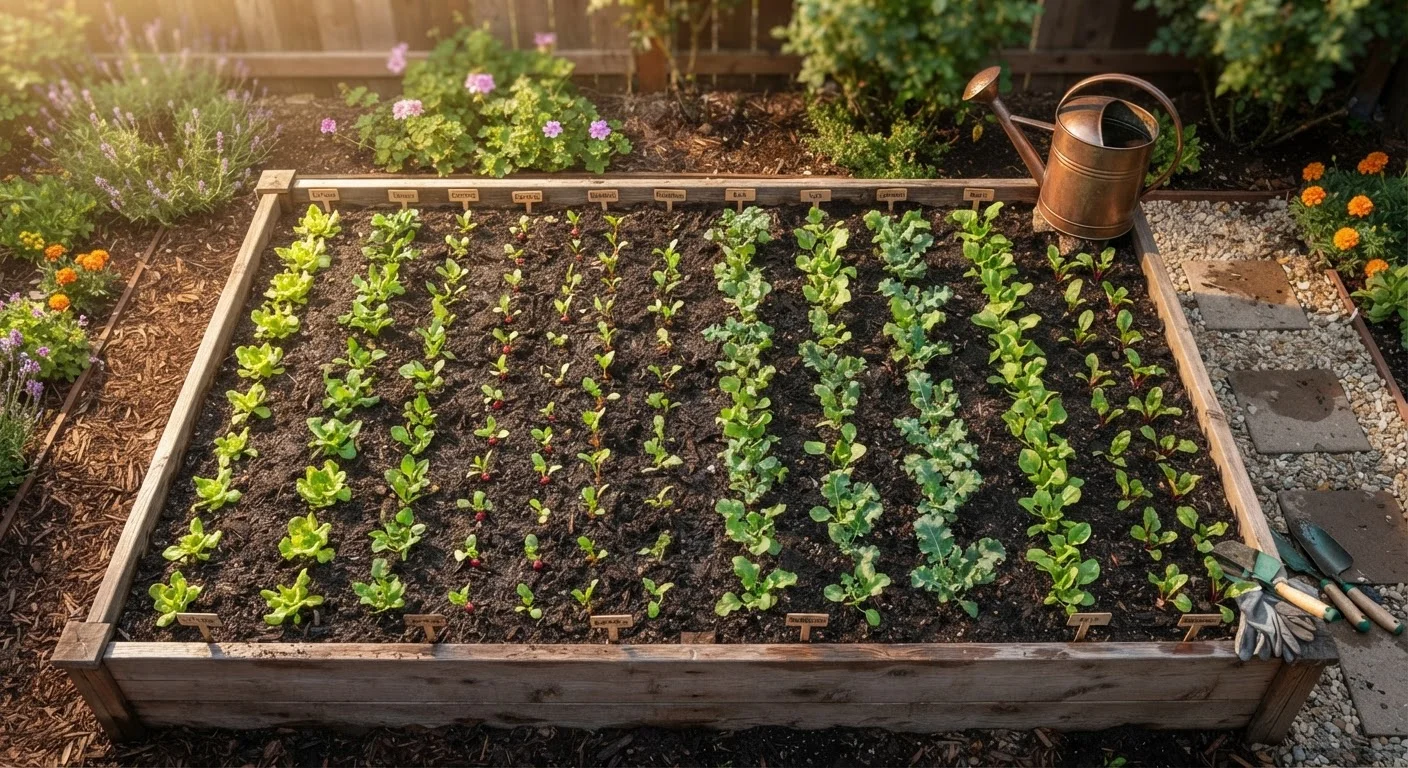
Key Takeaways
- A sunny, level spot with at least six hours of direct sunlight daily is the most important site requirement.
- Starting with a small plot-roughly 4×8 feet-makes a first garden manageable and less overwhelming.
- Improving soil with compost before planting is the single most impactful step you can take.
- Easy crops like lettuce, green beans, and zucchini reward beginners with reliable harvests.
- Consistent, deep watering beats frequent shallow watering for healthy vegetable root systems.
Start here
Choosing the Right Spot
Next
Preparing Your Soil
Then
Planning What to Grow
Getting hands-on
Planting and Early Care
Ongoing success
Watering, Feeding, and Troubleshooting
Choosing the Right Spot
The single most important decision in starting a vegetable garden is picking the right location. Vegetables are sun-hungry plants - most need a minimum of six hours of direct sunlight each day, and fruiting crops like tomatoes, peppers, and squash thrive with eight or more. Walk your yard at different times of day and observe where shade falls. A spot that looks sunny at 9 a.m. may be shaded by a tree or roofline by noon.
Beyond sunlight, look for ground that is reasonably level and drains well after heavy rain. Standing water around plant roots encourages disease and rot. Proximity to a water source also matters - dragging a hose across the yard quickly becomes a deterrent to consistent watering.
If your yard lacks a sunny in-ground space, a raised bed or containers on a sunny patio are practical alternatives. For those with limited outdoor space, our guide to container gardening explores how to grow vegetables productively in pots.
Mark Sun Patterns Before You Dig
Spend one full day observing your yard before committing to a garden location. Note where sunlight falls at morning, midday, and late afternoon. This simple step prevents the common mistake of planting in a spot that receives less light than expected. A smartphone compass app can help you identify south-facing areas, which typically receive the most sun in the Northern Hemisphere.
Preparing Your Soil
Healthy soil is the foundation of a productive garden. Native soil in most American yards is compacted, nutrient-poor, or both - and vegetables are heavy feeders that need loose, fertile ground to develop strong root systems.
Before planting, loosen the top 10-12 inches of soil using a garden fork or tiller, then work in a 2-3 inch layer of compost. Compost improves drainage in heavy clay soils, helps sandy soils retain moisture, and feeds soil biology that makes nutrients available to plants. If you're not yet composting at home, our article on turning kitchen scraps into garden compost walks you through setting up a simple backyard system.
A basic soil test - available through many cooperative extension offices - can reveal pH and nutrient deficiencies, allowing you to amend purposefully rather than guessing. Most vegetables prefer a soil pH between 6.0 and 7.0.
Soil pH
A measure of how acidic or alkaline your soil is, rated on a scale from 0 to 14. Most vegetables grow best when pH is between 6.0 and 7.0, which allows roots to absorb nutrients efficiently.
Compost
Decomposed organic matter - food scraps, leaves, yard trimmings - that enriches soil with nutrients and improves its texture and water-holding capacity.
Transplant
A young plant started from seed indoors or in a greenhouse and then moved to the garden. Transplants give slow-maturing crops like tomatoes a head start on the growing season.
Cool-season crop
A vegetable that grows best in cooler spring or fall temperatures, typically between 45°F and 70°F. Examples include lettuce, spinach, peas, and broccoli.
Mulch
A layer of material - straw, wood chips, or shredded leaves - spread over the soil surface to retain moisture, regulate temperature, and reduce weed growth.
Thinning
Removing extra seedlings from an area so the remaining plants have enough space, light, and nutrients to reach their mature size.
Planning What to Grow
Resist the urge to plant everything at once. A focused first garden with five to eight vegetable types will teach you far more than an overstuffed one that becomes unmanageable. Choose vegetables your household actually eats - there's no point harvesting pounds of kale if no one will eat it.
Reliable beginner choices include lettuce, radishes, green beans, zucchini, cucumbers, and cherry tomatoes. These crops germinate readily, tolerate minor mistakes, and produce quickly enough to provide encouraging feedback early in the season. Radishes, for example, are ready to harvest in as little as three to four weeks from seed.
Think about how your plants will interact with each other, too. Pairing certain crops can reduce pest pressure and improve space efficiency. Our guide to companion planting explains the practical science behind these combinations. Also consider whether your vegetable choices fit your meal routine - our overview of meal planning for beginners can help you match what you grow to what you cook.
Planting and Early Care
Some vegetables are easiest to start from seed sown directly in the garden - beans, carrots, radishes, and squash all fall into this category. Others, particularly tomatoes and peppers, are typically purchased as transplants from a nursery because their indoor growing period is long and requires controlled conditions. Seed packets and plant tags carry spacing and depth information specific to each crop; follow them closely, as crowded plants compete for light and airflow.
After planting, apply a 2-inch layer of mulch (straw, shredded leaves, or wood chips) around plants, keeping it away from stems. Mulch conserves soil moisture, moderates temperature, and suppresses weeds - three significant benefits for very little effort.
Thin seedlings when they emerge. It feels counterintuitive to pull up healthy sprouts, but overcrowded seedlings never develop to their full potential. If seed packets call for 6-inch spacing, honor that instruction.
Watering, Feeding, and Troubleshooting
Most vegetables need about one inch of water per week from rain or supplemental irrigation. Deep, infrequent watering - saturating the root zone a few times per week rather than sprinkling lightly every day - encourages roots to grow downward and makes plants more resilient during dry spells. A simple rain gauge helps you track how much water your garden is actually receiving.
Once plants are established, a balanced fertilizer or side-dressing of compost mid-season helps replenish nutrients that heavy-feeding crops consume quickly. Avoid over-fertilizing with nitrogen, which promotes lush foliage at the expense of fruit production.
Watch for common problems: yellowing leaves, chewed foliage, and wilting despite adequate water are early warning signs worth investigating. Many pest and disease issues are manageable when caught early. Hand-picking caterpillars and beetles, removing diseased leaves promptly, and maintaining good airflow through proper spacing are all practical first lines of defense.
Don't Overwater Young Seedlings
Overwatering is one of the most common beginner mistakes and can cause root rot, fungal disease, and stunted growth. Before watering, push your finger two inches into the soil - water only if it feels dry at that depth. Seedlings need consistently moist (not saturated) soil to establish healthy roots.
Starting a vegetable garden is one of the most rewarding projects a homeowner can undertake. If you're in the middle of broader home improvements, our guide on what first-time homeowners should tackle first can help you sequence outdoor projects alongside indoor priorities.