

Key Takeaways
- Containers let you garden successfully on balconies, patios, and small yards with no in-ground soil required.
- Pot size and drainage are the two factors most likely to determine whether your plants thrive or fail.
- High-quality potting mix - not garden soil - is essential for healthy container plants.
- Most vegetables, herbs, and many fruits grow well in containers when given adequate light and consistent water.
- Container plants need more frequent watering and fertilizing than in-ground plants due to limited soil volume.
Why Container Gardening Works
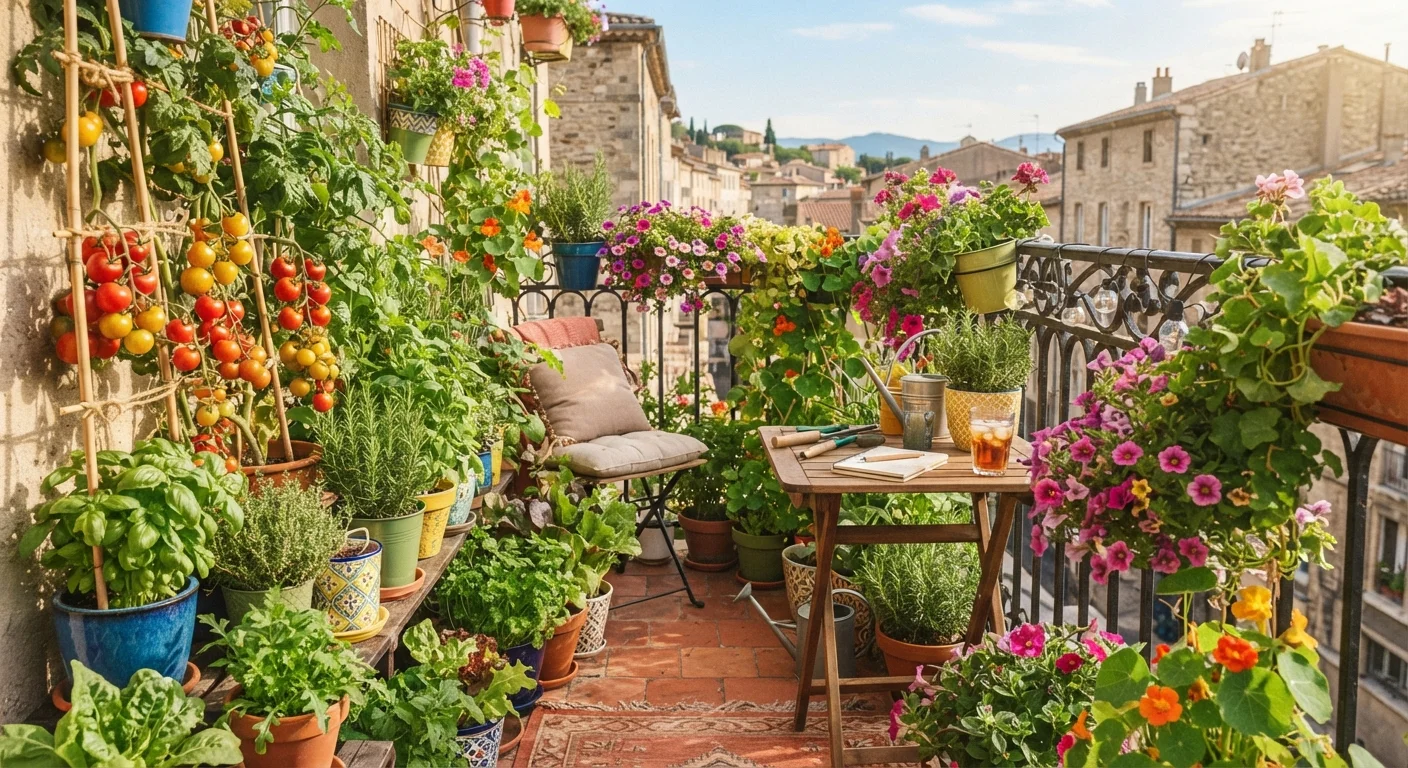
Container gardening lets you grow food, flowers, and herbs virtually anywhere - a sunny balcony, a paved patio, a rooftop, or a narrow strip of concrete outside a front door. Instead of amending existing ground soil, you control the entire growing environment from the start: the soil type, drainage, sun exposure, and even temperature, since pots can be moved.
The advantages extend beyond space constraints. Containers allow you to grow plants that wouldn't survive your native soil (say, acid-loving blueberries in alkaline-soil regions), sidestep soil-borne pests and diseases, and extend your season by moving tender plants indoors before frost. They're also accessible - raised off the ground, containers reduce bending and kneeling for gardeners with mobility limitations.
80%
Americans living in urban or suburban settings
According to U.S. Census Bureau data, roughly four in five Americans live in urban or suburban areas where outdoor growing space is limited.
5-10 gal
Minimum pot size for most vegetables
Extension horticulturists generally recommend at least a 5-gallon container for compact vegetable varieties and 10 gallons or more for tomatoes and peppers.
2x
More frequent watering vs. in-ground plants
Container plants can dry out twice as fast as in-ground plants during hot weather, according to university cooperative extension guidance.
Container gardening does come with trade-offs. Pots dry out faster, nutrients leach out with each watering, and root space is finite. Understanding those constraints upfront is what separates a thriving container garden from a frustrating one.
Choosing the Right Containers
Size is the single most important container decision. Small pots restrict root development, dry out in hours on a hot day, and limit yields. As a general guideline, use containers of at least 5 gallons for compact herbs and lettuces, 10 gallons for peppers and bush beans, and 15-20 gallons for indeterminate tomatoes and squash.
Material affects both performance and weight:
- Terracotta: Breathable and attractive, but dries out quickly and can crack in freeze-thaw cycles.
- Plastic: Lightweight, retains moisture well, and inexpensive - a practical workhorse for edibles.
- Fabric grow bags: Excellent air pruning of roots encourages dense, fibrous root systems; they fold flat for storage.
- Wood: Insulates roots from temperature extremes; naturally occurring or untreated cedar and redwood resist decay longer than other species.
- Glazed ceramic: Retains moisture like plastic but is heavy - factor this in for balconies with weight limits.
Drainage Holes Are Non-Negotiable
Every container must have at least one drainage hole. Without it, water pools at the root zone, oxygen is excluded, and root rot sets in quickly - often killing plants within days. If you love the look of a decorative pot without drainage, use it as a cachepot (an outer sleeve) around a plain nursery pot that does drain.
For balconies, always verify the load-bearing capacity of your structure before arranging large, soil-filled containers. A 20-gallon pot of wet soil can weigh well over 100 pounds.
Soil and Drainage: Getting the Foundation Right
Potting mix - not garden soil - is the correct growing medium for containers. Quality potting mixes are formulated to stay loose and drain well even after repeated watering, while garden soil compacts into a dense, airless mass inside a pot.
Never Use Garden Soil in Containers
Garden soil compacts heavily in pots, suffocates roots, and drains poorly. Always use a quality potting mix formulated for containers. This is one of the most persistent container gardening myths - our article on garden myths that keep your yard from thriving covers this and other common misconceptions in detail.
Look for a potting mix that lists ingredients such as peat moss or coco coir, perlite or vermiculite, and often some composted material. Mixes labeled "potting soil" vary widely; reading the ingredient list is more informative than the name on the bag.
One persistent myth is that adding a layer of gravel to the bottom of a pot improves drainage. Research in soil science consistently shows the opposite: the gravel layer creates a perched water table that keeps the soil above it wetter, not drier. Skip the gravel and instead ensure your pot has adequate drainage holes.
Refresh Your Potting Mix Each Season
Reusing old potting mix without amendment depletes nutrients and can harbor disease. At the start of each growing season, blend in fresh compost or replace the top third of the mix entirely. See our guide to composting at home for a practical source of homemade amendment.
Best Plants and Crops for Containers
Almost any vegetable, herb, or annual flower can be grown in a container, but some are naturally better suited to the format than others.
Vegetables
- Tomatoes: Determinate (bush) varieties are easier to manage in pots than sprawling indeterminate types. Look for varieties bred for compact growth.
- Peppers: Both sweet and hot peppers thrive in containers and are remarkably productive in a 10-gallon pot.
- Lettuce and salad greens: Shallow-rooted and fast-maturing, greens are ideal for window boxes and smaller pots.
- Radishes and carrots: Choose short-root carrot varieties; standard radishes fit well in 8-inch-deep containers.
- Cucumbers and squash: Possible in large containers (15+ gallons) with a trellis for vertical support.
Herbs
Basil, parsley, chives, cilantro, and mint grow exceptionally well in containers. Note that mint spreads aggressively - keeping it in its own pot is usually the better choice rather than mixing it with other plants.
Fruits
Strawberries are a classic container crop. Dwarf citrus, figs, and blueberries can be grown in large containers (20+ gallons) in suitable climates, or overwintered indoors where temperatures prohibit year-round outdoor growth.
Pairing compatible plants in a single large pot can improve space efficiency. For the principles behind plant pairing, see our guide on companion planting.
Container Gardening vs. In-Ground Gardening
Container gardening is not a lesser substitute for in-ground growing - it's a genuinely different method with its own advantages. If you're deciding between approaches, our article starting a vegetable garden from scratch covers in-ground planning and is a useful complement to this guide.
Watering, Feeding, and Keeping Plants Productive
Container plants need consistent attention to two things: water and nutrients.
Watering
Check containers daily during warm weather - push a finger an inch into the soil; if it's dry at that depth, water thoroughly until water runs freely from the drainage holes. Shallow, frequent sips encourage surface roots and stressed plants. Deep, infrequent watering is better, but in summer heat that may still mean once or twice a day for small pots.
If you're managing multiple containers, a drip irrigation setup can automate watering and significantly reduce plant stress during hot spells.
Group containers together to create a microclimate that retains moisture longer and raises humidity around foliage - especially helpful for herbs like basil.
Clustering pots reduces wind exposure and slows surface evaporation, meaning you water less frequently and plants experience less stress.
Place a saucer under pots in summer and remove it in rainy seasons - standing water in saucers during wet periods invites root rot.
Saucers help pots retain moisture during dry spells but become a liability when rainfall is frequent, causing consistently waterlogged roots.
Fertilizing
Because nutrients leach out with every watering, container plants need supplemental feeding throughout the growing season. A balanced, slow-release granular fertilizer at planting, supplemented with a liquid fertilizer every two to three weeks, is a common approach. Follow product label directions - over-fertilizing, especially with nitrogen, produces lush foliage at the expense of fruit and flowers.
Common Container Gardening Mistakes to Avoid
Even attentive gardeners run into predictable pitfalls with containers. Here are the most common - and how to sidestep them:
- Underestimating pot size: Starting with the largest practical container for your space saves you from having to transplant mid-season and reduces watering frequency.
- Crowding plants: Enthusiasm leads many gardeners to plant too densely, which restricts airflow, encourages disease, and creates competition for nutrients. Follow spacing guidance on seed packets or plant tags even when it feels sparse at transplant time.
- Ignoring sunlight requirements: Most vegetables need at least six to eight hours of direct sun. Containers allow you to move plants to track the sun, but they cannot manufacture light that isn't there. Assess your space honestly before selecting crops.
- Letting pots dry out completely: Severely stressed, wilted plants often don't fully recover even after watering. Consistent moisture - not occasional flooding - is the goal.
- Skipping seasonal refresh: Old potting mix loses structure and nutrition over time. Replacing or amending it each season keeps plants productive year after year.
Container gardening rewards patience and observation. Once you understand the rhythm of your pots - how fast they dry, how quickly your plants respond to feeding - managing a productive container garden becomes intuitive rather than laborious.