
Getting Started With Home Improvement: What First-Time Homeowners Should Tackle First

Key Takeaways
- Address safety systems and structural concerns before cosmetic upgrades.
- A modest toolkit of quality hand tools handles the majority of beginner repairs.
- Seasonal maintenance routines prevent small issues from becoming costly problems.
- Electrical, gas, and structural work typically requires a licensed professional.
- Budgeting a home maintenance reserve helps absorb unexpected repair costs.
Start here
Set Your Priorities: Safety and Systems First
Next
Build a Basic Toolkit Before You Start
Then
Establish a Maintenance Rhythm
When you're ready
Know When to DIY - and When to Call a Pro
Finally
Budget for Home Improvement From the Start
Set Your Priorities: Safety and Systems First
The urge to repaint, renovate, and redecorate is natural when you first get the keys. But experienced homeowners know the first order of business is less glamorous: making sure the home is safe and its core systems are in working order.
Start by walking through the home systematically. Test every smoke detector and carbon monoxide detector, replacing batteries or units as needed. Locate your main water shutoff valve and your electrical panel - knowing where these are before an emergency is invaluable. Check under sinks and around the water heater for signs of leaks or corrosion.
Next, assess the home's envelope - the roof, windows, doors, and foundation. Water intrusion is one of the most damaging and expensive problems a home can develop. Look for stained ceilings, soft spots around window frames, gaps in caulking, and pooling water near the foundation. These are the issues worth addressing before any cosmetic project.
For a deeper look at your home's critical systems, the Home Systems hub covers HVAC, plumbing, and electrical fundamentals in plain language.
Home envelope
The physical boundary of your home - roof, walls, windows, doors, and foundation - that separates interior living space from the outside environment. Keeping it intact prevents water and air infiltration.
Main water shutoff
A valve, typically near where the water line enters your home, that stops all water flow to the house. Knowing where it is lets you quickly stop flooding during a plumbing emergency.
Load-bearing wall
A wall that supports the weight of the structure above it. Removing or modifying one without proper assessment can compromise the home's structural integrity.
Building permit
Official approval from your local government required before certain construction or renovation work begins. It ensures the work is inspected for safety and code compliance.
Preventive maintenance
Routine upkeep done on a schedule to prevent systems and components from failing - as opposed to waiting until something breaks to address it.
Build a Basic Toolkit Before You Start
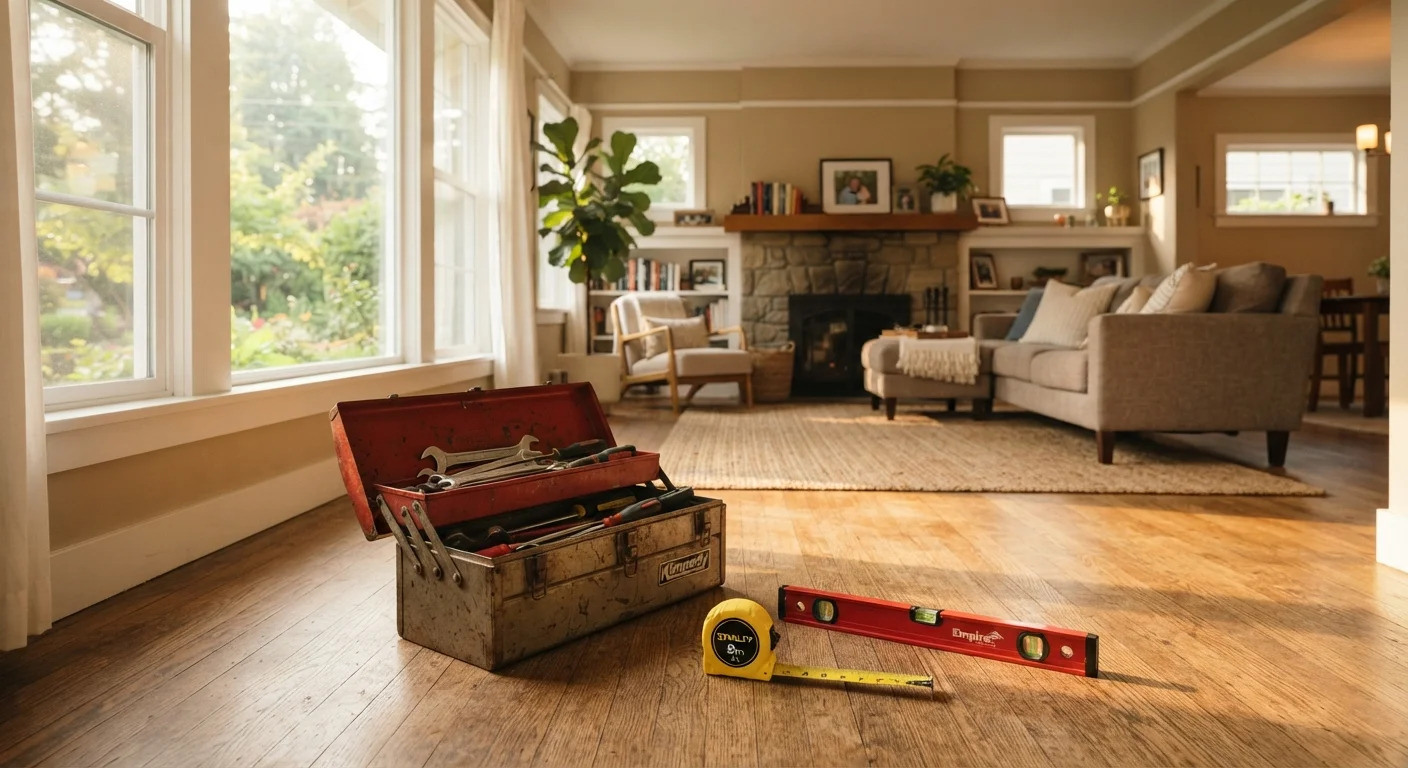
You don't need a garage full of equipment to handle most beginner repairs. A focused starter toolkit covers a surprising range of tasks and can be assembled over time without significant expense.
- Hammer - for driving and pulling nails, light demolition
- Screwdriver set - both Phillips and flathead in multiple sizes
- Adjustable wrench and pliers - for basic plumbing and hardware
- Tape measure - a 25-foot model handles most jobs
- Utility knife - for cutting drywall, flooring, and materials
- Level - a 4-foot level ensures shelves, frames, and fixtures hang straight
- Cordless drill/driver - once you're comfortable, this becomes your most-used tool
Store tools in a dedicated toolbox or cabinet, and replace worn or damaged tools promptly - a stripped screwdriver or dull blade makes tasks harder and less safe. Quality over quantity matters: a few reliable hand tools outperform a large collection of cheap ones.
Start with Repairs, Not Upgrades
New homeowners often want to upgrade finishes or add features immediately. A smarter approach is to spend your first few months fixing what's already there - patching, sealing, replacing worn parts - before investing in anything new. This builds your knowledge of how your home actually works and reveals hidden issues before they become expensive surprises.
Establish a Maintenance Rhythm
Reactive maintenance - fixing things after they break - is almost always more expensive than staying ahead of problems. Building a simple seasonal routine is one of the most effective habits a new homeowner can develop.
A rough seasonal framework:
- Spring
- Inspect the roof and gutters after winter, check exterior caulking and weather stripping, schedule an HVAC tune-up before cooling season, and look for foundation drainage issues after snowmelt.
- Summer
- Check window and door screens, monitor for pest activity, keep gutters clear of debris, and test outdoor faucets and irrigation.
- Fall
- Clean gutters before leaf fall ends, have heating systems serviced, reverse ceiling fans for winter circulation, and drain garden hoses before freezing temperatures arrive.
- Winter
- Monitor for ice dams, keep interior temperatures stable to avoid pipe freezing, and check that weatherstripping is intact.
For HVAC-specific tasks - including when to change filters and what a technician should inspect - see HVAC maintenance tasks every homeowner should know.
Know When to DIY - and When to Call a Pro
Honest self-assessment separates confident homeowners from frustrated ones. Many tasks are genuinely manageable for beginners: patching small drywall holes, caulking around tubs and windows, replacing outlet covers, touching up paint, or swapping out a showerhead. These projects carry low risk, require modest skill, and teach you how your home works.
Other projects are a different matter entirely. Electrical panel work, gas line repairs, load-bearing wall modifications, and anything requiring a permit should be handled by licensed professionals. These aren't arbitrary boundaries - mistakes in these areas create fire hazards, structural failures, or legal complications that affect your home's insurability and resale value.
Why DIY electrical work goes wrong is a useful read before you're tempted to tackle wiring yourself. Likewise, understanding when a building permit is required can save you from costly compliance issues later.
When in doubt, a consultation with a licensed contractor is worth the cost. Many will provide a quick assessment and help you understand the scope of a job before you commit.
Permits Protect More Than Just You
Skipping a required permit isn't just a legal risk - it can void your homeowner's insurance coverage for that project and create serious problems when you sell. Buyers and their inspectors may flag unpermitted work, and you could be required to bring it up to code at your own expense before closing. Always verify permit requirements with your local building department before starting work.
Budget for Home Improvement From the Start
Home improvement costs have a way of surprising new owners. A common rule of thumb is to reserve 1-2% of your home's purchase price per year for maintenance and repairs. This is general guidance, not a guarantee - older homes, those with aging roofs or HVAC systems, or homes in harsh climates may need more.
Build this reserve into your household budget from the start, even if your home seems in great shape. Systems wear out, appliances fail, and weather causes damage on no predictable schedule. Treating home maintenance as a regular expense - not an emergency - reduces financial stress and keeps your home in better condition over time.
If a larger project is on the horizon, it's worth understanding your financing options. Our overview of home renovation financing options explains how HELOCs, personal loans, and other tools work in general terms. For help structuring your broader finances as a homeowner, building your first household budget is a practical starting point.
Before diving into any significant renovation, use this renovation planning checklist to avoid the common planning gaps that lead to blown timelines and budgets.