

Key Takeaways
- Meal planning doesn't require perfection - a flexible structure is more sustainable than a rigid schedule.
- Starting with just three to four planned dinners per week is enough to see real benefits.
- A well-stocked pantry reduces decision fatigue and makes healthy eating easier on busy days.
- Batch cooking staples like grains and proteins saves significant time throughout the week.
- Treating slip-ups as normal - not failures - is key to building a lasting habit.
Start here
Why Meal Planning Works (and Why Most People Quit)
Learn the basics
The Core Concepts: What You Actually Need to Know
Take action
Building Your First Weekly Plan
Set yourself up
Stocking a Flexible Pantry
Make it stick
Keeping the Routine Going
Why Meal Planning Works (and Why Most People Quit)
Meal planning has a reputation for being complicated - color-coded binders, elaborate spreadsheets, perfectly portioned containers lined up in the fridge. That image stops a lot of people before they start. In reality, effective meal planning is far simpler, and the research behind it is straightforward: when people decide what they'll eat before they're hungry, they tend to make choices that align better with their health goals and waste less food.
The most common reason beginners quit isn't lack of motivation - it's overcommitment. Trying to plan every meal, every snack, seven days a week, from week one is a recipe for burnout. The same behavioral patterns that derail other new habits apply here. If you've ever wondered why structured routines fall apart, the reasons behind abandoned habits share a common thread: the plan was too rigid to survive real life. A flexible structure, not a perfect one, is what actually sticks.
The Core Concepts: What You Actually Need to Know
Before building your first plan, it helps to understand a few basic principles that guide sustainable eating - without getting lost in nutrition science.
Macronutrients
The three main energy-providing nutrients in food: carbohydrates, proteins, and fats. A balanced meal typically includes all three in proportions that suit your health needs.
Batch cooking
Preparing larger quantities of one or more foods at a single time so they can be used across multiple meals during the week, saving time and effort.
Meal template
A simple formula - such as a protein, a vegetable, and a grain - that you repeat with different ingredients each week. Templates reduce planning effort while maintaining variety.
Food waste
Edible food that is thrown away, often because it was bought without a specific plan. Meal planning directly reduces food waste by aligning purchases with intended use.
Pantry staples
Non-perishable or long-lasting ingredients kept on hand so you can assemble a meal even when fresh ingredients run out or plans change unexpectedly.
You don't need to master all of these at once. Understanding that balance, variety, and realistic portion awareness matter more than any single food or rule is the foundation everything else builds on.
Building Your First Weekly Plan
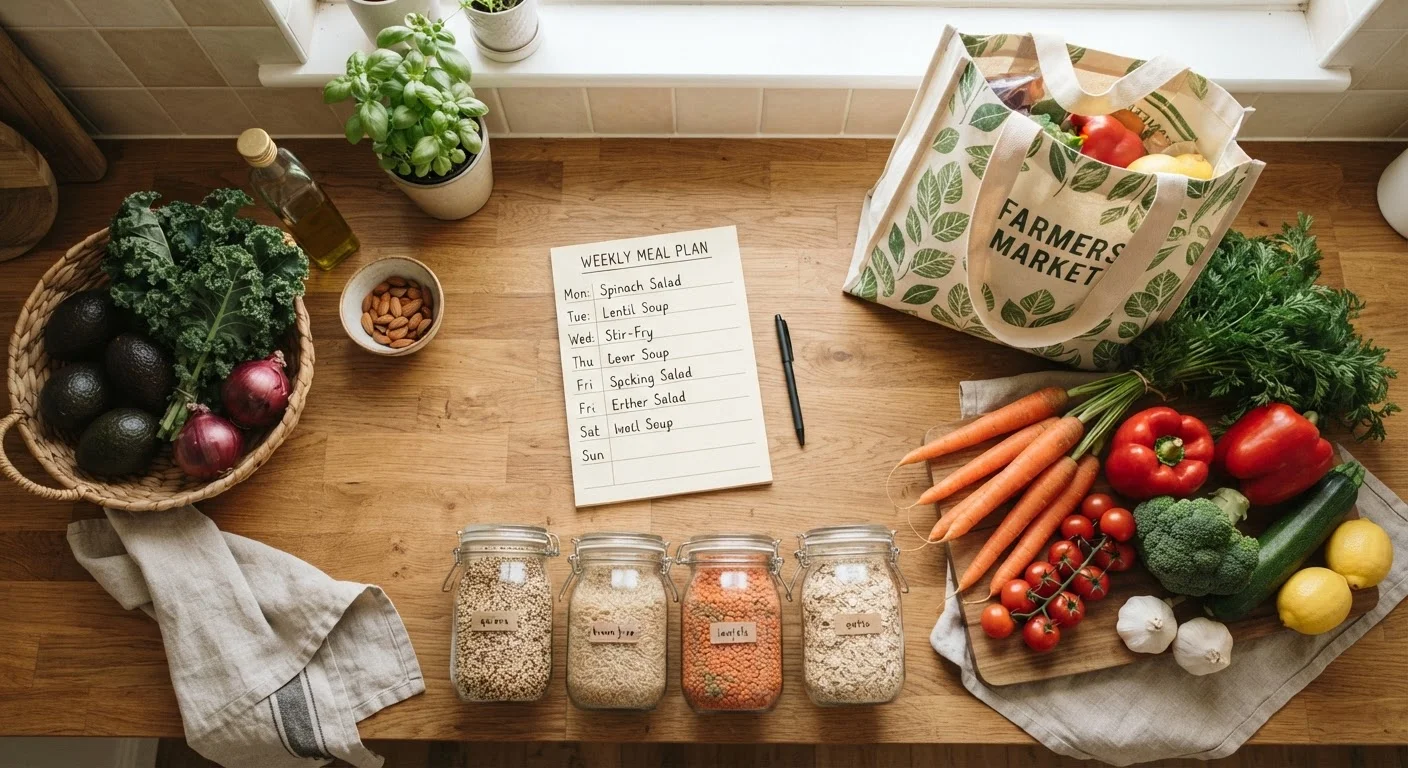
The most practical starting point is to plan only dinners for the first two weeks. Choose three to four meals you already know how to make or that use simple, familiar ingredients. Write them down and assign each to a day - loosely. Leave one or two nights open as your flex nights for leftovers, takeout, or whatever's convenient.
Once you have your meals chosen, build your grocery list backwards from those recipes. This is what separates planned shopping from wandering the aisles: you know exactly what you need. Planned shopping also tends to reduce impulse spending, which connects naturally to broader household budgeting - the same logic behind why rigid first budgets fail applies to meal plans that try to do too much too soon.
As your confidence grows, consider adding one new recipe per week. Variety prevents boredom, which is another common reason people abandon their plans. For ideas on how your meals can support your energy levels throughout the day, eating patterns for steady energy offers useful, evidence-informed context.
Use a Simple Meal Template
Instead of searching for entirely new recipes each week, build meals around a repeating formula: one protein, one vegetable, one grain or starch. Swap the ingredients each week and you get variety without the planning burden. This approach makes the weekly planning session much faster once you've done it a few times.
Stocking a Flexible Pantry
A well-stocked pantry is what makes meal planning resilient. When your planned dinner falls through, a good pantry means you can still put together a nourishing meal in 20 minutes without a trip to the store.
Focus on a core set of versatile staples that work across multiple recipes: dried or canned legumes, whole grains like brown rice or oats, canned tomatoes, olive oil, low-sodium broth, and a range of dried herbs and spices. In the freezer, keep proteins like chicken or fish portions, frozen vegetables, and bread. These items form the backbone of dozens of different meals.
If you have outdoor space, growing even a few herbs or vegetables can supplement your pantry and reduce frequent small grocery trips. Starting a vegetable garden from scratch is more accessible than most people expect and pairs well with a meal planning habit.
Keeping the Routine Going
Consistency in meal planning, like consistency in any new health habit, comes from making the behavior low-effort enough to repeat. Pick one day each week - Sunday evening or Saturday morning work well for many people - as your planning session. Keep it to 20-30 minutes: review what's in your fridge, choose meals, write your list.
Batch cooking one or two staples during that same window - a pot of grains, a tray of roasted vegetables, a simple protein - reduces the daily effort of cooking dramatically. This kind of preparation parallels building any gradual routine: the same principle that makes starting a walking routine from zero sustainable applies directly to meal planning. Small, repeated actions compound over time.
When the plan doesn't work out - and some weeks it won't - treat that as expected, not as failure. Adjust the following week rather than abandoning the habit. A flexible, imperfect plan executed consistently will always outperform a perfect plan that's given up after one hard week.
This article is for general informational and educational purposes only and is not a substitute for professional medical or nutritional advice. Individual dietary needs vary. Consult a registered dietitian or qualified healthcare professional for guidance specific to your health circumstances.