

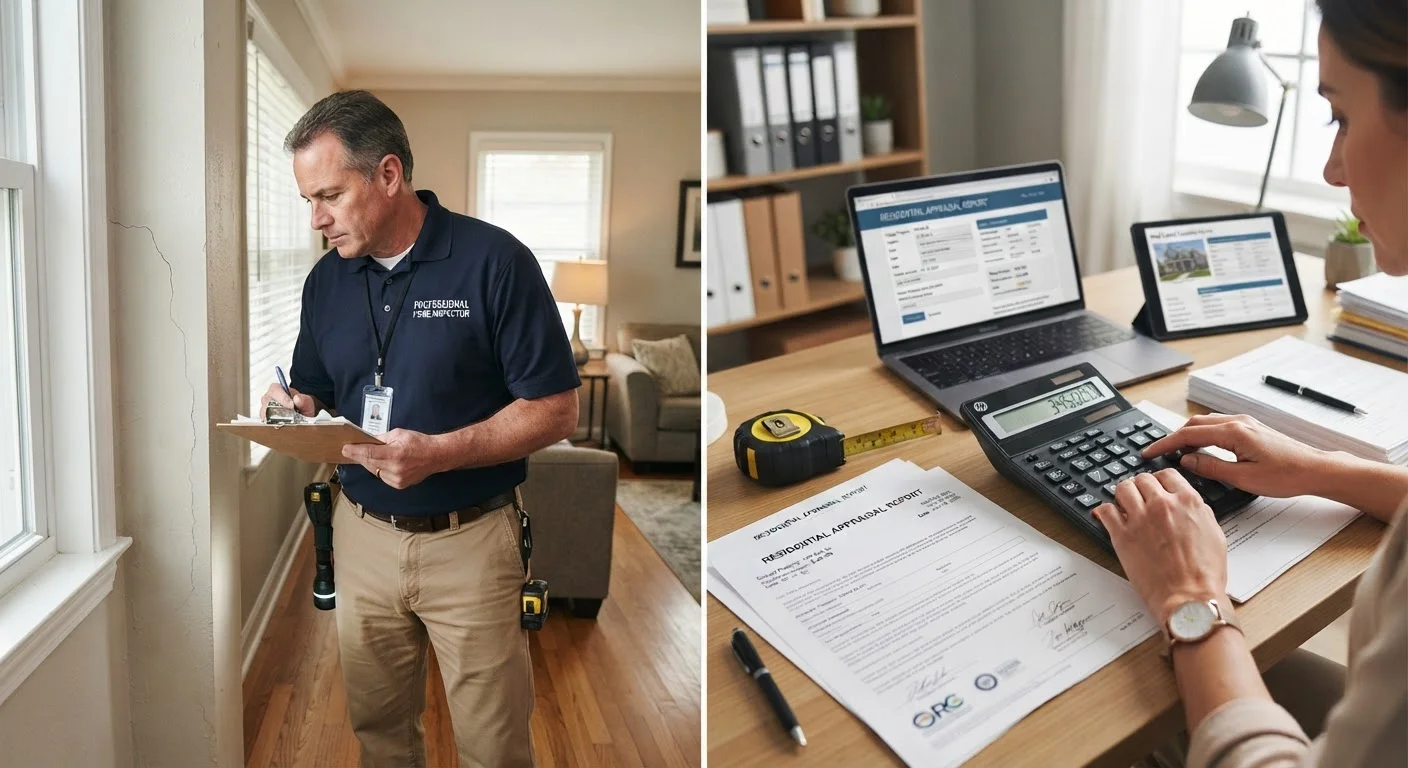
Key Takeaways
- A home inspection evaluates physical condition; a home appraisal determines market value - they are not interchangeable.
- The inspection primarily protects the buyer; the appraisal primarily protects the lender.
- Both typically occur during the due-diligence period after an offer is accepted.
- Buyers generally pay for both, though costs and timing vary by transaction.
- A failed inspection can trigger renegotiation; a low appraisal can affect how much a lender will finance.
- Neither process substitutes for the other - most financed purchases require both.
Option A
Home Inspection
The buyer's window into the property's physical condition.
Best for: Buyers who want to understand the true physical state of a home before committing fully to the purchase.
Option B
Home Appraisal
The lender's independent check on a property's market value.
Best for: Lenders - and buyers - who need confirmation that the agreed sale price reflects fair market value.
If you want to know whether a home has hidden structural or mechanical problems
Home Inspection
A licensed inspector physically examines the property and documents issues ranging from roof condition to plumbing leaks, giving you actionable information before closing.
If your lender needs to confirm the home is worth the loan amount
Home Appraisal
Most mortgage lenders require an appraisal to verify the property's market value supports the financing they're extending - it protects against over-lending.
If you're a first-time buyer trying to decide which to prioritize
Home Inspection
While lenders typically require the appraisal automatically, the inspection is yours to use - its findings can inform negotiation, repair requests, or a decision to walk away.
If the sale price and market value alignment is in question
Home Appraisal
When a home is priced above comparable sales, the appraisal result determines whether a lender will finance the full amount or require the buyer to make up the difference.
What Each Evaluation Actually Does
During the period between an accepted offer and closing day, buyers encounter two evaluations that often get conflated - the home inspection and the home appraisal. Both involve a professional visiting the property, but they answer fundamentally different questions. Understanding the distinction helps buyers navigate each step with confidence. For a broader look at this phase of buying, see our guide to the homebuying process from offer to closing.
A home inspection is a physical examination of a property's condition. A licensed home inspector assesses the structure, systems, and components of the home - roof, foundation, HVAC, plumbing, electrical, windows, and more - and delivers a written report detailing findings. The inspector's job is not to assign a dollar value to the home, but to describe what is working, what is deficient, and what may need attention soon. For a deeper look at one specific system, our article on what happens during a home electrical inspection walks through what inspectors typically examine panel to outlet.
A home appraisal, by contrast, is a professional assessment of the property's market value. A state-licensed or certified appraiser reviews the home's features, condition, and location, then compares it to recently sold comparable properties (known as comps) to arrive at an estimated fair market value. The result is a formal appraisal report used primarily by the mortgage lender.
| Criterion | Home Inspection | Home Appraisal |
|---|---|---|
| Primary purpose | Assess physical condition | Determine market value |
| Conducted by | Licensed home inspector | State-licensed appraiser |
| Who orders it | Buyer | Lender (on buyer's behalf) |
| Who it primarily protects | Buyer | Lender |
| Report goes to | Buyer | Lender (buyer gets a copy) |
| Required for mortgage? | Not always required, but strongly advisable | Required by most lenders |
| Typical outcome if issues found | Renegotiation or repair requests | Price adjustment or financing gap |
Who Orders Each - and Who It Protects
The inspection is typically ordered and paid for by the buyer, and its report belongs to the buyer. This means the buyer decides what to do with the findings - request repairs, negotiate a price reduction, ask for a credit at closing, or, if the contract includes an inspection contingency, withdraw from the deal entirely without penalty.
The appraisal is also paid for by the buyer in most transactions, but it is ordered by the lender - not the buyer - through an independent process designed to prevent conflicts of interest. The lender uses the appraisal to confirm that the property is worth at least as much as the loan amount. If the appraised value comes in below the agreed purchase price (a low appraisal), the lender will typically only finance up to the appraised value, leaving the buyer to renegotiate with the seller, make up the difference in cash, or walk away if a financing contingency is in place.
Cash Buyers and the Appraisal
Buyers purchasing a home with cash are not required to obtain an appraisal, since there is no lender involved. However, many cash buyers choose to get one voluntarily to confirm they are not overpaying for the property. The inspection remains equally valuable regardless of how the purchase is financed.
It's worth noting that the inspection protects the buyer's interests while the appraisal protects the lender's interests - even though the buyer pays for both. Buyers should treat each as a separate, necessary step rather than viewing one as a substitute for the other. For unfamiliar terminology throughout this process, our plain-language guide to homebuying terms is a useful reference.
Cost, Timing, and What Happens to the Results
Both evaluations typically occur during the due-diligence window after an offer is accepted. The inspection usually happens first - often within days of a signed contract - so buyers have time to review findings and decide how to proceed. Inspections generally take two to four hours depending on property size, and inspection fees typically range from a few hundred dollars upward, varying by region, home size, and scope.
Appraisals are usually scheduled shortly after the inspection and may take one to two weeks to complete and deliver, depending on appraiser availability in the local market. Appraisal fees also vary by location and property complexity but are similarly in the several-hundred-dollar range as a general baseline.
~80%
Buyers who request a home inspection
According to the National Association of Realtors, the large majority of homebuyers include an inspection contingency as part of their purchase contract.
2-4 hrs
Typical home inspection duration
Inspection length varies with property size and age; larger or older homes commonly take longer to assess thoroughly.
After the inspection, the report goes directly to the buyer (and their agent). After the appraisal, the lender receives the report first, though buyers are entitled to a copy under federal lending regulations. If the appraisal meets or exceeds the purchase price, the transaction typically moves forward. If it falls short, negotiations or contract adjustments may follow.
First-time buyers especially benefit from understanding both processes before they begin their search. Our article on what first-time homebuyers should know before starting the search covers credit, budgeting, and the full buying timeline - all of which set the stage for navigating inspections and appraisals smoothly.
This article is for general informational purposes only and does not constitute financial, legal, or real estate advice. Costs, timelines, and requirements vary by location, lender, and transaction. Consult a qualified real estate professional or attorney for guidance specific to your situation.