
Ground Fault vs. Arc Fault Circuit Interrupters: Two Devices, Two Different Hazards

Key Takeaways
- GFCIs protect people from electrocution by detecting stray current leaking to ground.
- AFCIs protect homes from fires caused by damaged or deteriorating wiring that produces electrical arcs.
- Each device is required by the National Electrical Code in specific locations based on the hazard it addresses.
- Combination AFCI breakers now cover both arc fault and ground fault protection in certain applications.
- Testing your GFCI and AFCI devices monthly is the simplest way to confirm they are functioning properly.
GFCI vs. AFCI
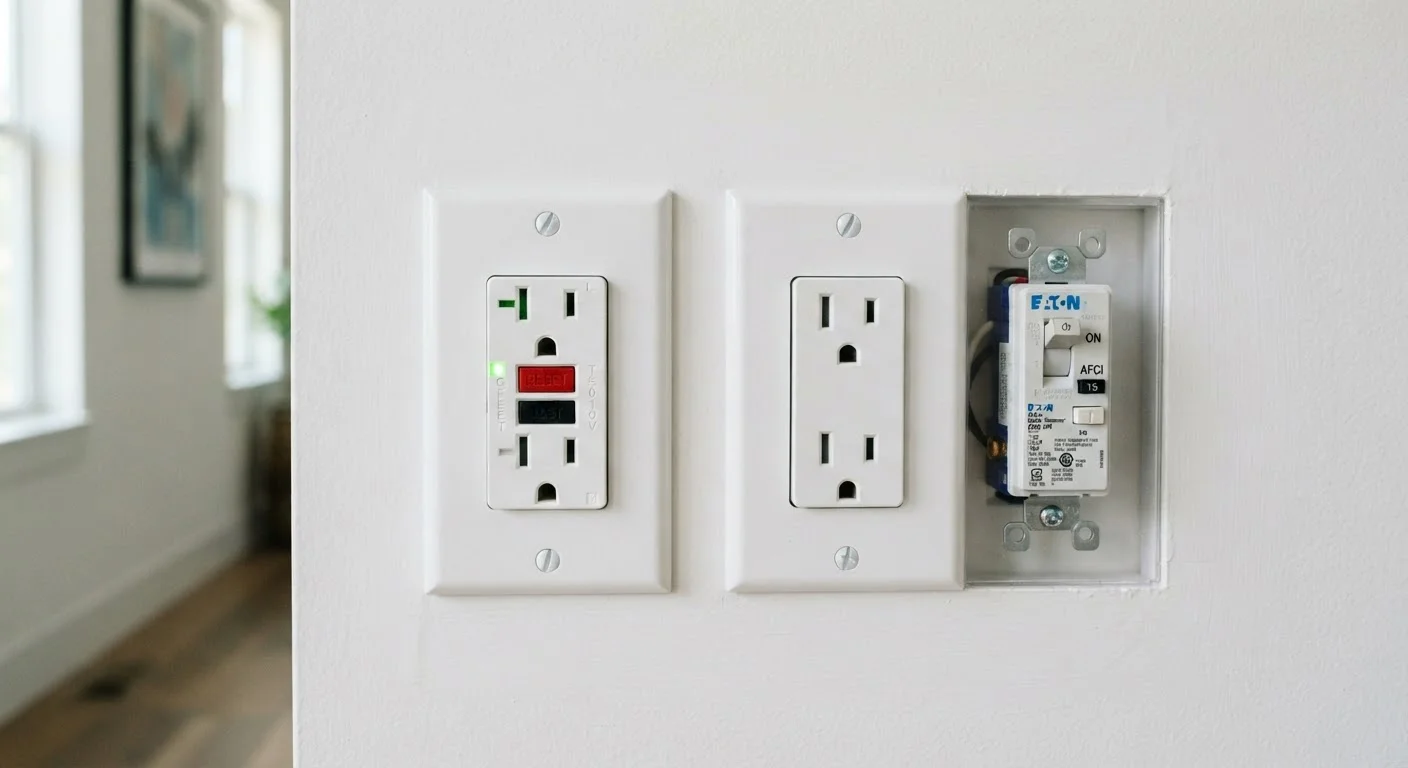
A Ground Fault Circuit Interrupter (GFCI) shuts off power when electricity starts flowing along an unintended path - such as through a person - to prevent electrocution. An Arc Fault Circuit Interrupter (AFCI) detects the signature of an electrical arc - a dangerous discharge that can ignite surrounding materials - and cuts power to prevent fires. Both devices protect your home's occupants, but they respond to entirely different threats.
GFCIs monitor current imbalance as small as 4-6 milliamperes; AFCIs use electronic pattern recognition to distinguish hazardous arcing from normal sparks produced by switches or motors.
The Core Difference: What Each Device Is Watching For
Both GFCIs and AFCIs are safety devices built into your home's electrical system, but they monitor entirely different conditions. Understanding what each one is listening for is the clearest way to grasp why both are necessary.
A GFCI (Ground Fault Circuit Interrupter) compares the current flowing out of an outlet with the current returning through the neutral wire. In a healthy circuit, those two values match precisely. When a ground fault occurs - electricity leaking outside the intended path, for example through a person who touches a live wire while standing on a wet floor - the returning current drops. The GFCI detects this imbalance in milliseconds and cuts power before a potentially lethal shock can occur.
An AFCI (Arc Fault Circuit Interrupter) watches for a different signature entirely: the distinctive electrical pattern produced when current jumps across a gap or through damaged insulation. This arcing generates intense heat - enough to ignite wood, insulation, or other nearby materials - yet it may not trip a standard breaker, which only responds to overloads. The AFCI's electronics continuously analyze the waveform of the current, distinguishing a dangerous arc from the ordinary sparks a switch or motor produces.
Ground Faults and Arc Faults Are Separate Problems
A ground fault involves current escaping the circuit to an unintended path - a person, a wet surface, a grounded metal object. An arc fault involves current bridging a gap inside the circuit itself due to damaged insulation, loose connections, or deteriorated wiring. A home can experience either or both, which is why both protections are required in modern construction.
Where Each Type of Protection Is Required
The National Electrical Code (NEC), published by the National Fire Protection Association, sets baseline requirements for where each device must be installed. Local jurisdictions adopt specific editions of the NEC and may add their own amendments, so the rules in your community could differ from the baseline - always verify with your local building department or a licensed electrician.
Typical GFCI Locations
- Bathrooms and powder rooms
- Kitchen countertop outlets within a specified distance of the sink
- Garages and accessory structures
- Outdoor outlets and receptacles
- Crawl spaces and unfinished basements
- Boathouses and areas near swimming pools or hot tubs
Typical AFCI Locations
- Bedrooms (the original mandate, adopted in the 1999 NEC)
- Living rooms, family rooms, and dining rooms
- Hallways, closets, and similar spaces
- Laundry areas and sunrooms (in more recent NEC editions)
One important distinction: GFCI protection is commonly provided by the familiar outlet with the Test and Reset buttons, or by a GFCI breaker in the panel. AFCI protection is almost always delivered through a special breaker installed in the electrical panel. Combination AFCI breakers that also provide ground fault protection exist and are increasingly common.
One Outlet Can Protect Several Others
A single GFCI outlet wired correctly can extend protection to multiple standard outlets downstream on the same circuit. Look for the 'Load' terminals on the GFCI outlet - wiring downstream outlets to those terminals brings them under GFCI protection. An electrician can confirm whether your existing GFCI outlets are wired this way, which is especially useful in older homes where adding new outlets is impractical.
What Happens When These Devices Detect a Problem
Speed is the defining feature of both devices. A GFCI reacts in roughly one-fortieth of a second - fast enough to interrupt a shock before the current reaches levels that cause cardiac arrest. A standard circuit breaker, by contrast, is designed to respond to sustained overloads and wouldn't trip fast enough to prevent electrocution in a ground fault scenario.
An AFCI breaker trips when its electronics confirm a sustained hazardous arc pattern. Because some arcing (from a light switch, for example) is normal, the device must be sophisticated enough to avoid nuisance tripping while still catching genuinely dangerous conditions. When an AFCI does trip, it's signaling that something in the wiring deserves attention - not a condition to simply reset and ignore.
If a GFCI or AFCI breaker trips repeatedly on the same circuit, that's a diagnostic signal. Repeated GFCI trips suggest a persistent moisture problem or a failing appliance. Repeated AFCI trips often point to damaged wiring, a failing device, or a wiring problem that warrants professional inspection. See our guide on when electrical work needs a licensed professional for guidance on what not to attempt yourself.
Testing and Maintaining Your Protection Devices
Both GFCIs and AFCIs have built-in test functions for a reason - they need periodic verification. Electrical safety organizations generally recommend testing once a month. The process is straightforward:
- For a GFCI outlet: press the Test button. Any outlet protected by this device should lose power. Press Reset to restore it.
- For a GFCI or AFCI breaker: press the test button on the breaker itself. The breaker should trip. Flip it fully off and then back on to reset.
If a device fails to respond correctly to its own test, it should be replaced by a licensed electrician. These devices do wear out, and a GFCI or AFCI that doesn't trip when tested provides no protection at all.
When buying or selling a home, a home electrical inspection will typically assess whether the appropriate protective devices are installed and functioning. Understanding the difference between GFCIs and AFCIs helps you follow that conversation and ask the right questions.
~51,000
Home electrical fires annually in the U.S.
According to the National Fire Protection Association, home electrical fires cause roughly 500 deaths and $1.3 billion in property damage each year.
4-6 mA
Current imbalance that triggers a GFCI
This threshold is far below the 100-200 mA range considered potentially lethal - demonstrating how quickly a GFCI intervenes compared to a standard breaker.
1999
Year AFCIs first required in NEC (bedrooms)
The National Electrical Code first mandated AFCI protection in bedroom circuits in its 1999 edition; subsequent editions have steadily expanded the requirement to most living spaces.