

Key Takeaways
- Soil pH determines how well plants can absorb nutrients already present in the soil.
- Most vegetables and grasses grow best in a pH range of 6.0 to 7.0.
- Inexpensive soil test kits or professional lab tests can reveal your soil's current pH.
- Lime raises soil pH; sulfur or acidic amendments lower it.
- Correcting pH takes time - results typically improve over one or more growing seasons.
- Testing before adding fertilizers prevents wasting money on nutrients plants can't absorb.
Soil pH
Soil pH is a measure of how acidic or alkaline your soil is, expressed on a scale from 0 to 14. A reading of 7.0 is neutral, numbers below 7 indicate acidic soil, and numbers above 7 indicate alkaline (basic) soil. Most garden plants thrive in a slightly acidic to neutral range, roughly 6.0 to 7.0.
pH is a logarithmic scale, meaning a soil with a pH of 5.0 is ten times more acidic than one at 6.0 - small numerical shifts represent significant chemical changes in your growing environment.
Why pH Controls What Your Plants Can Eat
Even nutrient-rich soil can starve your plants. The reason is often pH. Soil pH governs the chemical form that nutrients take in the soil - and plants can only absorb nutrients in specific forms. When pH drifts outside a plant's preferred range, essential elements like iron, manganese, phosphorus, and calcium become chemically bound to soil particles and effectively locked away, no matter how much fertilizer you add.
This is called nutrient lockout. A gardener who watches yellowing leaves and keeps feeding without testing pH is essentially trying to fill a glass that has no bottom. Understanding pH first saves time, money, and frustration. For more on how fertilizer interacts with soil chemistry, see our article on how organic and synthetic fertilizers differ.
6.0-7.0
Optimal pH range for most vegetables and lawn grasses
This range is widely cited by university extension soil science programs as the target for the majority of common garden and turf plants.
0-14
Full pH scale range
The pH scale is logarithmic, so each whole number step represents a tenfold change in acidity or alkalinity.
4.5-6.0
Preferred pH range for acid-loving plants
Blueberries, azaleas, and rhododendrons are among the common landscape plants that require more acidic conditions to access iron and other micronutrients.
Reading the Signs of a pH Problem
Certain symptoms reliably point toward pH as the culprit. Interveinal chlorosis - yellowing between leaf veins while the veins themselves stay green - often signals iron or manganese deficiency caused by soil that is too alkaline. Stunted growth, purple-tinged leaves, or poor fruiting in vegetable gardens can point to phosphorus being locked out in overly acidic conditions.
Lawn grasses give their own signals. Thin, patchy turf that struggles despite regular watering and feeding may be dealing with pH that prevents root systems from functioning efficiently. It's worth noting that other soil problems can produce similar symptoms - compacted soil can mimic pH stress by restricting root growth and water infiltration.
How to Test and Correct Your Soil pH
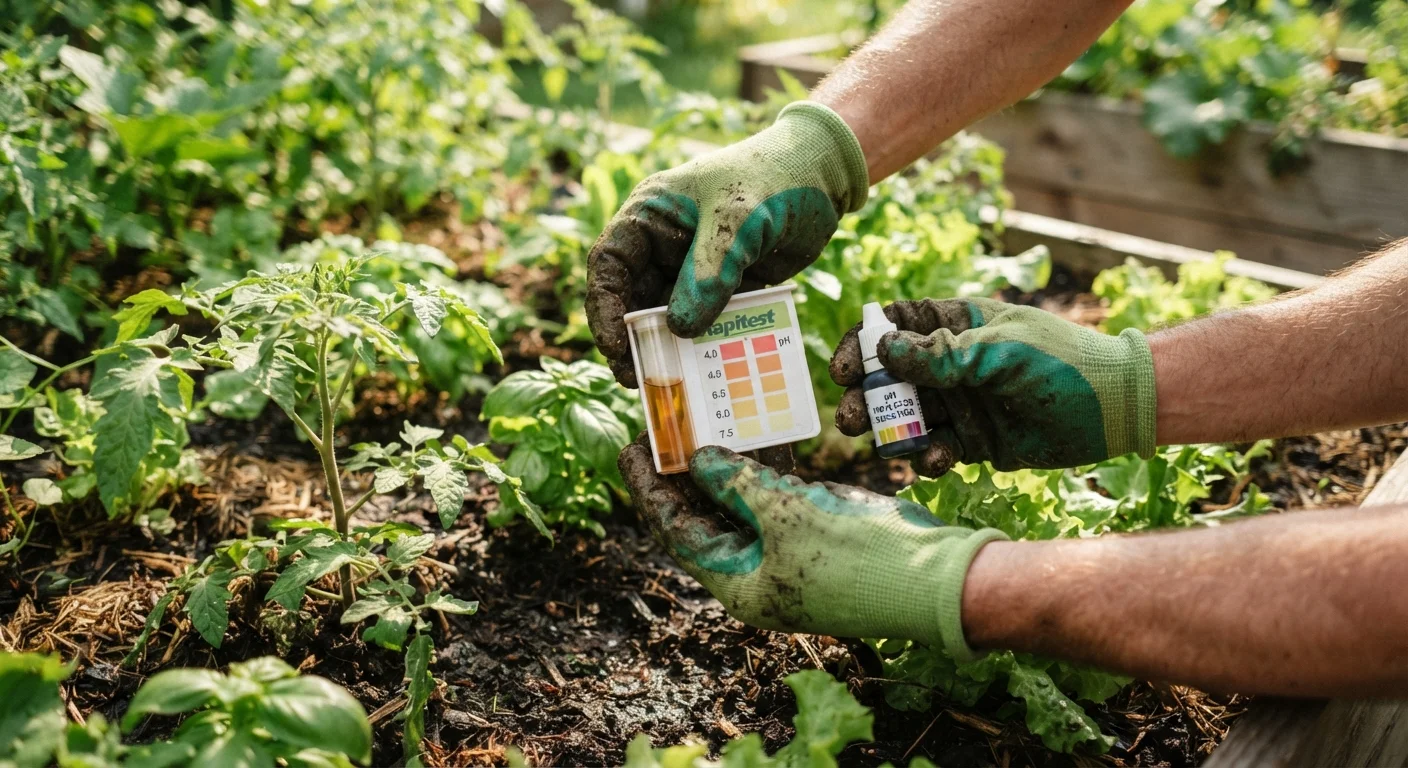
Testing is the essential first step. Home test strips or meters offer a quick baseline, while mail-in lab tests from cooperative extension services provide greater precision and often include tailored amendment advice. Collect samples from several spots in your garden at root depth - typically 4 to 6 inches - and mix them for a representative reading.
To raise pH (make soil less acidic): Apply ground agricultural limestone. Calcitic lime works well in most gardens; dolomitic lime also adds magnesium, which benefits deficient soils. Follow the rate recommended by your soil test - over-application can cause its own problems.
To lower pH (make soil more acidic): Elemental sulfur is the most reliable long-term amendment. Soil microbes convert it into sulfuric acid gradually, so results take time. Organic matter such as composted pine bark also helps acidify soil incrementally.
Test Before You Amend
Never add lime or sulfur to your garden based on guesswork - over-correcting pH can create new deficiencies and set back your plants further. A soil test result gives you a specific starting point and takes the guesswork out of how much amendment to use. Many state cooperative extension offices offer low-cost testing and will include amendment rate recommendations with your results.
Always retest after one growing season before applying additional amendments. Soil chemistry responds slowly, and patience is part of the process. Watering habits also influence how amendments move through the soil profile - see common watering mistakes that can undermine your soil improvement efforts.
Working With Your Soil's Natural Range
Sometimes the most practical approach is selecting plants suited to your existing pH rather than fighting your soil's natural chemistry. If your soil tests consistently acidic, native shrubs and acid-loving ornamentals may reward you with far less effort than repeatedly amending for plants that prefer neutral conditions. Our guide on native plants and rewilding your lawn explores how working with your local environment - including soil chemistry - can reduce maintenance significantly.
Where amendment is worthwhile, build the habit of annual testing into your gardening routine. A modest investment in understanding your soil's chemistry pays dividends across every season.