

Key Takeaways
- Synthetic fertilizers deliver nutrients quickly but don't improve soil structure over time.
- Organic fertilizers feed soil biology first, releasing nutrients more slowly and building long-term fertility.
- Neither type is universally superior - your soil condition, plant needs, and goals determine the better fit.
- Over-application of either type can harm plants, waterways, and soil health.
- A soil test before fertilizing helps you avoid guesswork and reduce waste.
Our Verdict
Synthetic fertilizers excel when plants need a fast, targeted nutrient boost, but they offer little to soil health over time. Organic fertilizers build lasting soil structure and biology, making them a strong foundation for long-term garden care. Many home gardeners find value in using both strategically rather than committing to one approach exclusively.
| Best for | Recommended |
|---|---|
| Gardeners focused on rapid correction of nutrient deficiencies | Synthetic fertilizers |
| Those building long-term soil health and sustainable gardens | Organic fertilizers |
| Vegetable and edible gardens where soil biology matters | Organic fertilizers |
| Lawns or landscapes needing precise, season-specific nutrient timing | Synthetic fertilizers |
How Each Type Actually Works
The core difference between organic and synthetic fertilizers isn't just what's in them - it's how they deliver nutrients to plants.
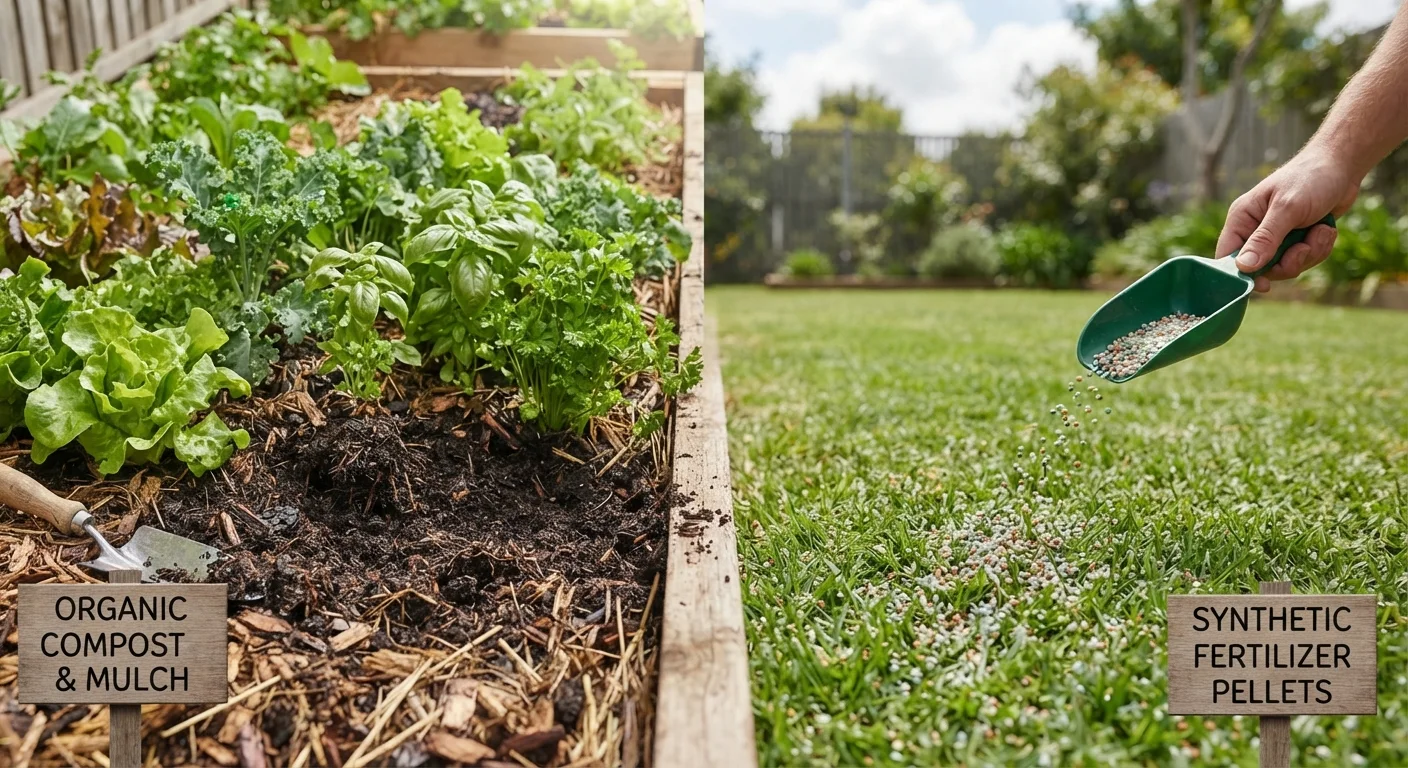
Synthetic fertilizers (also called chemical or conventional fertilizers) are manufactured from inorganic compounds, most commonly derived from mined minerals or industrial processes like the Haber-Bosch nitrogen synthesis. They contain concentrated, water-soluble nutrients in forms that plant roots absorb almost immediately. When you apply a synthetic fertilizer, plants can begin taking up nitrogen, phosphorus, or potassium within days.
Organic fertilizers come from once-living materials - things like composted manure, bone meal, blood meal, kelp, and worm castings. These materials contain nutrients bound inside complex organic molecules. Soil microbes - bacteria, fungi, and other organisms - must first break down those molecules through decomposition before plants can access the nutrients. This biological step is the defining feature of how organic fertilizers function.
In practical terms: synthetic fertilizers feed the plant directly; organic fertilizers feed the soil, which in turn feeds the plant. That distinction has real downstream consequences for soil health, plant resilience, and long-term garden performance.
| Organic Fertilizers | Synthetic Fertilizers | |
|---|---|---|
| Nutrient source | Plant, animal, or mineral materials | Manufactured inorganic compounds |
| Speed of nutrient availability | Slow (weeks to months) | Fast (days) |
| Soil health impact | Builds organic matter and microbes | Minimal to none |
| Risk of over-application | Lower; slow release buffers risk | Higher; soluble nutrients can burn or leach |
| Nutrient concentration | Generally lower | Generally higher and precise |
| Cost | Varies; often higher per unit | Typically lower per unit |
| Best use case | Long-term soil building | Targeted, fast nutrient correction |
Soil Health and Long-Term Effects
One of the most important - and often overlooked - dimensions of this comparison is what each type does to your soil over time.
Healthy garden soil isn't just dirt. It's a living ecosystem dense with microbial life, organic matter, and physical structure (called soil tilth) that allows roots to penetrate, water to drain, and air to circulate. Organic fertilizers actively support this ecosystem. As organic matter decomposes, it feeds soil organisms and contributes humus - a stable organic fraction that improves water retention, aeration, and the soil's ability to hold nutrients (known as cation exchange capacity).
Synthetic fertilizers, by contrast, contribute no organic matter and don't meaningfully support microbial communities. Repeated heavy use of high-salt synthetic formulations can actually reduce microbial diversity and, over time, lead to soil that becomes more compacted and dependent on external inputs to produce results.
This doesn't mean synthetic fertilizers are harmful when used appropriately - but it does explain why gardeners focused on long-term soil building tend to lean on organic amendments. Pairing fertilization with good mulching practices further supports soil moisture and biology year-round.
Test Before You Fertilize
A basic soil test is the most useful tool a home gardener can use before choosing any fertilizer. It reveals which nutrients are already present, which are deficient, and what your soil's pH is doing - all of which affect nutrient availability regardless of fertilizer type. Many cooperative extension services offer affordable testing kits or mail-in options. Fertilizing without this information means guessing, and guessing often leads to waste, expense, or unintended damage.
Nutrient Precision, Risk of Overuse, and Practical Considerations
Synthetic fertilizers carry clearly labeled N-P-K (nitrogen-phosphorus-potassium) ratios, making it straightforward to apply a precise dose for a specific deficiency. This precision is genuinely useful - if a soil test reveals a specific phosphorus shortfall, a targeted synthetic application corrects it efficiently. Organic products are often lower in nutrient concentration and their release rates vary by soil temperature and moisture, making exact dosing harder to predict.
However, that fast availability in synthetics also means the margin for error is narrower. Over-application is a real risk: excess soluble nutrients - particularly nitrogen - can leach into groundwater or run off into nearby waterways, contributing to algal blooms and water quality problems. High-salt formulations can also burn roots and foliage if applied incorrectly.
Organic fertilizers release nutrients more gradually, which reduces leaching risk but requires patience. In cold or very dry soils, microbial activity slows, meaning nutrient release slows too - organic inputs work best when the soil is biologically active.
Before buying any fertilizer, a basic soil test (available through many cooperative extension services) tells you what your soil actually needs. This step reduces waste, prevents over-fertilization, and helps you choose the right product type. Whether you're working on a vegetable bed, lawn, or landscape border, the same principle applies that governs decisions like choosing between grass seed and sod: match the tool to the actual conditions, not just general habit.
Making the Right Choice for Your Garden
Neither organic nor synthetic fertilizers are universally right or wrong. The better choice depends on what your soil currently needs, what you're growing, and what your gardening goals are.
If you're starting a new garden bed with depleted or compacted soil, organic amendments like compost and aged manure build the biological foundation that supports plant health for seasons to come. If you're maintaining an established lawn and need a seasonal nitrogen boost for green growth, a well-timed synthetic application can be both practical and effective.
Many experienced gardeners use both: organic matter as a baseline soil amendment applied each season, and targeted synthetic products only when a specific, confirmed deficiency requires a quick response. This hybrid approach balances immediacy with sustainability.
Whatever you choose, applying the correct rate matters more than the product type. Follow label directions carefully, account for your soil test results, and remember that more fertilizer rarely means better results - it often means more problems.
This article is for general informational and educational purposes only. Consult your local cooperative extension service or a certified horticultural professional for guidance specific to your soil type, climate, and planting conditions.