

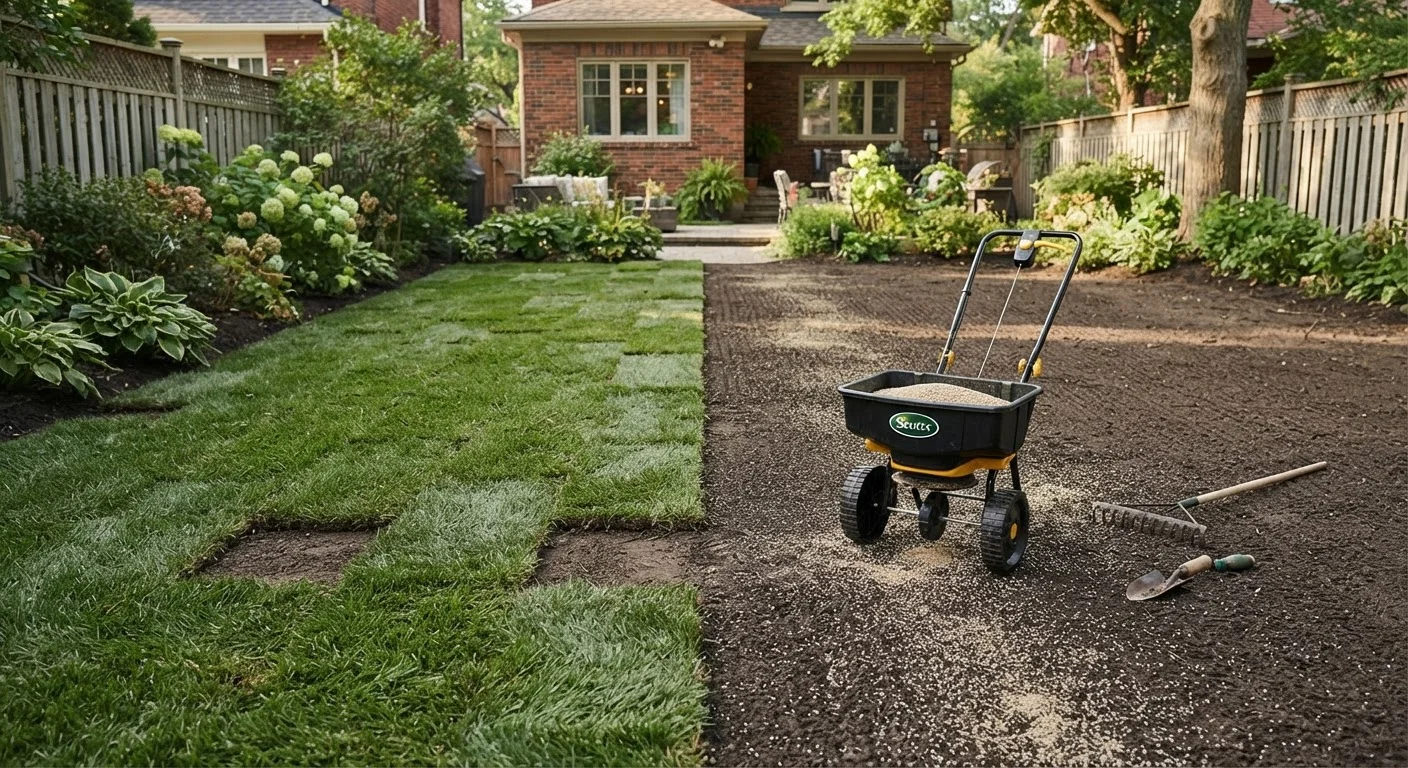
Key Takeaways
- Grass seed costs considerably less per square foot than sod, but demands more time and consistent watering before it establishes.
- Sod provides near-immediate ground cover and can be used in most seasons, while seed has narrower planting windows.
- Soil preparation is equally critical for both methods - skipping it is the most common reason either approach fails.
- Sod is generally better for slopes and erosion-prone areas; seed allows access to a wider range of grass varieties.
- Neither method guarantees a perfect lawn without ongoing fertilization, irrigation, and mowing discipline.
Option A
Grass Seed
The patient, budget-friendly foundation builder.
Best for: Homeowners willing to invest several months of care in exchange for significantly lower upfront costs and greater grass-variety flexibility.
Option B
Sod
The instant, walk-on-it-sooner solution.
Best for: Homeowners who need fast results, are managing erosion on slopes, or are tackling high-visibility areas where bare soil is not acceptable.
If you're working with a tight budget and a large area to cover
Grass Seed
Seed costs a fraction of sod per square foot, making it far more practical for covering hundreds or thousands of square feet without overspending.
If you need usable turf quickly - for children, pets, or an event
Sod
Sod knits into soil within two to three weeks and can handle light foot traffic far sooner than seeded grass, which may take several months to fully establish.
If you're repairing a slope or an area prone to runoff
Sod
The dense root mat in sod holds soil in place immediately, reducing erosion risk that bare, seeded ground cannot address until germination is complete.
If you want a specific regional grass variety not available as sod
Grass Seed
Seed catalogs offer far more variety options - including drought-tolerant and native-adjacent grasses - than what local sod farms typically stock.
If you're a first-time homeowner doing a smaller patch repair
Grass Seed
Small-area overseeding is forgiving, inexpensive, and a good way to build lawn-care confidence before committing to larger projects.
The Core Trade-Off: Speed vs. Cost
The grass seed versus sod decision usually comes down to two competing priorities: how fast you need results and how much you're willing to spend. Sod - pre-grown grass harvested in rolls or slabs - delivers nearly instant ground cover. Grass seed, by contrast, requires germination, establishment, and months of careful nurturing before it looks like a real lawn.
On cost, the gap is substantial. Sod typically runs several times more per square foot than seed, and that difference compounds quickly on larger lots. For a homeowner covering 2,000 square feet, the price difference can reach into the hundreds or even thousands of dollars depending on your region and grass type. Seed is also lighter to transport and requires no special equipment to apply.
The trade-off is time. Cool-season grasses like tall fescue or Kentucky bluegrass seed best in early fall; warm-season varieties like Bermuda or zoysia prefer late spring. Miss that window and your seed may struggle. Sod, while not season-proof, has a wider installation range and bounces back from mild heat or cold more reliably than fragile seedlings.
| Criterion | Grass Seed | Sod |
|---|---|---|
| Upfront cost | Low - cents per square foot | High - several times more per sq ft |
| Time to usable lawn | 3-6 months | 3-6 weeks |
| Planting season flexibility | Narrower - species-specific windows | Broader - most non-frozen seasons |
| Variety selection | Very wide | Limited to what farms stock |
| Erosion control | Poor until established | Immediate root mat coverage |
| Watering intensity | Very high during germination | High for 2-3 weeks, then normal |
| Labor required | Moderate - spreading and ongoing care | Higher upfront - laying and cutting rolls |
| Suitable for slopes | Poor - seeds and seedlings wash away | Good - holds soil immediately |
Soil Preparation: The Step Neither Can Skip
Whether you're laying sod or sowing seed, soil preparation is where most lawn projects succeed or fail. Compacted, nutrient-poor, or improperly graded soil will undermine both approaches - no matter how premium your seed blend or how fresh your sod delivery.
Start by testing your soil's pH. Most turf grasses prefer a range of 6.0 to 7.0. A basic soil test, available through many cooperative extension services, tells you whether you need to add lime to raise pH or sulfur to lower it. Amend the soil before you plant, not after.
Till or loosen the top four to six inches of soil, remove debris and large rocks, and rake to a relatively even grade. For seed, this loose seedbed is essential - seeds need soil contact to germinate. For sod, even grading prevents the rolls from sitting on high spots or bridging air pockets, which can dry out roots and cause die-back.
Whatever method you choose, a month-by-month lawn care reference can help you align preparation tasks with your climate's seasonal rhythms.
A Note on Grading and Drainage
Proper grading - ensuring the soil surface slopes slightly away from your home's foundation - is just as important as soil chemistry. Poor drainage causes standing water that drowns both seed and sod roots. If your yard has significant low spots or drainage problems, address those before investing in any grass establishment method. In some cases, a landscaping professional can assess whether regrading is needed.
Watering, Establishment, and Realistic Timelines
New sod needs to be watered deeply and consistently for the first two to three weeks while it roots into the underlying soil. After that, you can taper to a normal irrigation schedule. Light foot traffic is usually possible within three to four weeks, and the lawn is generally considered established in six to eight weeks.
Seeded lawns demand more patience. Depending on the grass species, germination alone takes five to thirty days. Full establishment - meaning the grass can handle regular mowing and moderate traffic - typically takes three to six months. During that entire period, the soil surface must stay consistently moist. Letting it dry out for even a day or two can kill emerging seedlings before they develop a root system capable of surviving on their own.
For irrigation strategy during establishment, it's worth understanding your options. A comparison of drip irrigation and sprinkler systems can help you identify the setup most suited to your yard layout and watering goals.
Once either method is established, ongoing fertilization becomes important. Understanding the difference between organic and synthetic fertilizers will help you make informed decisions about feeding your new lawn without guessing.
Which One Actually Works for Your Yard?
Both grass seed and sod can produce a healthy, attractive lawn - the method that works better is the one matched to your specific conditions. Sod makes sense when you have a visible area that needs to look presentable quickly, when you're dealing with a slope where bare soil would erode, or when the installation window falls outside the ideal seeding season. It's also worth considering if you've struggled with seed germination in the past due to irregular watering or bird pressure.
Seed is the stronger choice when budget is a primary concern, when you want access to a broader selection of grass varieties, or when you're filling in a large area where the timeline is flexible. It also rewards patient, attentive gardeners who can commit to the daily watering routine establishment demands.
One thing worth questioning: the assumption that a traditional lawn is always the right answer. If your yard faces persistent drought, shade, or heavy maintenance burden, it may be worth exploring alternatives. Replacing turf with native plants is a growing approach that some homeowners find reduces both cost and effort over the long term.
Whichever route you take, avoid the common myths that derail new lawns - like the belief that more seed always means thicker grass, or that watering once daily is sufficient. Common garden myths can quietly sabotage even well-prepared projects.