

Key Takeaways
- Drip irrigation delivers water directly to plant roots, reducing evaporation and weed growth.
- Sprinkler systems cover large areas quickly but lose more water to evaporation and wind drift.
- Drip systems typically cost less to install for small gardens but require more hands-on maintenance.
- Sprinklers are generally better suited to lawns; drip works best for beds, borders, and containers.
- Both systems benefit from timers and pressure regulators to improve efficiency.
- Your yard's shape, soil type, and plant mix should drive the choice between the two.
Option A
Drip Irrigation
The precision, water-saving option for beds and borders.
Best for: Vegetable gardens, raised beds, shrubs, and drought-sensitive plantings where targeted root-zone watering matters most.
Option B
Sprinkler Systems
The broad-coverage solution for lawns and open spaces.
Best for: Turf grass, large open flower beds, and any area where even overhead coverage across a wide surface is the priority.
If you grow vegetables, herbs, or a raised bed garden
Drip Irrigation
Drip lines deliver water precisely at the root zone, which helps prevent fungal disease on leaves and conserves water in food-producing beds.
If you need to water a large lawn or broad turf area
Sprinkler Systems
Sprinklers distribute water evenly across wide open spaces efficiently, making them the practical standard for lawn irrigation.
If water conservation or a drought-prone climate is a major concern
Drip Irrigation
Drip systems can use significantly less water than overhead sprinklers by minimizing evaporation and runoff.
If you want a low-maintenance, set-and-forget watering solution
Sprinkler Systems
In-ground sprinkler systems with automatic timers require minimal seasonal adjustment once professionally installed and calibrated.
If your yard includes a mix of lawn and planting beds
Drip Irrigation
Many gardeners combine both systems - sprinklers for turf, drip for beds - but a drip-first approach on beds reduces overwatering of non-turf areas.
How Each System Works
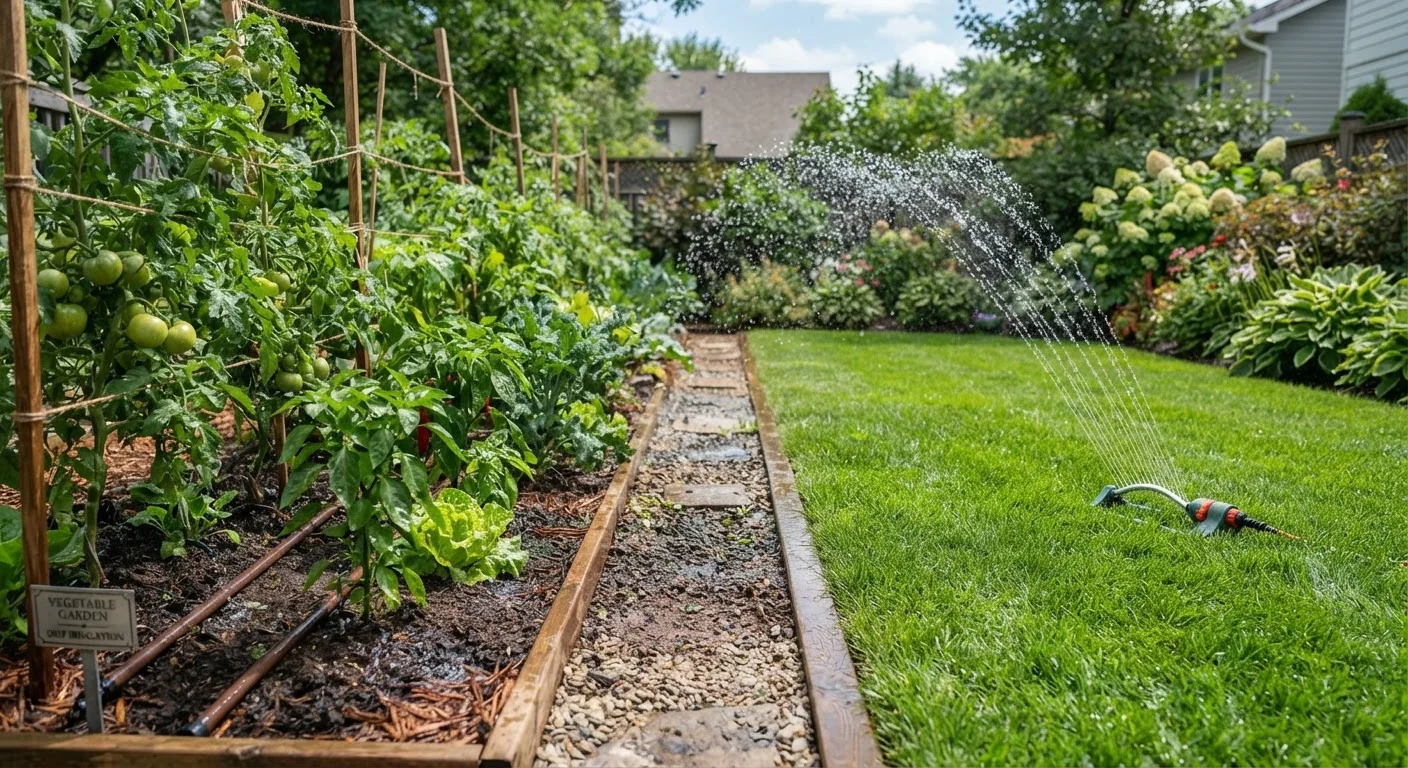
Understanding the mechanics of each system helps clarify where one outperforms the other. Drip irrigation uses a network of flexible tubing, emitters, and sometimes soaker hoses laid at or just below the soil surface. Water seeps slowly and directly to the root zone of individual plants, keeping moisture where plants need it most. Sprinkler systems - whether portable oscillating heads or in-ground pop-up rotors - project water into the air and let it fall like rain across a defined coverage area.
Each approach has real strengths. Drip irrigation limits water contact with foliage, which can reduce the spread of certain fungal diseases in vegetable and ornamental beds. Sprinklers excel at delivering uniform moisture across lawns and wide planting zones quickly. To dig deeper into how watering habits affect plant health, see our guide to common lawn watering mistakes.
| Criterion | Drip Irrigation | Sprinkler Systems |
|---|---|---|
| Best use case | Beds, borders, vegetables, containers | Lawns, turf, wide open areas |
| Water efficiency | High - minimal evaporation | Moderate - subject to wind and heat loss |
| Installation complexity | Low to moderate - DIY-friendly | Moderate to high - often requires a pro |
| Upfront cost (typical) | Lower for small-scale gardens | Higher, especially for in-ground systems |
| Maintenance needs | Emitter cleaning, tubing checks | Head adjustment, winterization |
| Foliage wetting | Minimal - water stays at root zone | High - wets leaves and stems |
| Coverage uniformity | Plant-by-plant precision | Broad, even area coverage |
| Automation compatibility | Yes - works with timers and sensors | Yes - standard with most in-ground systems |
Efficiency, Water Use, and Cost
Water efficiency is one of the most important factors for many homeowners. Drip systems can reduce outdoor water use compared to conventional overhead sprinklers because they apply water slowly at the root zone, minimizing evaporation and surface runoff. Sprinkler systems, by contrast, are more exposed to wind drift and mid-day heat loss - particularly when run at the wrong time of day.
30-50%
Potential water savings with drip vs. sprinklers
The EPA's WaterSense program notes that efficient irrigation practices, including drip systems, can significantly reduce outdoor water use compared to conventional overhead methods.
50%+
Share of home water use applied outdoors
According to the EPA, roughly half of residential water use goes to landscape irrigation, making system choice a meaningful conservation decision.
Early morning
Optimal watering time for both systems
Watering before 10 a.m. reduces evaporation losses and allows foliage to dry before evening, regardless of which system you use.
Installation costs vary based on yard size and system complexity. A basic drip kit for a small vegetable garden can be assembled affordably with off-the-shelf components. An in-ground sprinkler system with multiple zones typically involves higher upfront costs and usually benefits from professional installation to ensure proper pressure, head placement, and zone design. Both systems can be made more efficient with pressure regulators and automatic timers, which prevent overwatering and account for rainfall.
Maintenance requirements also differ. Drip emitters and tubing can clog over time and may be disrupted by garden tools, rodents, or freeze-thaw cycles. Sprinkler heads need periodic adjustment to maintain coverage and avoid watering pavement. Reviewing your month-by-month lawn care calendar can help you schedule system checks alongside other seasonal tasks.
Choosing the Right System for Your Garden
The best system depends on what and where you're growing. Consider these key factors:
- Plant types: Drip is well-suited for vegetable rows, raised beds, shrubs, and container plantings. Sprinklers are better matched to grass and sprawling ground covers.
- Garden shape: Irregular beds and densely planted areas are easier to serve with drip lines. Rectangular or open lawns work well with sprinkler zones.
- Soil and slope: Heavy clay soils absorb water slowly and may produce runoff from sprinklers; drip's slower delivery rate matches the soil's absorption capacity. Slopes also benefit from drip to reduce runoff.
- Climate: Hot, dry, or water-restricted regions favor drip for its efficiency. Cooler, humid climates may tolerate sprinklers with fewer losses.
Many gardeners find that a hybrid approach - drip for planting beds, sprinklers for turf - delivers the best of both systems. If you're also weighing how to establish or improve your lawn from the ground up, our comparison of grass seed vs. sod covers the trade-offs in establishment methods. And for gardeners working without a dedicated yard at all, container gardening paired with a simple drip or self-watering setup can be highly effective.
Before committing to any system, check whether your local municipality has watering restrictions, rebate programs for water-efficient irrigation, or requirements for backflow prevention devices - regulations vary by region. It's also worth verifying whether permits are required for in-ground work in your area.