

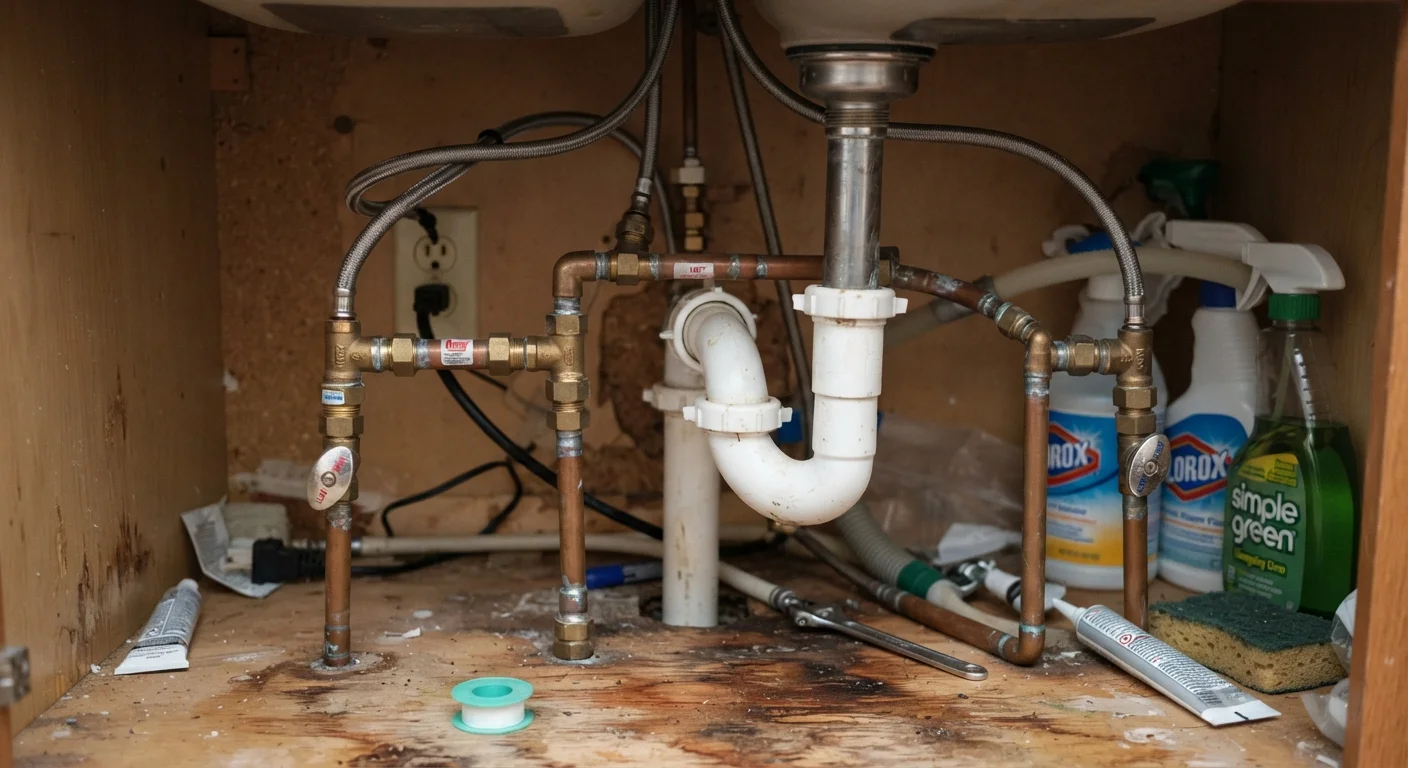
Key Takeaways
- Missing shutoff valves at fixtures turn minor leaks into major water damage emergencies.
- Mixing incompatible pipe materials without proper fittings causes corrosion and eventual failure.
- Skipping venting requirements leads to slow drains, gurgling, and sewer gas infiltration.
- Unpermitted plumbing work can void home insurance coverage and create costly sale complications.
- Proper pipe slope on drain lines is critical - too flat causes clogs, too steep causes solids to separate.
Why Small Plumbing Decisions Have Outsized Consequences
Plumbing is one of those home systems that mostly disappears behind walls and under floors - which is exactly why poor decisions during installation or repair are so easy to overlook until something goes wrong. Unlike a crooked tile or a squeaky hinge, a misrun drain line or a missing valve stays hidden until it produces a flooded cabinet, a persistent sewer smell, or a repair bill that dwarfs the original shortcut.
The good news is that most of these mistakes are avoidable with basic awareness. Whether you're supervising a contractor, tackling a bathroom update yourself, or simply trying to understand your home's systems, knowing where plumbing decisions go sideways helps you ask better questions and catch problems before they're buried in drywall. See our homeowner's planning checklist for a broader look at what to confirm before any project begins.
Installing fixtures without individual shutoff valves.
Why it happens: Homeowners and even some contractors skip fixture-level shutoffs to save time or money during installation, assuming the main shutoff is sufficient.
Mixing incompatible pipe materials without the correct transition fittings.
Why it happens: Older homes often have galvanized steel or cast iron pipes, and repairs or additions frequently involve newer copper or PVC. Connecting them directly without a dielectric union or approved transition fitting causes accelerated corrosion at the joint.
Running drain lines with incorrect slope.
Why it happens: The intuition is that steeper is better for draining, but both too-flat and too-steep slopes create problems. Installers eyeball the pitch or follow floor structure without measuring.
Omitting or improperly sizing drain vents.
Why it happens: Venting is invisible and feels abstract - homeowners often don't realize every drain trap requires a vent to function correctly. Contractors cutting corners on rough-in work sometimes skip or undersize vent runs.
Using the wrong type of pipe for the application.
Why it happens: Not all plastic pipe is interchangeable. PVC, CPVC, and PEX each have different pressure ratings and temperature tolerances. Homeowners often grab whatever is familiar or available.
Skipping permits for plumbing modifications that legally require them.
Why it happens: Pulling a permit feels like extra hassle and expense, so homeowners and some contractors avoid it on renovations they assume are straightforward.
Permits, Inspections, and When to Call a Professional
One pattern runs through almost every costly plumbing mistake: the work bypassed the review process that would have caught it. Most jurisdictions in the U.S. require permits for new plumbing runs, drain or vent modifications, and water heater replacements. An inspection gives a licensed official the chance to spot a missing trap, an illegal material, or an improper slope before the wall closes up.
Unpermitted Work Can Follow the House
Plumbing modifications done without a required permit don't just risk code violations during the project - they can surface at sale time, when a buyer's inspector flags unlicensed work. In some cases, the seller is required to disclose unpermitted work or bring it into compliance before closing. Verify local permit requirements with your building department before work begins, not after.
If you're unsure whether your project requires a permit, learn what a building permit actually covers - the threshold is often lower than homeowners expect. Similarly, plumbing shares wall cavities and timelines with electrical work, and mistakes in both trades follow the same pattern. Understanding where DIY electrical work goes wrong is equally worthwhile reading before opening walls. For homeowners tackling a full bathroom overhaul, the end-to-end bathroom remodeling guide walks through plumbing integration at every stage.
Finally, your water meter is an underused diagnostic tool. Reading your home's water meter can reveal hidden leaks before they become structural problems - a simple habit that costs nothing and can save thousands.
This article is for general informational purposes only. Plumbing codes, permit requirements, and safe practices vary by location. Always consult a licensed plumber and verify local code requirements before undertaking any plumbing work in your home.