

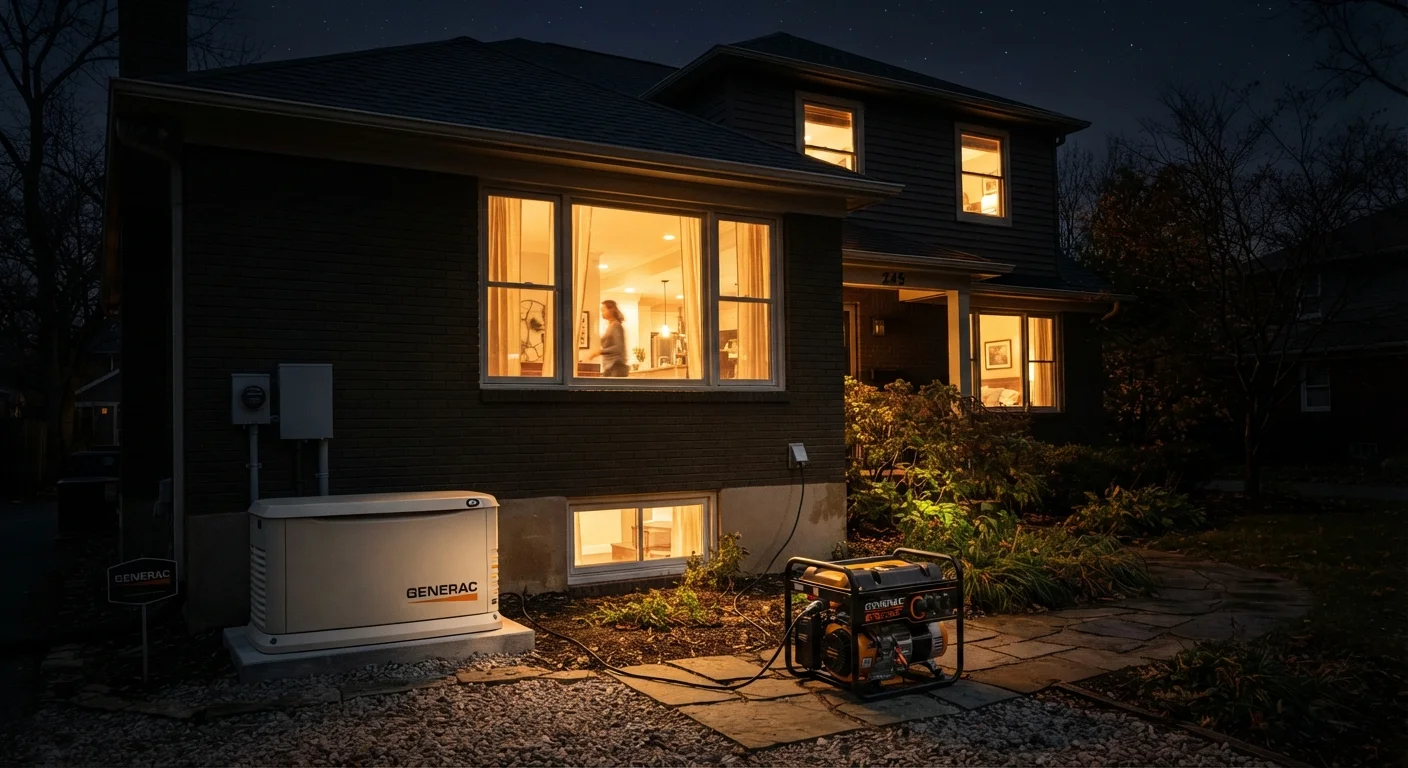
Key Takeaways
- Portable generators are affordable and flexible but require manual setup and safe outdoor operation.
- Standby generators switch on automatically and can power an entire home, but require professional installation.
- Solar battery systems are silent and emissions-free but have limited capacity and higher upfront costs.
- Fuel type, run time, capacity, and installation complexity vary significantly across all three options.
- Local codes and utility requirements often govern what equipment you can legally install.
Our Verdict
No single backup power system is right for every household. Portable generators offer practical, low-cost coverage for short outages; standby generators provide seamless, whole-home protection; and solar battery systems suit those prioritizing clean energy and quiet operation. The best fit depends on your outage history, budget, home size, and energy values.
| Best for | Recommended |
|---|---|
| Homeowners on a tight budget needing occasional backup power | Portable Generator |
| Those in areas with frequent or prolonged outages needing automatic whole-home coverage | Standby Generator |
| Households with solar panels seeking silent, emissions-free backup | Solar Battery System |
| Anyone prioritizing minimal installation requirements and portability | Portable Generator |
Why Backup Power Matters - and How the Options Differ
Power outages can last anywhere from a few minutes to several days, and their consequences range from minor inconvenience to serious safety risks - particularly for households relying on medical equipment, climate control, or refrigerated medications. Choosing the right backup power system means weighing capability against cost, convenience, and installation requirements.
Three main categories serve most American homeowners: portable generators, standby generators, and solar battery backup systems. Each uses a different energy source and delivery method, which shapes how they perform during real outages. If you already track your home's mechanical systems seasonally, this decision fits naturally into that broader maintenance planning - see our seasonal home systems walkthrough for guidance on assessing your readiness before each season.
| Portable Generator | Standby Generator | Solar Battery System | |
|---|---|---|---|
| Typical Power Output | 3,000-10,000 watts | 10,000-20,000+ watts | 5-20 kWh capacity |
| Fuel Source | Gasoline, propane, or dual-fuel | Natural gas or propane | Solar / grid electricity |
| Startup | Manual | Automatic (within seconds) | Automatic |
| Installation Required | Minimal (transfer switch recommended) | Extensive - licensed pro required | Moderate to extensive |
| Noise Level | Loud (65-75 dB) | Moderate (65-70 dB) | Silent |
| Emissions | Yes - outdoor use required | Yes - vented externally | None |
| Approximate Upfront Cost | Lower | Highest | High |
| Run Time | Limited by fuel tank | Extended via piped gas | Limited by battery capacity |
Portable Generators: Flexibility at a Trade-Off
Portable generators are gasoline-, propane-, or dual-fuel-powered units that you wheel out, fuel up, and start manually. They typically output between 3,000 and 10,000 watts - enough to run a refrigerator, lights, a window AC unit, and a few other appliances simultaneously, though not an entire home on a standard circuit.
The key advantage is cost: entry-level models are significantly less expensive than installed alternatives, and no permanent infrastructure is required. However, portable generators must always be operated outdoors, at least 20 feet from windows, doors, and vents, to prevent deadly carbon monoxide buildup indoors. They also require a manual transfer switch or interlock kit if you want to connect them safely to your home's electrical panel - a step that should be handled by a licensed electrician to meet code requirements.
Run time is limited by fuel tank capacity, and extended outages mean repeated refueling, which can be challenging if local gas stations lose power too. Noise is another real consideration: most portable generators operate at 65-75 decibels, roughly equivalent to a vacuum cleaner running continuously.
Carbon Monoxide Is a Serious Risk
Never run a portable generator inside your home, garage, basement, or any partially enclosed space. Carbon monoxide (CO) is colorless and odorless and can become lethal within minutes. Always operate portable generators outdoors, at least 20 feet from any opening, and install battery-powered CO detectors on every level of your home. This is non-negotiable safety practice, not a precaution you can skip in a pinch.
Standby Generators: Automatic Whole-Home Coverage
Standby generators are permanently installed units - typically fueled by natural gas or propane - that connect directly to your home's electrical system through an automatic transfer switch (ATS). When utility power drops, the ATS detects the outage and starts the generator within seconds, restoring power without any action from you.
Whole-home standby units commonly range from 10 to 20+ kilowatts, capable of running central HVAC, well pumps, and multiple large appliances simultaneously. Because they run on piped natural gas in many cases, fuel supply is rarely an issue during regional storms.
The trade-offs are cost and commitment. Installation requires a licensed electrician and often a gas plumber, plus permits and utility coordination. Local inspection requirements vary - always verify what your municipality requires before proceeding. Standby units also need annual maintenance (oil changes, load testing) to remain reliable.
One planning note: standby generators typically run on dedicated circuits separate from smart home systems. If you rely on cloud-connected devices, review our article on local vs. cloud-dependent smart home devices to understand which systems may stop functioning if your internet service is also disrupted.
Solar Battery Systems: Clean and Quiet Backup
Solar battery backup systems - such as home energy storage units paired with rooftop solar - store electricity generated during the day and discharge it when the grid goes down. Unlike fuel-based generators, they produce no emissions, operate silently, and can recharge daily as long as sunlight is available.
Capacity is the main limitation. A typical residential battery stores between 10 and 20 kilowatt-hours. That's meaningful coverage for essential loads - refrigerator, lights, phone charging, a few outlets - but running central air conditioning or an electric range will drain the battery significantly faster. Multiple units can be stacked to increase capacity, but costs rise accordingly.
Installation requires a licensed electrician and, if paired with solar panels, often a separate solar contractor and utility interconnection agreement. Battery systems also involve inverter technology and monitoring software, which adds another layer of complexity compared to a conventional generator. That said, for households already invested in solar energy, a battery system is a natural complement rather than a standalone purchase.
For homes where multiple systems interact - water heaters, HVAC, generators - understanding each system's energy demands is important. Our overview of tank vs. tankless water heaters illustrates how appliance choices ripple into your home's overall energy load.
Key Factors to Weigh Before You Decide
Beyond the basic comparisons, a few practical considerations should shape your final decision:
- Outage frequency and duration: If your area sees brief, rare outages, a portable generator may suffice. Frequent multi-day outages favor a standby system.
- Critical loads: Identify which appliances are non-negotiable - medical equipment, heat, well pump - and confirm your chosen system can support them continuously.
- Local codes and permits: All three types involve some regulatory consideration. Standby units and battery systems in particular require permits and inspections in most jurisdictions. Consult your local building department before purchasing.
- Fuel availability: Natural gas is generally reliable during storms; gasoline can become scarce. Propane requires on-site tank management. Solar-plus-battery depends on sun exposure.
- Budget: Costs span a wide range. Portable generators are the most accessible entry point. Standby systems and battery installations represent significant capital investments. Get multiple contractor quotes and verify what's included.
This article is for general informational purposes only. Installation of electrical, gas, and backup power equipment should be performed by licensed professionals in accordance with local codes. Always consult qualified contractors and your utility provider before purchasing or installing any backup power system.