

Key Takeaways
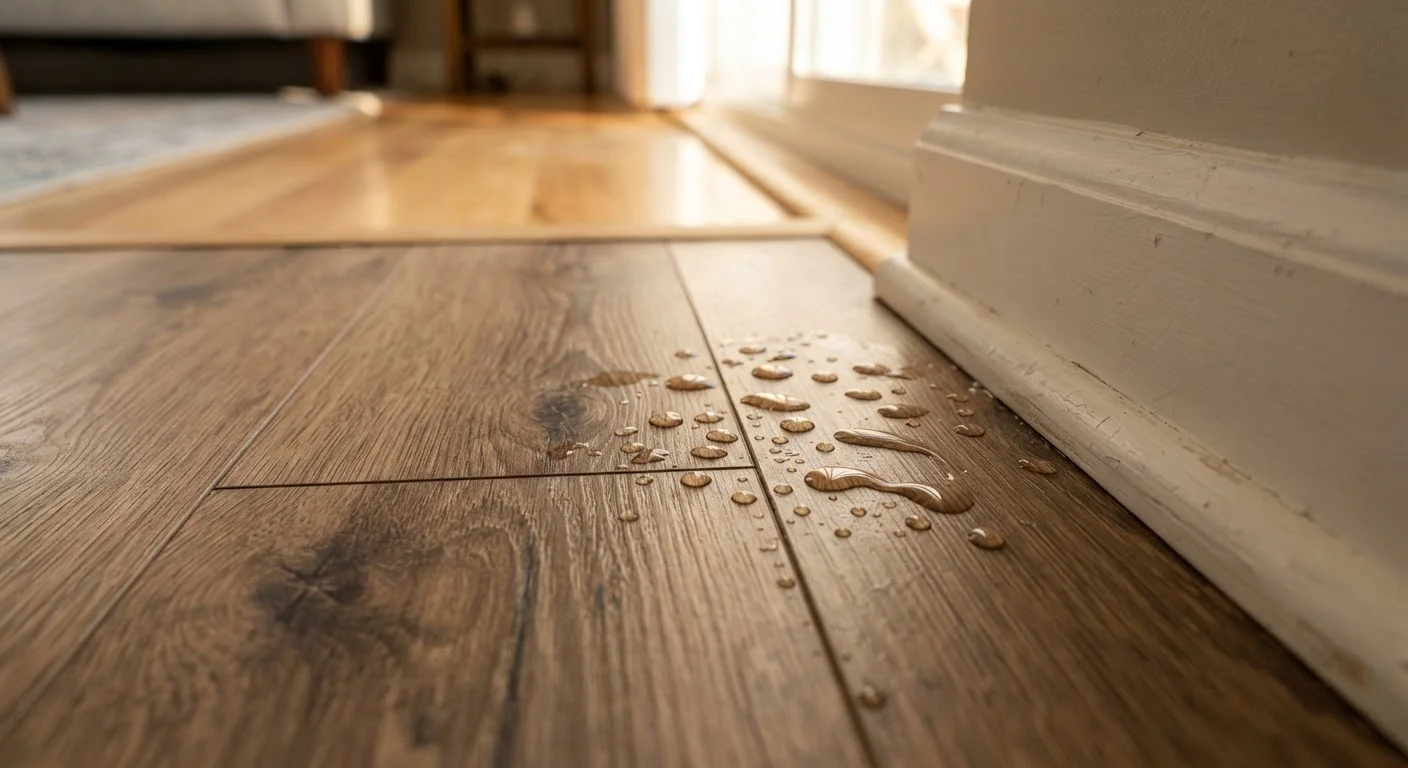
- 'Waterproof' flooring resists surface water but is rarely protected against moisture from below or the sides.
- Subfloor moisture, seam gaps, and improper installation are the most common causes of water damage in 'waterproof' floors.
- Luxury vinyl plank (LVP) cores are waterproof, but attached underlayment and locking joints can still trap moisture.
- Mold can grow beneath any flooring type if moisture becomes trapped between the product and the subfloor.
- Proper installation, vapor barriers, and prompt spill cleanup are essential regardless of flooring label.
What 'Waterproof' Actually Means on a Flooring Label
Walk into any flooring showroom and you'll see the word waterproof printed prominently on packaging for luxury vinyl plank (LVP), waterproof laminate, and even some engineered wood products. What that label actually communicates is narrower than most homeowners assume.
In the flooring industry, waterproof typically means the core material itself will not swell, delaminate, or warp when exposed to standing surface water - for a limited period. It is a material property claim about the plank or tile, not a guarantee about your entire installed floor system. The seams between planks, the subfloor beneath, and the gap at the perimeter of the room are all outside the scope of that claim.
For a fuller comparison of how different materials handle moisture, see our side-by-side flooring guide.
Myth
If a floor is labeled waterproof, I don't need to worry about spills or moisture in that room.
Fact
The waterproof label applies to the plank core, not the full installation. Seams, edges, and the subfloor beneath remain vulnerable.
Flooring manufacturers test plank cores for water absorption in controlled conditions. What they don't certify is how your specific installation will handle a pooled spill near a toilet base for 48 hours, or persistent humidity coming up through a concrete slab. Surface spills should still be cleaned promptly, and any room with consistent moisture exposure - like a full bathroom - requires additional sealing and vapor management regardless of flooring type.
Myth
Mold can't grow under waterproof flooring because water can't get through.
Fact
Mold grows wherever moisture and organic material meet, and moisture can reach the subfloor from below even when the surface stays dry.
Concrete subfloors release moisture vapor that migrates upward through capillary action. If that vapor condenses beneath an impermeable waterproof floor, the underside of the flooring or the subfloor itself can sustain mold growth - with no visible sign on the surface above. A musty odor or soft spots underfoot are common first indicators that moisture has accumulated beneath the floor.
Myth
Waterproof laminate and waterproof LVP are essentially the same product.
Fact
Waterproof LVP uses a solid vinyl or stone-plastic composite core; waterproof laminate still uses a wood-fiber core with a water-resistant coating that has real limits.
Traditional laminate is made from high-density fiberboard (HDF), which swells significantly when wet. Waterproof laminate uses either a denser, treated core or adds a protective coating, but wood-fiber materials are inherently more vulnerable to moisture than a fully synthetic vinyl core. LVP (luxury vinyl plank) and SPC (stone-plastic composite) products are more genuinely resistant to moisture absorption at the core level - though the seam and subfloor vulnerabilities described above still apply to both.
Myth
Installing waterproof flooring in a basement eliminates the need for a vapor barrier.
Fact
Basements and concrete slabs produce significant moisture vapor, and most manufacturers still require or recommend a vapor barrier regardless of flooring type.
Concrete is not a sealed surface - it releases moisture continuously, and the rate increases with ground saturation after rain. A vapor barrier (typically a polyethylene sheet at least 6 mil thick, or a manufacturer-specified underlayment with integrated vapor protection) is standard practice for below-grade installations. Skipping it because the flooring is labeled waterproof is one of the most common and costly installation mistakes homeowners make in basements.
Myth
Click-lock joints on waterproof floors create a watertight seal between planks.
Fact
Click-lock joints hold planks together mechanically but are not designed or tested as waterproof seals.
The tongue-and-groove or click-lock mechanisms used in floating floor systems are engineered for stability and ease of installation - not for sealing out liquid water. Water that sits on seams long enough, especially thin water from a slow appliance leak or a damp mop used excessively, can travel through those joints. In consistently wet areas, fully adhered installations (where planks are glued to the subfloor) offer better protection than floating systems because they eliminate the channel beneath the floor where water could travel.
The Vulnerabilities Marketers Don't Highlight
Even if a plank's core won't absorb water, your floor installation has multiple entry points where moisture can infiltrate and cause damage over time.
~90%
Water damage claims involving subfloor or seam infiltration
Industry flooring installers commonly report that the majority of moisture damage in 'waterproof' floors originates from below or through seams rather than from surface spills.
24-48 hrs
Time before mold can begin developing in damp conditions
The EPA notes that mold can begin to grow on damp surfaces within 24 to 48 hours under the right temperature and humidity conditions.
Subfloor Moisture Is the Hidden Threat
Most water damage in so-called waterproof floors originates from below, not above. Concrete slabs emit moisture vapor continuously, and if the relative humidity beneath the flooring is high enough, condensation forms and becomes trapped. Over weeks or months, this creates ideal conditions for mold growth on the underside of the flooring and on the subfloor itself.
Seams and Expansion Gaps
Click-lock LVP and floating laminate systems rely on tight mechanical joints - but those joints are not sealed. Water that lingers near seams, especially in bathrooms, laundry rooms, or around dishwashers, can work its way through over time. Similarly, the small expansion gap left at baseboards and walls (required to allow for thermal movement) can let water travel laterally under the floor. If you're sealing tile transitions or wet areas, our guide to grout, mortar, and caulk explains which materials belong where.
Wet Areas Require More Than Waterproof Flooring
Bathrooms, laundry rooms, and spaces around dishwashers have consistent moisture exposure that exceeds what most waterproof flooring is tested for. In these spaces, consider fully adhered installation methods, sealed perimeter caulking, and verify that the specific product you choose is rated for wet-area use by its manufacturer. Floating installations are generally not recommended directly adjacent to toilets, showers, or sink bases without careful sealing.
Underlayment and Attached Padding
Many waterproof LVP products come with a pre-attached foam underlayment. While convenient, foam padding is porous and can retain moisture if water reaches it. Once saturated, it takes a long time to dry - and trapped humidity underneath an impermeable vinyl layer creates exactly the conditions mold needs.
How to Actually Protect Your Floor From Water Damage
Understanding the limits of waterproof labeling points directly toward the practices that genuinely protect your floors over the long term.
- Test your subfloor moisture before installation. Inexpensive moisture meters can measure concrete slab moisture content. Most flooring manufacturers specify a maximum acceptable level in their installation guidelines - consult those before laying any product.
- Use an appropriate vapor barrier. In basements and over concrete slabs, a polyethylene vapor barrier between the concrete and the flooring helps block moisture vapor transmission. Check whether your flooring's manufacturer requires or allows a separate barrier, since some pre-attached underlayments are not compatible with additional layers.
- Seal perimeter transitions. In wet areas like bathrooms and laundry rooms, apply a flexible, waterproof caulk at the base of baseboards and around fixtures. This closes the gap where water can migrate laterally under the floor.
- Clean up spills promptly. Even with waterproof flooring, allowing water to sit near seams or at edges for extended periods increases the chance of infiltration.
- Monitor for hidden leaks. Slow leaks from supply lines or appliances may not be visible until damage is advanced. Learning to read your home's water meter can help you catch problems before they reach your floor.
The bottom line: treat waterproof flooring as a moisture-resistant surface that benefits from - and in many conditions requires - proper installation practices and routine vigilance.