

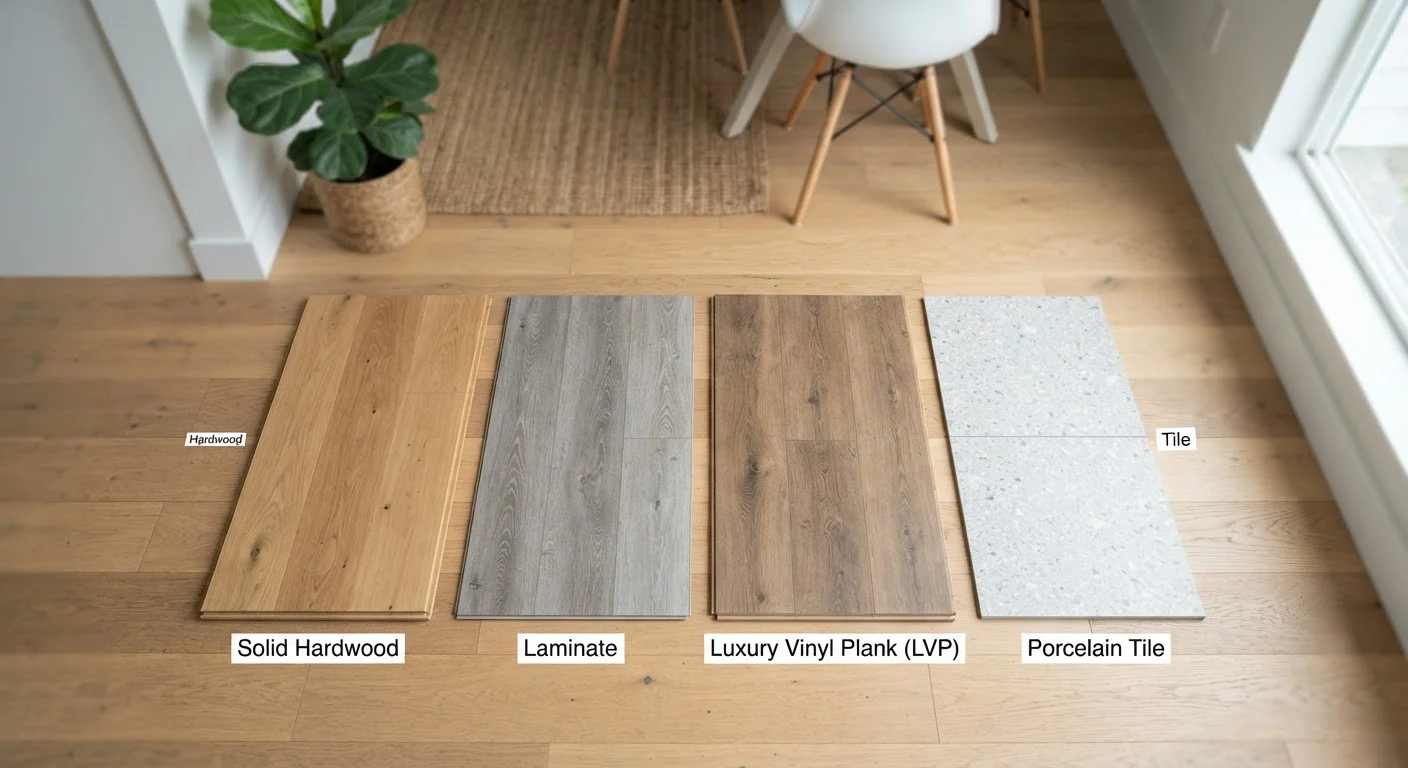
Key Takeaways
- Hardwood offers timeless appeal and refinishability but is the most moisture-sensitive of the four options.
- Laminate mimics wood at a lower cost but cannot be refinished and struggles with standing water.
- Luxury vinyl plank (LVP) balances water resistance, durability, and affordability for most rooms.
- Tile is the most durable and moisture-proof choice, though it requires more involved installation.
- No single flooring type wins across all criteria - the right choice depends on room function and conditions.
Our Verdict
Each flooring material occupies a distinct niche. Hardwood suits dry living spaces where longevity and refinishability matter most. LVP is the most versatile option for households with pets, children, or moisture-prone rooms. Laminate offers a budget-conscious middle ground in low-traffic dry areas, while tile is the go-to for bathrooms, kitchens, and entryways demanding maximum durability.
| Best for | Recommended |
|---|---|
| Dry living rooms, dining rooms, and bedrooms | Hardwood |
| Kitchens, bathrooms, and high-moisture areas | Tile |
| High-traffic family homes with pets or children | Luxury Vinyl Plank (LVP) |
| Low-traffic rooms on a tight budget | Laminate |
How to Use This Comparison
Flooring is one of the most impactful and permanent decisions you'll make in a home improvement project. The four materials covered here - hardwood, laminate, luxury vinyl plank (LVP), and tile - represent the most widely installed residential options in the United States. Each has meaningful trade-offs across durability, moisture tolerance, maintenance demands, and installation complexity. Understanding those trade-offs before you shop will save you from costly regrets.
This comparison is organized around the criteria that matter most to everyday homeowners. Use the table below as a quick-reference guide, then read the section breakdowns for the nuance behind each rating.
| Hardwood | Laminate | LVP | Tile | |
|---|---|---|---|---|
| Moisture Resistance | Low | Low-Moderate | High | Very High |
| Durability / Lifespan | Very High (50-100 yrs) | Moderate (10-25 yrs) | High (20-30 yrs) | Very High (lifetime) |
| Refinishable | Yes (multiple times) | No | No | No |
| DIY Installation | Moderate-Difficult | Easy-Moderate | Easy-Moderate | Difficult |
| Relative Cost | Highest | Low | Moderate | Moderate-High |
| Comfort Underfoot | Warm, moderate | Warm, moderate | Warm, moderate | Hard, cold |
| Best Room Fit | Living, dining, bedroom | Dry low-traffic rooms | Most rooms | Bath, kitchen, entry |
Hardwood: Classic Appeal With Real Limitations
Solid hardwood flooring - typically ¾-inch-thick milled planks of oak, maple, hickory, or similar species - is prized for its warmth, authenticity, and the fact that it can be sanded and refinished multiple times over its lifespan. A well-maintained hardwood floor can last 50 to 100 years, making it one of the strongest long-term investments in residential flooring.
The critical limitation is moisture. Wood expands and contracts with humidity changes, making hardwood a poor choice for basements, full bathrooms, or rooms with significant temperature swings. Engineered hardwood - a plywood core topped with a real wood veneer - handles humidity somewhat better and can be installed below grade, though it can typically only be refinished a limited number of times depending on veneer thickness.
Check Your Subfloor Before Choosing Hardwood
Hardwood requires a structurally sound, dry wood subfloor - concrete slabs are generally not compatible with solid hardwood. Before finalizing your material choice, assess your subfloor type and check moisture readings with an inexpensive moisture meter. A reading above 12% in the subfloor typically warrants remediation before installation proceeds.
Installation usually requires nailing or stapling to a wood subfloor, which adds labor cost and complexity. Expect hardwood to be the most expensive option per square foot, including materials and professional installation.
Laminate: Budget-Friendly but Moisture-Sensitive
Laminate flooring is a composite product with a high-density fiberboard (HDF) core, a photographic image layer that mimics wood or stone, and a clear wear layer on top. It clicks together over a foam underlayment - a floating installation that doesn't attach to the subfloor - making it one of the more DIY-accessible options.
The core weakness of laminate is its fiberboard core, which swells and degrades when exposed to standing water or persistent humidity. While some laminate lines advertise improved moisture resistance, the material is generally not recommended for bathrooms or laundry rooms. It also cannot be refinished; once the wear layer is scratched through, replacement is the only remedy.
For dry, low-traffic rooms on a constrained budget, laminate provides a convincing wood-look aesthetic at a fraction of hardwood's cost.
Luxury Vinyl Plank (LVP): The Versatile Middle Ground
Luxury vinyl plank is a fully synthetic flooring product built around a rigid or flexible PVC core, topped with a printed design layer and a urethane wear layer. It is 100% plastic, which makes it impervious to the water absorption that harms wood-based materials. Most LVP also installs as a floating floor, similar to laminate, keeping installation relatively accessible for experienced DIYers.
LVP has grown significantly in popularity because it successfully addresses several pain points at once: it handles moisture, resists scratches better than laminate, and can be installed over minor subfloor imperfections. However, some LVP products can be dented by heavy point loads (like furniture legs), and it cannot be refinished. Quality varies substantially between product lines, particularly in wear layer thickness - measured in mils - so it's worth understanding what the specifications mean before selecting a product.
Before assuming any flooring is truly waterproof, it's worth reading what waterproof flooring claims actually mean - especially at seams and edges where moisture can still infiltrate.
Tile: Maximum Durability, Maximum Installation Effort
Ceramic and porcelain tile are the most moisture-resistant flooring options on this list, making them the standard choice for bathrooms, kitchens, mudrooms, and entryways. Porcelain, in particular, is extremely dense and rated for both indoor and outdoor use. Properly installed tile can last the lifetime of a structure.
The trade-off is installation complexity and cost. Tile requires a rigid, level subfloor - often cement board - thinset mortar adhesive, and grout between joints. Each of those materials has its own role and limitations. If you're moving into a tile project, understanding when to use grout, mortar, or caulk is essential for avoiding cracking and water infiltration down the line.
Tile is also cold and hard underfoot, which can be a comfort concern in bedrooms or family rooms. In-floor radiant heating can offset this but adds cost and planning requirements. Most homeowners hire a licensed tile installer for this work, particularly in wet areas where waterproofing the substrate is critical.
Tile Work in Wet Areas Requires Proper Waterproofing
Installing tile in a shower, tub surround, or bathroom floor is not the same as installing it in a dry entryway. Wet areas require a waterproof membrane behind or beneath the tile, applied to the substrate before any mortar or tile is set. Skipping this step - even with grout joints sealed - can allow moisture to reach the subfloor and framing, leading to mold and structural damage that is expensive to remediate. For wet-area tile work, consult or hire a licensed contractor familiar with local building codes.