

| Mortar primary function | Bond tile permanently to substrate |
| Grout primary function | Fill joints between tiles |
| Caulk primary function | Seal flexible joints subject to movement |
| Sanded grout minimum joint width | Greater than 1/8 inch (Tile Council of North America guidelines) |
| Caulk replacement frequency (wet areas) | Approximately every 3-5 years |
| Mortar cure time before grouting | Typically 24-48 hours (check manufacturer specs) |
Why the Material Choice Matters
Walk through any home improvement store and you'll find shelves lined with grout, mortar, and caulk - often right next to each other. To a first-time tiler, they can look almost interchangeable. They are not. Using the wrong material in the wrong place is one of the most common reasons tile work fails prematurely, leading to cracked joints, loose tiles, or water infiltrating behind walls.
Each product is engineered for a specific function: bonding, filling, or sealing. Understanding the difference isn't just academic - it determines whether your shower floor holds up for a decade or starts showing problems within a year. If you're tackling a larger project like a full bathroom redo, our end-to-end bathroom remodeling guide walks through how these materials fit into the bigger picture.
| Mortar primary function | Bond tile permanently to substrate |
| Grout primary function | Fill joints between tiles |
| Caulk primary function | Seal flexible joints subject to movement |
| Sanded grout minimum joint width | Greater than 1/8 inch (Tile Council of North America guidelines) |
| Caulk replacement frequency (wet areas) | Approximately every 3-5 years |
| Mortar cure time before grouting | Typically 24-48 hours (check manufacturer specs) |
Mortar: The Foundation of Every Tile Installation
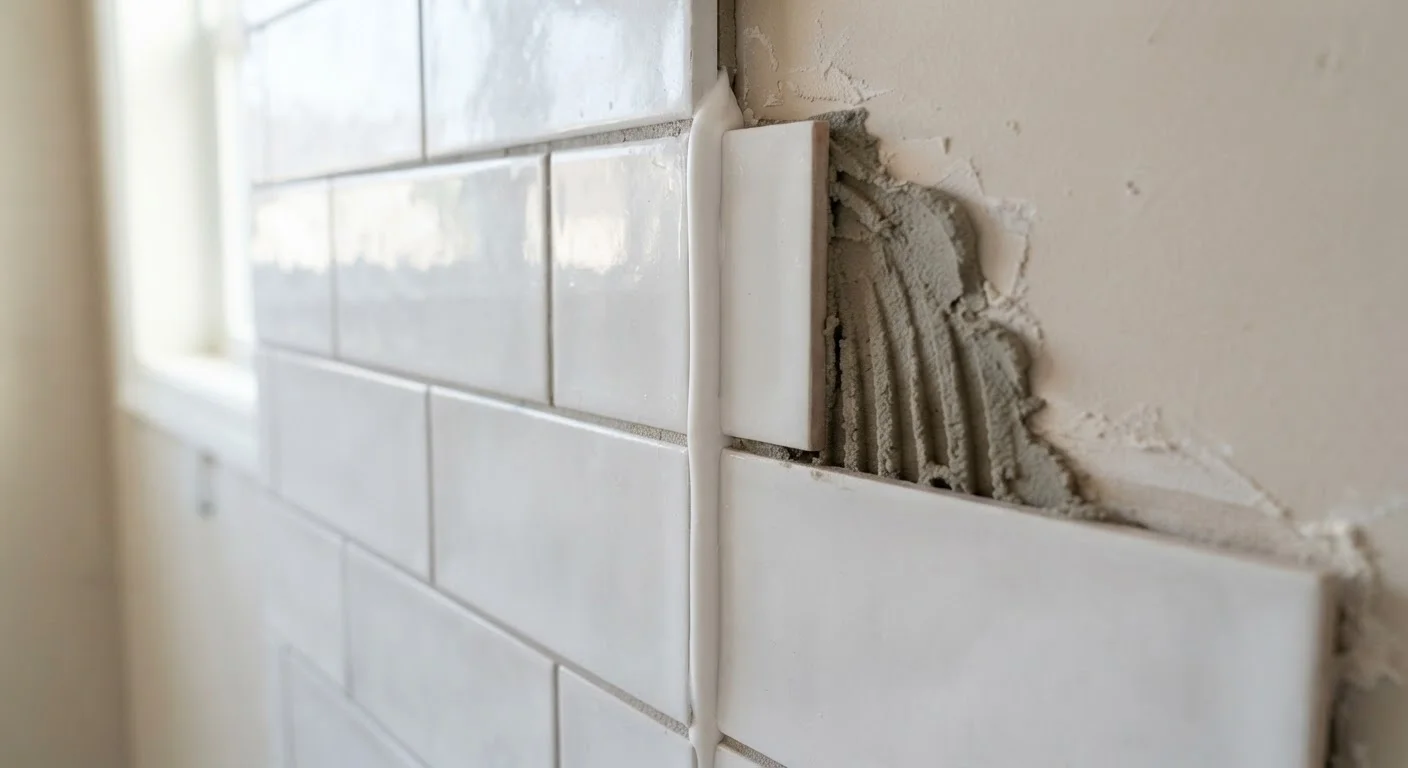
Mortar (specifically thinset mortar) is the adhesive layer that bonds tile to its substrate - the floor, wall, or countertop surface beneath. It is not a filler or a sealer; its sole job is to create a permanent mechanical bond between tile and backing.
Thinset is a cement-based mixture, and it cures rather than dries. That distinction matters: curing is a chemical process that produces lasting strength, while surface drying alone would leave a brittle bond. For wet areas like showers, modified thinset - which contains polymer additives - provides stronger adhesion and greater resistance to moisture movement.
When mortar is the right choice:
- Setting floor or wall tile onto cement board, concrete, or a properly prepared substrate
- Installing large-format tiles that need back-buttering for full coverage
- Anchoring tile in any area that will be submerged or regularly wet
Mortar should never be used to fill the spaces between tiles. That's grout's role.
Thinset mortar
A cement-based adhesive mixed with water (and sometimes polymer additives) used to bond tile to a substrate. It cures through a chemical reaction rather than simple drying, producing a strong, lasting bond.
Substrate
The structural surface beneath tile - such as cement board, concrete slab, or plywood - to which mortar adheres. A properly prepared substrate is essential for a lasting tile installation.
Sanded grout
A grout formulation containing fine sand aggregate, used to fill tile joints wider than 1/8 inch. The sand prevents shrinkage cracking in larger gaps.
Change-of-plane joint
Any joint where two tiled surfaces meet at an angle, such as a wall-to-floor corner or an inside shower corner. These joints require flexible caulk rather than rigid grout to accommodate movement.
Back-buttering
The practice of applying a thin layer of mortar directly to the back of a tile (in addition to the substrate) to ensure full, void-free coverage beneath the tile - especially important for large-format tiles.
Epoxy grout
A two-part grout system made from epoxy resins rather than cement. It offers exceptional stain and chemical resistance but sets quickly and requires more careful application than cement-based grouts.
Grout: Filling Joints Between Tiles
Grout fills the joints between tiles after mortar has fully cured. It is not an adhesive - it won't hold tile in place, and it is not flexible enough to absorb movement between surfaces. Its purposes are aesthetic (creating clean, uniform lines), structural (stabilizing tiles against lateral shifting), and partially protective (reducing debris and moisture entry into joints).
There are two main types homeowners encounter:
- Sanded grout - Contains fine sand aggregate. Used for joints wider than 1/8 inch. The sand reduces shrinkage and cracking in wider gaps.
- Unsanded grout - Smooth formulation for joints 1/8 inch or narrower. Often used on polished stone or glass tile where sand could scratch the surface.
Epoxy grout is a third category - highly stain- and chemical-resistant, and a good choice for kitchen countertops or commercial settings, though it requires careful and fast application.
One important limitation: grout is rigid once cured. Any joint where two surfaces meet at an angle - an inside corner, the transition between floor and wall, or where tile meets a fixture - should not be grouted. Those locations need caulk. Learn more about how moisture interacts with surfaces in our guide to waterproof flooring claims.
Caulk: The Flexible Seal for Joints Under Stress
Caulk is a flexible sealant, not a structural material. It is designed to span joints that experience movement - thermal expansion, building settlement, or vibration - without cracking. In tile work, caulk belongs at every change-of-plane joint and wherever tile meets a dissimilar material.
Common caulking locations in tile installations include:
- Inside corners in showers and tub surrounds
- The joint between a tub deck and wall tile
- Where tile meets a toilet base, vanity, or sink rim
- Expansion joints in large floor tile installations
For wet areas, use a silicone or siliconized latex caulk specifically rated for kitchen and bath. These resist mold and mildew and remain pliable long-term. Standard paintable caulk is not appropriate in wet tile environments - it will break down quickly.
Caulk requires periodic inspection and replacement; it is a maintenance material, not a permanent fix. Expect to re-caulk wet areas every three to five years depending on conditions. For caulking techniques that extend beyond tile - including windows and exterior joints - see our seasonal caulking maintenance primer.
When Grout and Caulk Must Match
In tiled showers and tub surrounds, inside corners and field joints are often close together visually. Many manufacturers produce caulk in colors formulated to match their grout lines, allowing a clean, seamless look even where the materials differ. Always use color-matched, bath-rated caulk at change-of-plane joints - never substitute grout just to match the color.