

Key Takeaways
- Brake pads typically need replacement every 25,000-70,000 miles depending on driving style and pad material.
- Rotors last longer than pads but can warp or thin beyond safe limits if pads are neglected.
- Brake fluid absorbs moisture over time, lowering its boiling point and reducing braking performance.
- Squealing, grinding, vibration, and a soft pedal are all signs the braking system needs professional attention.
- Catching brake wear early almost always costs less than waiting until performance is compromised.
Braking System Wear
Braking system wear refers to the gradual degradation of the components that slow and stop your vehicle - primarily brake pads, rotors, and brake fluid. Each part wears at its own rate depending on driving habits, vehicle weight, and conditions. Understanding how they deteriorate helps drivers recognize warning signs early and avoid more costly repairs.
Modern disc brake systems rely on friction between the pad and rotor to convert kinetic energy into heat. As pad material depletes and rotor surfaces score, the system's ability to generate consistent stopping force diminishes.
How Brake Pads Wear - and What They're Telling You
Brake pads are the most frequently replaced component in your braking system, and for good reason - they are the friction material that physically contacts the rotor to slow your vehicle. Each application of the brake pedal shaves a microscopic layer from the pad. Over time, that adds up.
Most pads include a small metal wear indicator, a thin strip designed to contact the rotor and emit a high-pitched squeal when pads have worn to a critical minimum. If you hear a persistent squealing sound when braking - and it's not simply wet weather causing a brief squeak - that's the system alerting you to act. Grinding sounds, by contrast, typically mean the pad material is nearly or completely gone and metal is contacting metal. At that stage, rotor damage is likely already occurring.
Pad lifespan depends heavily on driving behavior. Frequent city stop-and-go traffic accelerates wear compared to steady highway driving. Heavier vehicles also place greater demand on pads with each stop. As part of your overall vehicle care, reviewing your maintenance schedule can help you track when brake inspections should occur relative to mileage milestones.
Get Brakes Inspected at Every Tire Rotation
Tire rotations typically happen every 5,000-7,500 miles - an ideal interval for a visual brake inspection at the same time. Many shops include a basic brake check as part of a rotation service. This habit ensures wear is caught early without requiring a separate appointment.
Rotors: Surface Wear, Warping, and Minimum Thickness
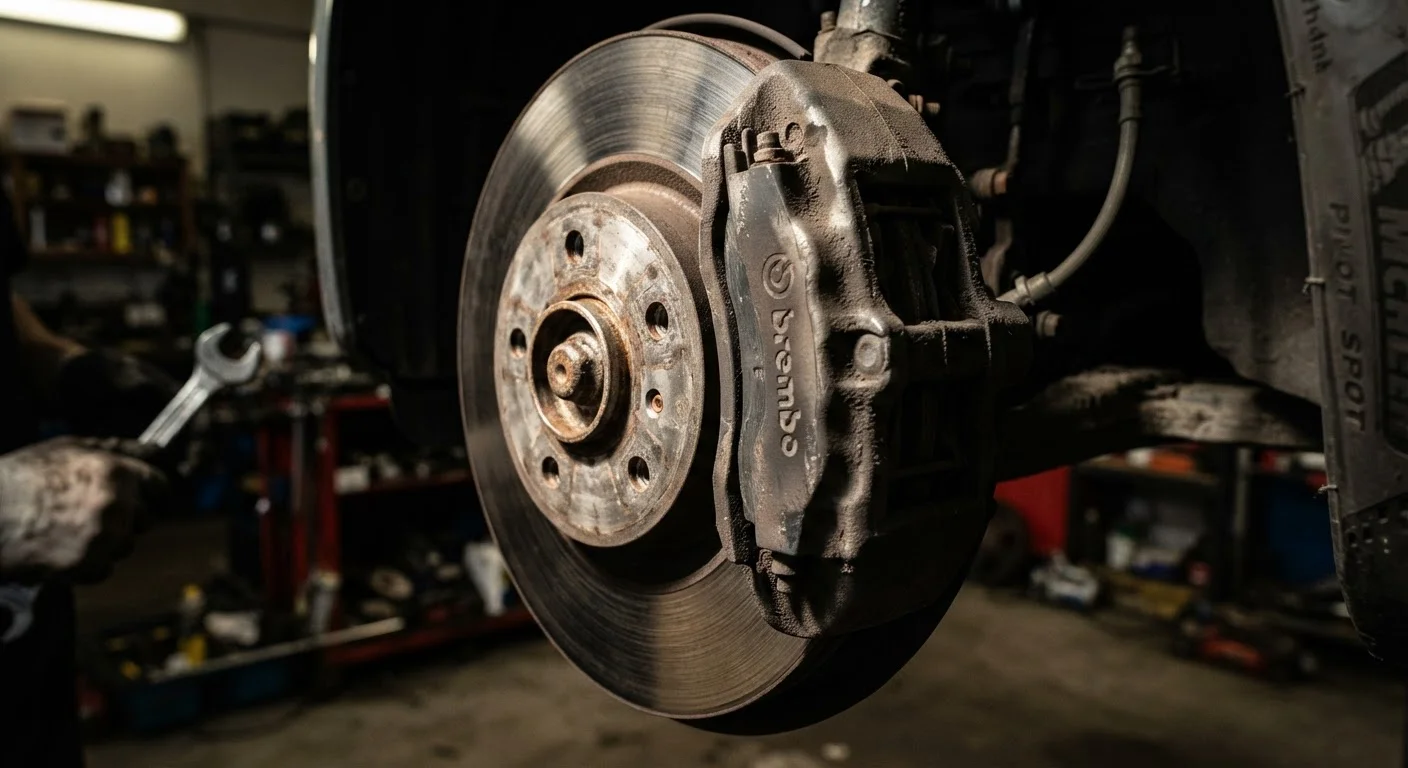
Brake rotors are the large metal discs clamped by the pads during braking. They are durable, but not indefinitely so. Rotors wear in two primary ways: gradual surface thinning from pad friction, and warping from thermal stress.
Every rotor has a minimum thickness specification stamped or cast into the rotor itself. Once worn to that threshold, the rotor no longer has sufficient mass to absorb and dissipate heat effectively, creating a safety concern. A qualified mechanic can measure rotor thickness with a micrometer during inspection.
Warping - technically, uneven thickness or surface variation - produces a pulsating or shuddering sensation through the brake pedal and steering wheel when slowing down. This occurs when rotors experience rapid, intense heating and uneven cooling. Warped rotors may sometimes be machined (resurfaced) if enough material remains above minimum thickness, though this option is increasingly limited on thinner modern rotors.
Neglected pad replacement accelerates rotor damage significantly. When pads are worn to bare metal, the metal backing scores rotor surfaces deeply, often making replacement unavoidable. This is a key reason why delaying routine maintenance compounds repair costs.
Brake Performance Varies by Season
Cold temperatures can temporarily stiffen brake components and reduce initial responsiveness, while summer heat increases the risk of fluid degradation and rotor warping. Seasonal vehicle checks are a practical way to catch brake issues before conditions demand peak system performance. See our guide on seasonal vehicle preparation for a broader checklist.
Brake Fluid: The Often-Overlooked Variable
Brake fluid transmits the force from your pedal through hydraulic lines to the calipers that squeeze the pads against the rotors. It operates under high pressure and, critically, high heat. What makes fluid maintenance easy to overlook is that degradation happens invisibly.
Most brake fluids are glycol-based and hygroscopic - meaning they actively absorb moisture from the surrounding environment over time, even through brake lines. As water content rises, the fluid's boiling point drops. Under hard braking, overheated fluid can boil and form vapor bubbles in the lines. Vapor compresses, while liquid does not - the result is a soft, spongy, or suddenly unresponsive pedal, a condition known as vapor lock.
Checking fluid condition is straightforward. Healthy brake fluid is typically clear to light amber; dark or murky fluid suggests significant moisture absorption. For a broader look at fluid maintenance across your vehicle, see our guide on fluid levels every driver should know how to check. Many manufacturers suggest replacing brake fluid every two to three years regardless of mileage, though your owner's manual and a qualified mechanic should guide the specific interval for your vehicle.
Warning Signs That Demand Prompt Attention
Your braking system is designed to communicate wear through sensory feedback before it reaches a critical point. Knowing what to watch for - and what not to ignore - is one of the most practical skills any driver can have.
- Squealing or squeaking: Often the wear indicator doing its job. Don't wait to see if it resolves on its own.
- Grinding or growling: Metal-on-metal contact. Requires immediate inspection; rotor damage is likely.
- Pulsating or vibrating pedal: A common indicator of rotor warping or uneven thickness.
- Soft or spongy pedal feel: May point to air in the lines or degraded brake fluid.
- Vehicle pulling to one side when braking: Can indicate uneven pad wear or a stuck caliper.
- Longer stopping distances: A general sign that braking capacity has declined.
Any of these symptoms warrants a professional inspection. Because braking performance also affects how your tires interact with the road, keeping an eye on tire condition alongside brake health gives you a more complete safety picture. Brakes don't fail overnight - but the window between early warning and serious danger is often shorter than drivers expect.
25,000-70,000 mi
Typical brake pad lifespan range
The AAA and automotive industry guidance consistently cite this wide range, reflecting the significant impact of driving style and vehicle type on pad longevity.
2-3 years
Recommended brake fluid replacement interval
Many vehicle manufacturers and brake system experts recommend replacing brake fluid every two to three years due to moisture absorption, regardless of mileage.
~130°F drop
Boiling point loss from moisture-laden fluid
Industry testing shows that brake fluid with just 3% water content can have its boiling point reduced by approximately 130°F compared to fresh fluid, significantly raising vapor lock risk.