

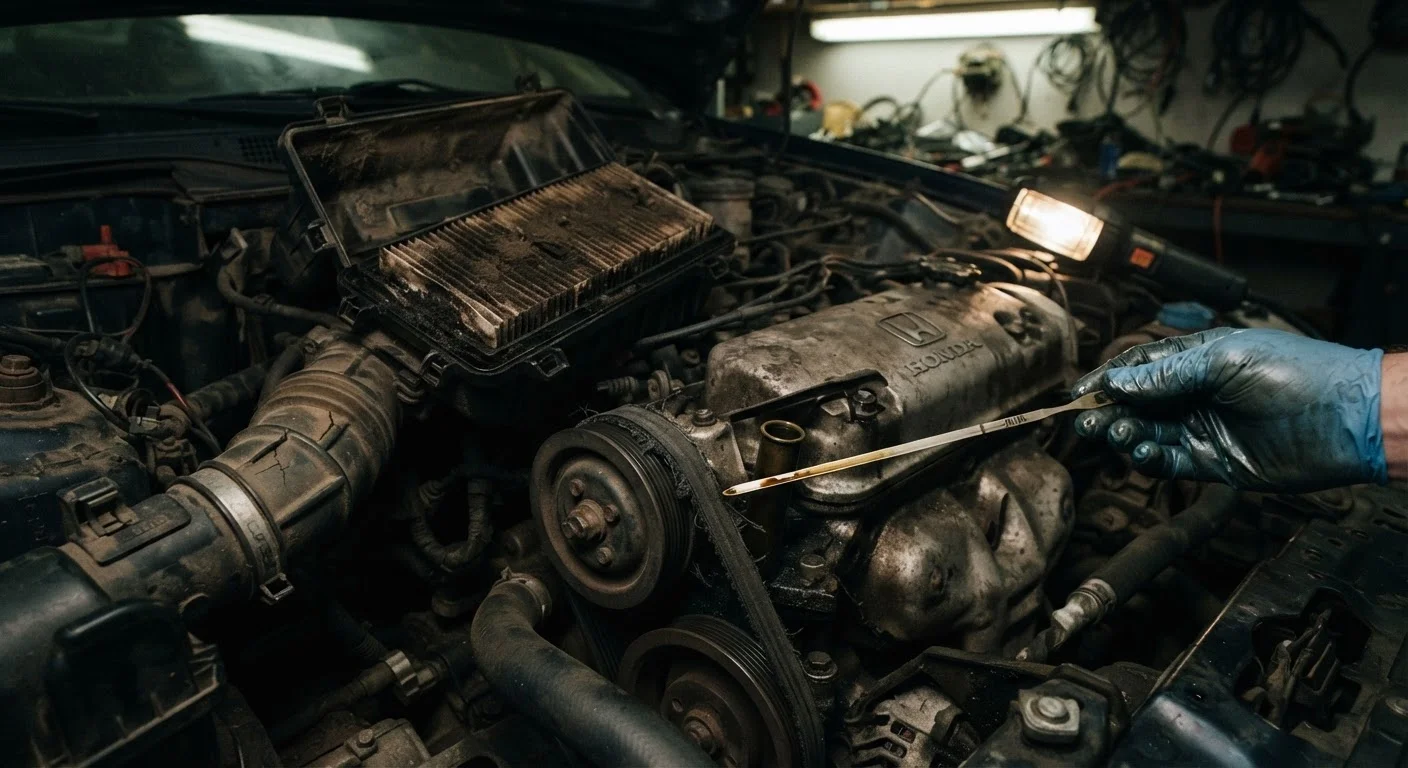
Key Takeaways
- Skipping oil changes accelerates engine wear and can lead to catastrophic engine failure.
- Ignoring worn belts and hoses risks sudden breakdowns that cost far more than the parts themselves.
- Most routine maintenance items cost a fraction of the repairs they prevent.
- Your owner's manual - not mileage myths - is the authoritative source for service intervals.
- Deferred maintenance compounds: one skipped service often accelerates wear on other components.
The Hidden Economics of 'It's Running Fine'
The most expensive phrase in vehicle ownership is it's running fine. It's the logic that leads drivers to postpone an oil change by a few thousand miles, skip a scheduled coolant flush, or ignore that faint squeal from the brakes. Each individual delay feels harmless. Collectively, they restructure a vehicle's future repair costs dramatically upward.
Routine maintenance is fundamentally a risk-transfer strategy. A $75 oil change does not just keep oil fresh - it removes abrasive metal particles and combustion byproducts that sandpaper engine internals with every revolution. A $25 cabin air filter swap isn't optional comfort; a clogged filter strains the HVAC blower motor, which can cost several hundred dollars to replace. The logic behind preventive maintenance is straightforward: intervene cheaply now, or pay extensively later.
Understanding this calculus doesn't require mechanical expertise. It requires only recognizing that cars are systems - and that one degraded component increases stress on everything connected to it.
$1,200+
Average cost of neglect-related engine repairs
AAA estimates that deferred maintenance contributes to billions in avoidable vehicle repair costs for American drivers each year.
40%
Of roadside breakdowns linked to maintenance neglect
Industry data from roadside assistance providers consistently shows that a large share of service calls involve issues preventable through routine upkeep.
The Mistakes That Drain Your Wallet
Most costly repair scenarios trace back to a short list of predictable, avoidable errors. They aren't the result of bad luck - they're the downstream consequences of specific decisions made (or not made) at specific service intervals. Knowing what these mistakes look like, and why drivers make them, is the first step toward avoiding them.
Skipping or stretching oil changes beyond recommended intervals.
Why it happens: Drivers often rely on outdated advice - such as the universal '3,000-mile rule' - without checking what their specific vehicle actually requires. Some assume synthetic oil makes intervals irrelevant.
Ignoring warning lights, especially the check engine and low oil pressure indicators.
Why it happens: Warning lights are easy to rationalize away, especially when the car seems to be running normally. Many drivers assume the light will go away on its own or fear an expensive diagnosis.
Neglecting coolant, transmission fluid, and brake fluid on the assumption that fluids last forever.
Why it happens: Unlike oil, these fluids have no obvious consumption to track, so they fall out of sight and out of mind. Drivers may go years without a fluid check.
Delaying tire rotation and alignment checks until a problem is obvious.
Why it happens: Uneven tire wear develops gradually and rarely causes dramatic symptoms until the tire is dangerously worn or a blowout occurs.
Postponing belt and hose replacement because they appear intact.
Why it happens: Rubber components look serviceable long after they have internally degraded. Without visible cracking or obvious damage, drivers - and sometimes inexperienced technicians - assume they are fine.
Timing Belt Failure Has No Warning
Unlike most components that degrade gradually, a timing belt can snap without any prior symptoms. When it does, the engine stops instantly - and on interference engines, internal components can collide and cause thousands of dollars in damage. Replacement on schedule is not optional; it is the only protection available.
For a full breakdown of what each service interval actually includes and why the timing matters, see our guide to your car's maintenance schedule.
Staying Ahead Without Overspending
Preventive maintenance does not require spending money constantly or replacing parts before they need it. It requires knowing what actually needs attention and when. Your owner's manual - not shop upsells, not internet forums - is the authoritative reference for your specific vehicle.
Neglect Can Void Your Warranty
Many new-vehicle limited warranties require documented adherence to the manufacturer's maintenance schedule. Skipping services - and failing to keep records - can give an automaker grounds to deny a powertrain warranty claim. Always retain service receipts and follow the intervals listed in your owner's manual, not aftermarket rules of thumb.
Some of the highest-return maintenance tasks are also the simplest. Air filters, spark plugs, and wiper blades are low-cost items that directly affect engine efficiency and safety. Our overview of air filters, cabin filters, and spark plugs explains exactly what these components do and what happens when they're ignored too long.
If you're considering handling some maintenance yourself to reduce costs, approach that decision carefully. Many tasks - checking fluid levels, replacing wiper blades, swapping cabin filters - are genuinely straightforward. Others carry real safety and mechanical risk. Our editorial guidance on DIY car maintenance draws an honest line between what's reasonable to tackle at home and what should go to a qualified mechanic.
The core principle holds across every make and model: the cost of prevention is nearly always lower than the cost of repair. Treating routine maintenance as an investment - not an inconvenience - is the single most effective way to protect both your vehicle and your budget.