

Key Takeaways
- The declarations page summarizes your entire policy - it is not the full policy contract.
- It lists named insureds, covered vehicles, coverage types, limits, and your premium.
- Liability limits appear as split numbers defining maximum payouts per person and per accident.
- Deductibles apply per claim - confirm they match what you agreed to at purchase.
- Always review your dec page after purchase or renewal to catch errors before you need to file a claim.
What you will need
What the Declarations Page Actually Is
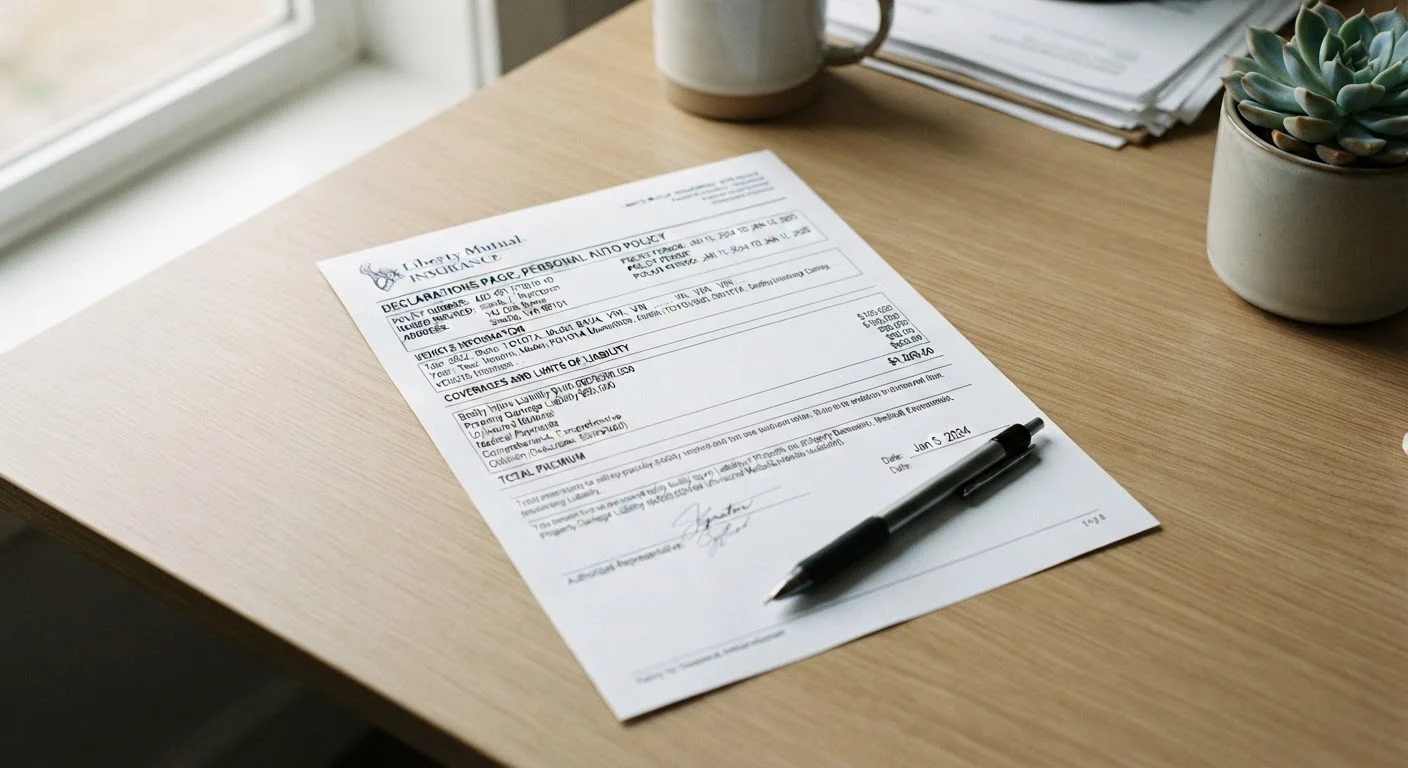
When your insurer sends your policy documents, you may receive a thick packet of legal language. The declarations page - commonly called the "dec page" - is the condensed summary that sits at the front. Think of it as the cover sheet: it translates your policy into plain facts about who is covered, what is covered, and for how much.
The dec page is not the policy contract itself. The full policy booklet contains the detailed terms, exclusions, and conditions that govern claims. But the dec page is the document you will reach for first when you need a quick answer - and it is the document most likely to contain a typo or outdated detail that could cause problems during a claim. For a broader grounding in how policies work, see our auto insurance overview.
What you will need
Every Section of the Dec Page, Explained
Although formatting varies by insurer, virtually every declarations page contains the same core sections. Here is what each one means.
Named Insured and Household Drivers
The top of the page lists the named insured - typically the policyholder - along with the mailing address. Additional household members who are licensed drivers are usually listed separately. Confirm that every regular driver in your household appears; an unlisted driver may face complications during a claim.
Policy Period
This is the effective and expiration date of your coverage. Most personal auto policies run six or twelve months. Check this against any renewal notices to make sure you are looking at your current policy period.
Covered Vehicles
Each vehicle on the policy is listed with its year, make, model, vehicle identification number (VIN), and sometimes the garaging address. Verify the VIN - a transposed digit is a common data-entry error that is easy to miss but can complicate a claim.
Coverage Types and Limits
This is the most information-dense section. Each coverage type is listed alongside its limit. Liability limits typically appear as three numbers separated by slashes - for example, 100/300/100 - representing (in thousands of dollars): bodily injury per person / bodily injury per accident / property damage per accident. Our guide to liability, collision, and comprehensive coverage explains exactly what each coverage type protects against.
Other coverages - such as uninsured motorist and medical payments - each carry their own limits. See uninsured vs. underinsured motorist coverage for a closer look at how those two lines interact.
Deductibles
Collision and comprehensive coverages each list a deductible - the amount you pay out of pocket before your insurer pays the remainder of a covered claim. Deductibles are per claim, not per year. A $500 deductible on collision means you absorb the first $500 of repair costs each time you file a collision claim.
Premium Breakdown
The dec page lists the cost of each coverage component and a total premium for the policy period. Some insurers also note discounts applied, such as multi-vehicle or safe-driver discounts. Review this column to confirm the discounts you were quoted are actually reflected in your premium.
Split Limits vs. Combined Single Limits
Some policies use a combined single limit (CSL) instead of the split-limit format. A CSL of $300,000 means your insurer will pay up to that total amount for any combination of bodily injury and property damage in a single accident, rather than capping each category separately. If your dec page shows a single large number rather than three numbers, you have a CSL policy.
After You Review: Next Steps
Once you have worked through the dec page, any discrepancy - a wrong VIN, a missing driver, a deductible that does not match what you agreed to - should be reported to your insurer promptly. Corrections typically require a written endorsement, which will generate a revised dec page. Keep a copy of every version.
Make it a habit to revisit your dec page each time your policy renews. Our policy renewal checklist walks through the specific items worth re-verifying each cycle. And if you ever need to use your coverage, understanding what your dec page says will help you follow the claims process with greater confidence.
This article provides general information about auto insurance documentation and is not legal or insurance advice. Coverage terms, limits, and requirements vary by insurer, state, and individual policy. Consult a licensed insurance agent or broker for guidance specific to your situation.