

Key Takeaways
- Your renewal notice is not a bill - it's an opportunity to review what you're actually paying for.
- Coverage needs change as your vehicle ages, your driving habits shift, or your financial situation evolves.
- Outdated personal information on your policy can affect your premium and even a claim outcome.
- Discounts are not always applied automatically - you may need to ask your insurer each renewal cycle.
- Comparing your current policy against your actual needs takes less than an hour and can surface meaningful gaps.
Summary
22 items · 20-45 minutes
Why Reviewing at Renewal Actually Matters
Most drivers receive their renewal notice, glance at the premium, and move on. That's understandable - insurance documents are dense and renewal feels routine. But your policy is a financial contract that should reflect your current life, not the circumstances you had when you first signed up. Life changes: you move, add a driver, pay off your car loan, or simply drive far less than you used to. Any of those shifts can affect what coverage you actually need and what you're paying for it.
There are also factors outside your control. Insurers periodically adjust rates based on claims data in your area, changes in repair costs, and other variables. Lesser-known factors - including credit score changes and address updates - can quietly shift your premium without a clear explanation arriving in your mailbox. Taking 20 to 45 minutes before each renewal to work through a structured checklist puts you in a much better position to catch issues, ask the right questions, and make deliberate choices about your coverage.
If you're newer to how auto policies work, our overview of auto insurance basics walks through coverage types and how premiums are calculated - worth reading alongside this checklist.
This Is General Information, Not Personalised Insurance Advice
The guidance in this checklist is educational and applies broadly - your specific coverage needs depend on your state's laws, your financial situation, and your individual risk profile. Policy terms, coverage options, and discount eligibility vary by insurer and state. Review your actual policy documents carefully and speak with a licensed insurance agent or adviser for guidance tailored to your circumstances.
What You'll Need Before You Start
Before working through the checklist items below, gather a few things so you can review accurately rather than from memory:
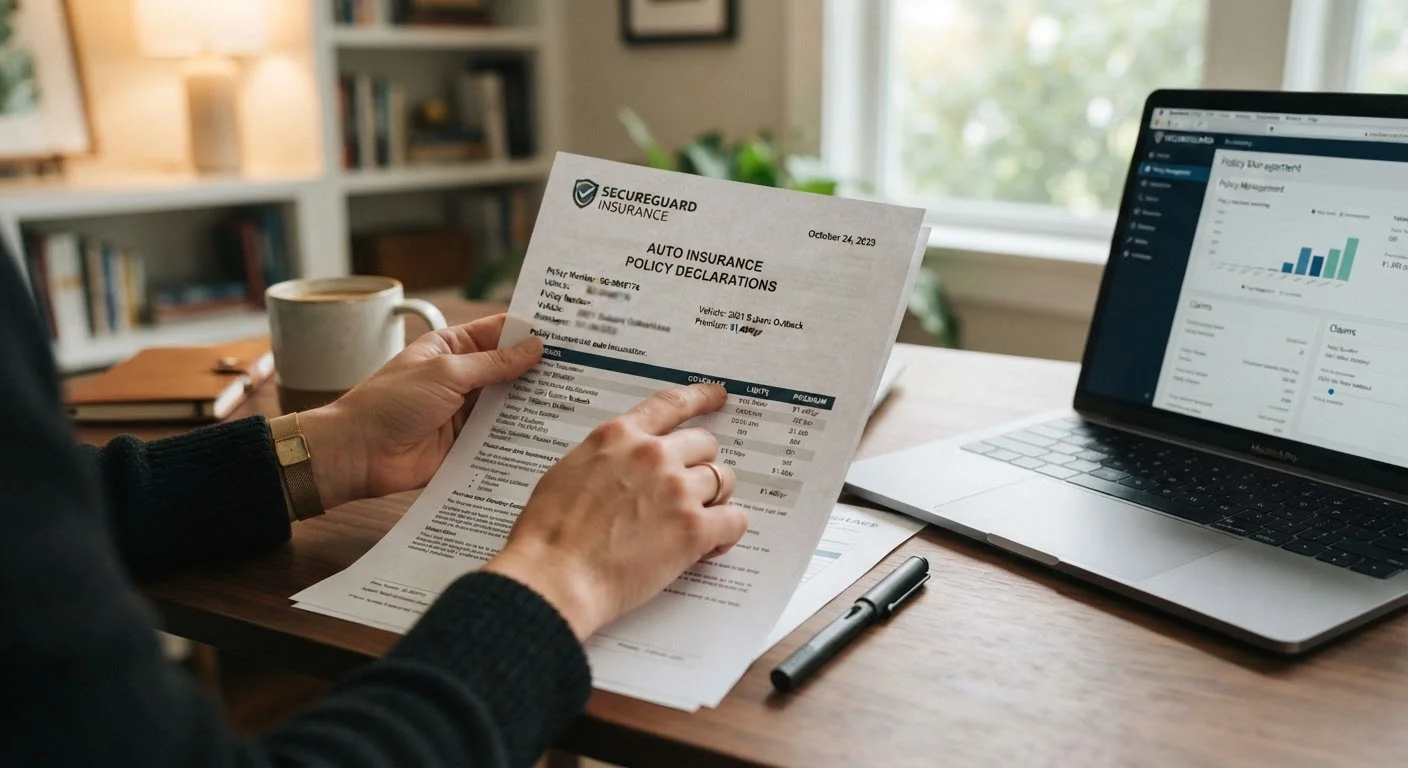
- Your current declarations page - this one-page summary from your insurer lists your coverage types, limits, deductibles, and the total premium. If you don't have a copy, log in to your insurer's online portal or call them to request one.
- Your prior term's declarations page - comparing the two side-by-side quickly reveals any changes in coverage, limits, or pricing.
- Your state's minimum coverage requirements - these are published by your state's department of insurance and can change. Verify you meet the current minimums.
- An estimate of your vehicle's current market value - relevant when deciding whether comprehensive and collision coverage is still cost-effective for an older vehicle.
Current Declarations Page
Your declarations page is the one-page policy summary showing your coverage types, limits, deductibles, and premium - the essential document for this review.
Vehicle Valuation Tool (e.g., NADA Guides or Kelley Blue Book)
Use a reputable vehicle valuation resource to check your car's current market value and help decide whether comprehensive and collision coverage still makes financial sense.
State Insurance Department Website
Your state's department of insurance publishes minimum coverage requirements and consumer complaint data, which can inform your coverage decisions.
Household Budget Summary
Knowing your current monthly budget helps you evaluate whether adjusting deductibles or premium amounts aligns with your financial situation.
Once you have these on hand, the review itself moves quickly. The checklist is grouped into five areas: personal and vehicle information, coverage types and limits, deductibles, discounts, and billing details.
Working Through the Checklist
Use the checklist below systematically rather than skimming. The must items are non-negotiable - skipping them leaves you exposed to either coverage gaps or billing errors. The should items are strongly recommended for most drivers. Nice-to-have items are worth exploring if your situation calls for it.
Personal & Vehicle Information
Coverage Types & Limits
Deductibles
Discounts & Credits
Billing & Policy Details
Pay particular attention to your liability limits. State minimum requirements are generally low and may not adequately protect your assets if you're found responsible for a serious accident. A licensed insurance agent can help you think through what limit level makes sense given your financial situation - this is one area where a short conversation can be genuinely useful.
Don't Assume Your Coverage Is the Same
Insurers can adjust policy terms, exclusions, or conditions at renewal - and those changes may be buried in the renewal packet's fine print. Read the full declarations page and any accompanying notices, not just the premium amount. If something looks unfamiliar, call your insurer or agent to get a clear explanation before the new term begins.
Gaps in Coverage Can Affect Claim Outcomes
An unlisted driver, an outdated address, or a coverage type you dropped to save money can all create complications if you need to file a claim. Reviewing your policy annually helps ensure the coverage you're paying for actually reflects your real-world situation. For a fuller look at what happens once a claim is filed, see what happens after you file a car insurance claim.
After the Review: What to Do With What You Find
Once you've completed the checklist, you'll likely fall into one of three situations:
- Everything looks accurate and appropriate. Renew with confidence, knowing the policy reflects your actual needs.
- You've found errors or outdated information. Contact your insurer before the renewal date to request corrections. Document the conversation in writing, such as by following up with an email.
- You have questions about your coverage or rate. Call your insurer's customer service line or your agent. Ask specifically about discounts you may not be receiving and what's driving any rate change from the prior term.
It's worth noting that auto insurance review fits naturally into a broader annual financial check-in. If you already run through a year-end financial checklist or a monthly budget review, adding your insurance renewal to those routines keeps your overall financial picture more coherent.
Finally, if you drive infrequently or your annual mileage has dropped, it may be worth asking your insurer about usage-based or pay-per-mile insurance programs - these can meaningfully reduce premiums for low-mileage drivers, though they come with their own trade-offs to understand.
This article is for general informational purposes only and does not constitute personalised insurance, financial, or legal advice. Coverage requirements, terms, and discount eligibility vary by insurer and by state. Consult a licensed insurance agent or adviser for guidance specific to your situation.