

| LTE Typical Download Speed | 20-50 Mbps (Real-world average range; varies by carrier and location) |
| Low-Band 5G Download Speed | 30-100 Mbps (Sub-1 GHz frequencies; broad coverage, modest gains over LTE) |
| Mid-Band 5G Download Speed | 200-500 Mbps (2.5-6 GHz range; most common meaningful 5G upgrade) |
| mmWave 5G Peak Speed | 1-4 Gbps (Short range, limited to dense urban/indoor deployments) |
| LTE Typical Latency | 30-70 ms (Round-trip delay under normal conditions) |
| Mid-Band 5G Typical Latency | Under 20 ms (Significant improvement for real-time applications) |
The Generational Labels Explained
The terms 4G, LTE, and 5G appear on phone screens and carrier marketing constantly, but they describe meaningfully different network capabilities. Understanding what each label actually means helps you evaluate whether a plan or device matches your real usage - not just the carrier's headline numbers.
| LTE Typical Download Speed | 20-50 Mbps (Real-world average range; varies by carrier and location) |
| Low-Band 5G Download Speed | 30-100 Mbps (Sub-1 GHz frequencies; broad coverage, modest gains over LTE) |
| Mid-Band 5G Download Speed | 200-500 Mbps (2.5-6 GHz range; most common meaningful 5G upgrade) |
| mmWave 5G Peak Speed | 1-4 Gbps (Short range, limited to dense urban/indoor deployments) |
| LTE Typical Latency | 30-70 ms (Round-trip delay under normal conditions) |
| Mid-Band 5G Typical Latency | Under 20 ms (Significant improvement for real-time applications) |
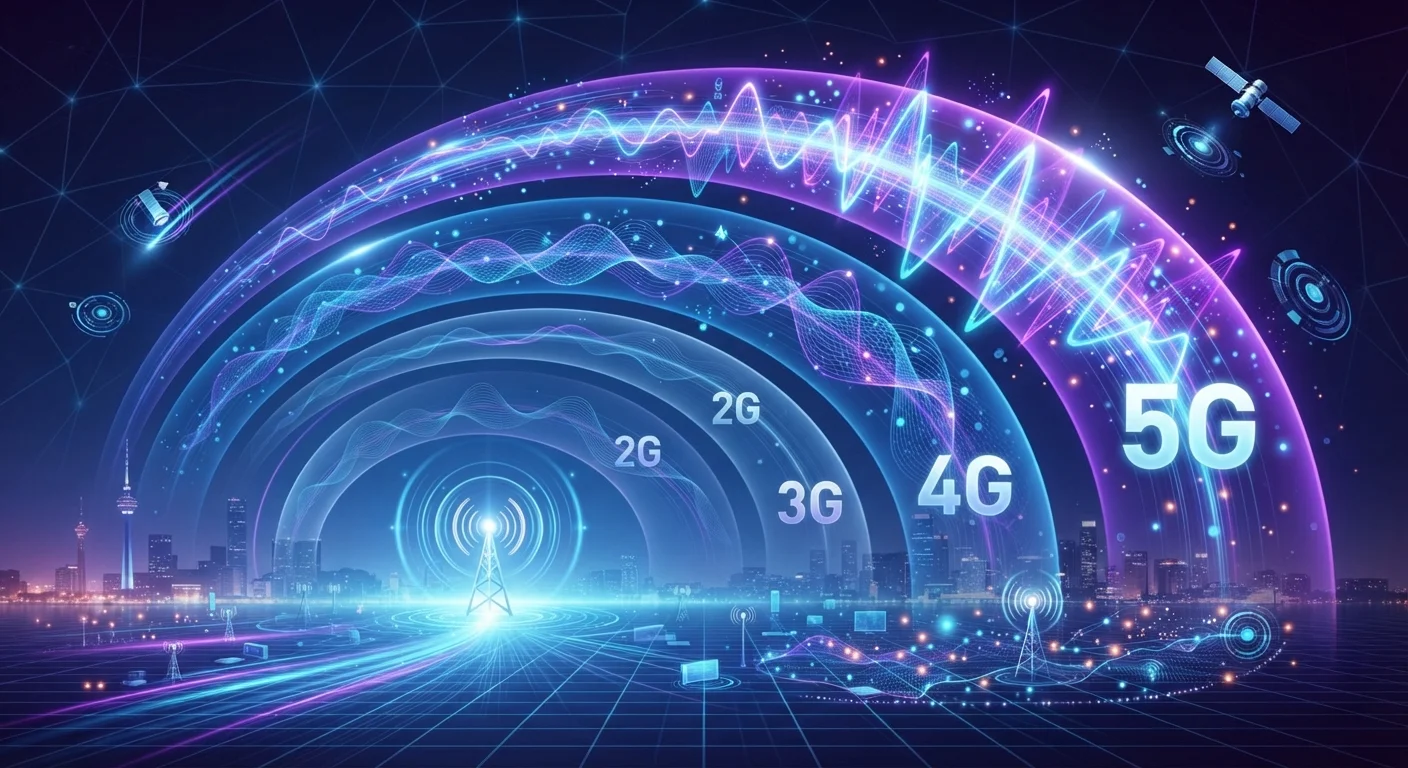
4G (fourth generation) refers to the cellular standard that succeeded 3G. In practice, what most Americans experience as "4G" is almost always LTE, a specific radio technology that carriers deployed to meet 4G performance thresholds. The two terms are often used interchangeably, though they're technically distinct.
LTE remains the workhorse of the U.S. wireless network. Even as 5G expands, LTE handles the majority of everyday calls, texts, and mobile data - particularly outside major metropolitan areas. It's reliable, mature, and supported by virtually every smartphone sold in the past decade.
5G (fifth generation) is the current frontier, but it's not a single uniform experience. The technology comes in three distinct frequency bands - low, mid, and high - each with very different performance profiles. A phone that shows a "5G" icon may be connecting to a low-band signal that offers speeds only modestly above LTE.
What the Numbers Actually Mean for Speed and Latency
Advertised speeds are peak theoretical figures measured under ideal lab conditions. Real-world performance depends on signal strength, network congestion, your device's modem, and how many users are sharing a nearby tower at a given moment.
~80%
U.S. mobile data still carried by LTE
Despite 5G expansion, LTE continues to handle the majority of everyday wireless traffic across the country.
3 bands
Distinct 5G frequency types in use
Low-band, mid-band, and mmWave each deliver very different speeds and coverage ranges under the same "5G" label.
~300 ft
Practical mmWave 5G range outdoors
High-frequency mmWave signals degrade rapidly with distance and are blocked by most building materials.
In practical terms, LTE typically delivers download speeds of 20-50 Mbps in everyday use, though well-placed users in low-traffic areas can occasionally see considerably higher. That's sufficient for streaming HD video, video calls, and most mobile tasks without noticeable lag.
Low-band 5G (operating below 1 GHz) offers broad geographic coverage - similar reach to LTE - but speed gains are modest, often in the 30-100 Mbps range. It travels through walls and over distance well, which is why carriers favor it for rural and suburban buildouts.
Mid-band 5G (roughly 2.5-6 GHz) delivers the most meaningful upgrade in everyday use: download speeds frequently in the 200-500 Mbps range with lower latency. This is what most consumers experience as a genuine step above LTE when they're in a covered area.
mmWave 5G (extremely high frequencies, 24 GHz and above) can reach multi-gigabit speeds in controlled environments, but the signal travels only short distances and is easily blocked by buildings, foliage, and even a hand. In practice, it's limited to dense venues - stadiums, transit hubs, parts of downtown cores - not suburban streets or homes.
Latency - the delay before data begins transferring - also improves across generations. LTE typically runs 30-70 milliseconds. Mid-band 5G can drop below 20 milliseconds, which matters more for real-time applications like gaming or video calls than for general browsing. For practical context on how speed thresholds translate to household activities, see our guide to estimating the right speed tier.
Coverage Realities and What Your Signal Bar Isn't Telling You
Signal bars on your phone measure signal strength - how clearly your device can hear the tower - not network generation or actual throughput speed. You can have full bars on low-band 5G in a rural area and experience similar speeds to a solid LTE connection in the same location.
Coverage maps published by carriers show where a signal exists, not where it performs well. A colored region on a map may include areas with weak signal, indoor penetration problems, or mid-band 5G limited to a small urban core while surrounding areas run on low-band or LTE.
5G Icon ≠ Fast 5G Connection
Your phone displaying a "5G" indicator only confirms it's connected to a 5G network - not which frequency band or how fast that connection actually is. Low-band 5G can look identical on-screen to mid-band 5G while delivering substantially different speeds. If you're evaluating whether 5G is worth prioritizing in a plan, check which 5G bands a carrier has deployed specifically in your zip code, not just whether 5G coverage exists there.
When evaluating wireless plans, the relevant questions are: which frequency band does 5G coverage use in your area? and does your phone's modem support mid-band frequencies? A 5G-capable phone connected to low-band 5G on a congested tower can underperform a well-placed LTE connection. For a fuller picture of how these factors interact with plan costs and contract terms, see the complete wireless coverage and cost guide.
If you're also evaluating home internet options - including fixed wireless access that runs on cellular networks - understanding how 5G and LTE compare to wired connections is useful context. Our overview of home internet types covers where wired options have structural advantages over wireless. And for consumers choosing between wireless plans based on data usage, understanding wireless plan tiers can help match a plan to actual needs.