
Understanding Wireless Plan Tiers: Light Users, Heavy Streamers, and Everyone In Between

Key Takeaways
- Wireless plan tiers are built around data allotments, speed guarantees, and priority levels - not just price.
- Most Americans use between 3 GB and 15 GB of data per month on their phones.
- "Unlimited" plans vary significantly in what they actually deliver; the label alone is not a reliable guide.
- Your Wi-Fi usage habits are just as important as your cellular usage when sizing a plan.
- Multi-line household plans and prepaid options can offer the same data for a lower per-line cost.
Start here
How Carriers Structure Their Plan Tiers
Next
Identifying Your Usage Profile
Then
What Each Tier Actually Delivers
Go deeper
Hidden Variables That Affect the Right Choice
Wrap up
Making a Decision That Fits Your Life
How Carriers Structure Their Plan Tiers
Wireless carriers organize their plans into tiers primarily based on three variables: the amount of high-speed data included, the priority level that data receives on the network, and additional features such as mobile hotspot access or international calling. Price is a result of these factors - not the starting point.
Most major carriers offer at least three distinct tiers: a basic or entry-level plan with a fixed data allotment or limited speeds, a mid-range plan with more data and modest perks, and a premium tier marketed as fully unlimited with added benefits. Understanding what sits behind each label is more useful than comparing price tags alone. For a detailed look at how "unlimited" branding can obscure important differences, see what unlimited really means on a wireless plan.
Data allotment
The amount of high-speed cellular data included in your plan each month before speeds are reduced or additional charges apply.
Deprioritization
A carrier practice where customers on certain plans temporarily receive slower speeds during periods of network congestion, while higher-priority customers are served first.
Throttling
A deliberate reduction in data speeds, either after you've used up a plan's high-speed allotment or as a permanent cap on certain plan types.
Hotspot data
Data used when you share your phone's cellular connection with another device, like a laptop. Many plans treat hotspot data separately from on-device data, often with tighter limits or lower speeds.
Priority threshold
The data amount after which your connection may be slowed on a congested network. Below this threshold, your speeds are treated the same as any other customer on that plan.
Identifying Your Usage Profile
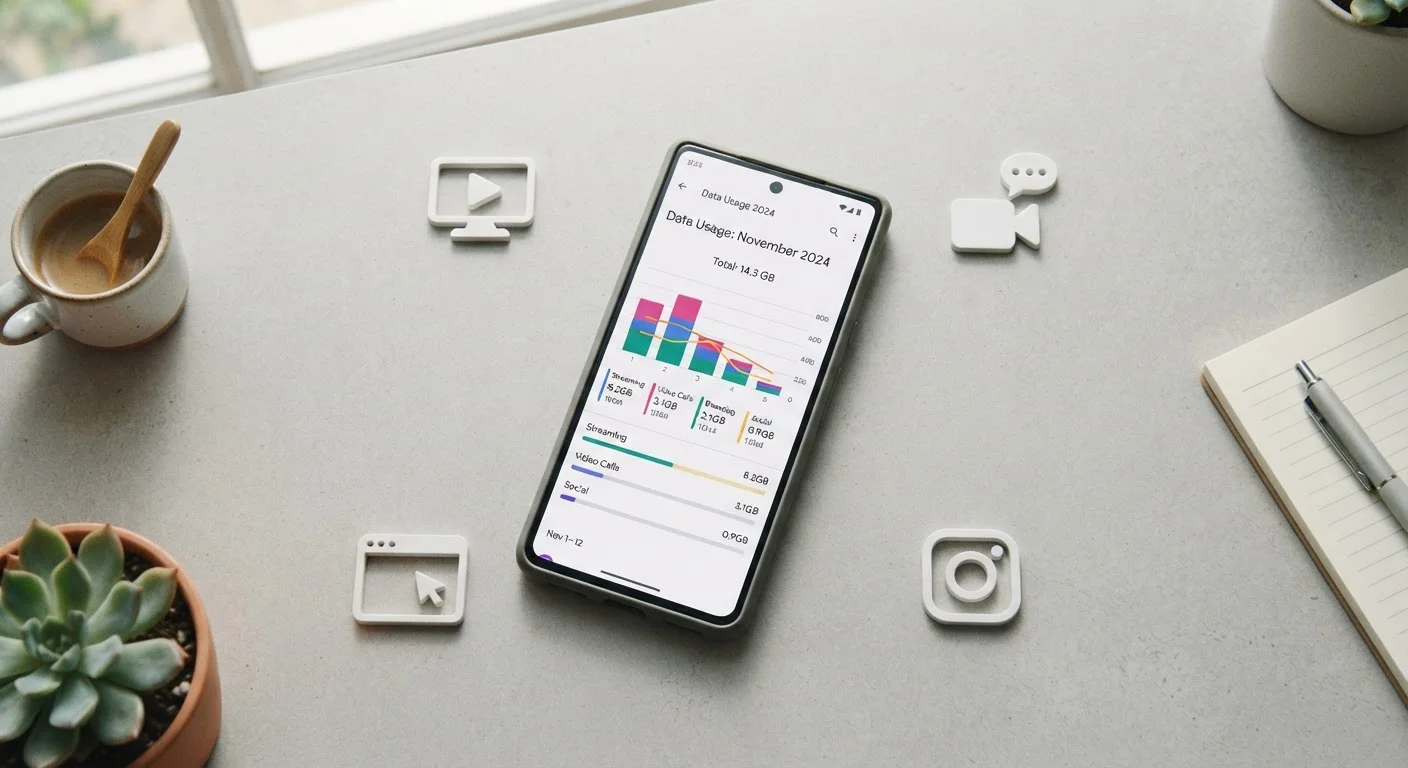
Before comparing any plan, spend two minutes checking your actual cellular data usage. On an iPhone, go to Settings > Cellular; on Android, look under Settings > Network > Data Usage. Most phones show totals for the current billing period and let you reset the counter monthly for ongoing tracking. Critically, look at cellular data only - not total data including Wi-Fi.
Three broad usage profiles cover most consumers:
- Light users (under 5 GB/month): Primarily on Wi-Fi at home and work. Use the phone for calls, texts, messaging apps, maps, and occasional social media browsing while out.
- Moderate users (5-15 GB/month): Stream music or podcasts during commutes, watch some video on mobile, use navigation regularly, and are away from Wi-Fi for meaningful portions of the day.
- Heavy users (15 GB+ per month): Stream video in standard or high definition on cellular, work remotely using phone hotspot, travel frequently, or have minimal Wi-Fi access throughout the day.
If you rely on your phone as a hotspot for a laptop or tablet, your data needs multiply quickly. How carriers treat hotspot data is a separate and important consideration from on-device streaming.
What Each Tier Actually Delivers
Entry-level plans typically cap high-speed data at somewhere between 5 GB and 15 GB, then throttle speeds sharply afterward. They rarely include hotspot data, may exclude international roaming, and often cap video streaming resolution at 480p or lower. For light users consistently on Wi-Fi, these plans are genuinely sufficient and can cost significantly less each month.
Mid-range plans generally offer higher or uncapped data with a deprioritization threshold - a point at which your speeds may slow if local towers are congested, but won't be cut off. Hotspot access is often included but capped at lower speeds (commonly 5-15 GB at full speed, then throttled). Video streaming may be limited to 1080p rather than 4K.
Premium unlimited tiers tend to offer the highest deprioritization thresholds, faster hotspot speeds, and fewer content restrictions. They often bundle perks like streaming subscriptions or international data passes. Whether those extras justify the price difference depends on whether you'd pay for them independently.
Check Your Cellular Usage Before You Shop
Before evaluating any plan, look up your cellular-only data usage in your phone's settings for the past two or three months. This single number - not your Wi-Fi usage - is the most important input for choosing the right tier. It takes under a minute and can prevent you from paying for data you'll never use.
Hidden Variables That Affect the Right Choice
Several factors beyond raw data allotment shape whether a plan works well in practice:
- Network priority: On congested towers, lower-tier customers on the same carrier may experience noticeably slower speeds than premium-tier customers. If you live or work in a dense urban area, priority level matters more than if you're typically in a less congested area.
- Multi-line discounts: Per-line costs drop substantially on family or multi-line accounts. A household of three or four may find that a higher-tier plan shared across lines costs less per person than individual basic plans. See how per-line charges and discounts appear on your bill for clarity.
- Prepaid vs. postpaid structure: Prepaid plans often offer equivalent data allotments at lower prices, with the tradeoff of lower network priority and fewer device financing options. The structural tradeoffs between prepaid and postpaid are worth understanding before committing.
Making a Decision That Fits Your Life
Match your plan to your measured usage, not your worst-case scenario. Most people overestimate how much cellular data they need because they think in terms of total data consumption - including all the streaming they do at home over Wi-Fi. Your cellular-only number is almost always lower than you expect.
A practical approach: note your actual monthly cellular data usage over two to three months, identify whether you have reliable Wi-Fi where you spend most of your time, and factor in whether you use hotspot regularly. From there, choose the lowest tier that covers your typical usage with a modest buffer - not the highest tier out of anxiety.
For households with multiple connected devices and a home broadband connection, the calculus around mobile data is also linked to your home internet setup. Understanding your household's total bandwidth needs can help you see both pictures together. And if you want a full end-to-end orientation to how wireless service works in the U.S., The Full Picture on Wireless covers coverage, cost, and contract terms in one place.