

Key Takeaways
- Mulch conserves soil moisture by significantly slowing evaporation from the soil surface.
- A 2-4 inch layer is the practical sweet spot - too little is ineffective, too much can suffocate roots.
- Organic mulches improve soil structure and biology as they break down over time.
- Keeping mulch a few inches away from plant stems prevents rot and pest problems.
- Spring and fall are the most impactful times to apply or refresh mulch.
- Mulch is one of the most cost-effective tools for reducing garden maintenance needs.
Mulch
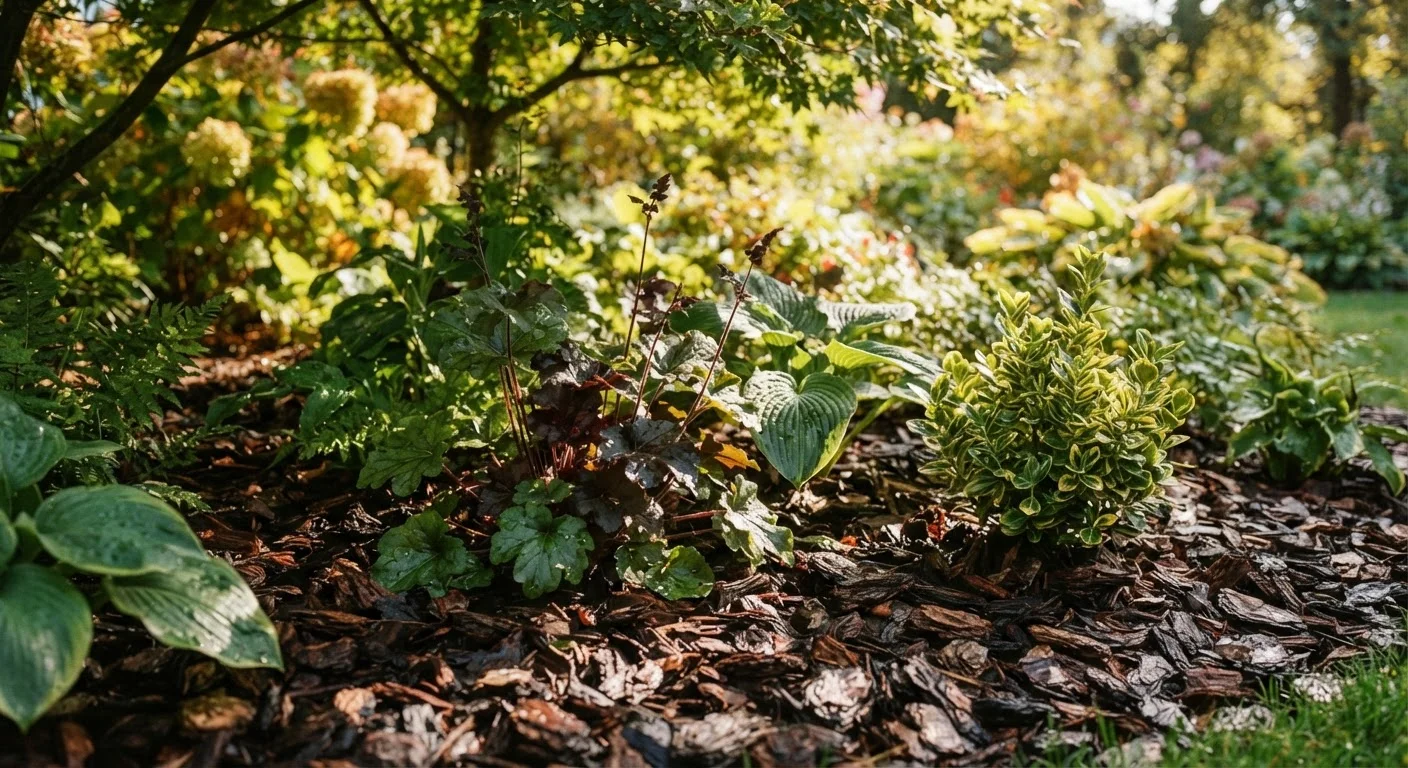
Mulch is any material spread over the surface of soil to protect and improve it. It can be organic - such as wood chips, straw, or shredded leaves - or inorganic, like gravel or landscape fabric. Regardless of type, mulch acts as a buffer between your soil and the environment above it.
Organic mulches decompose over time, gradually adding organic matter and nutrients to the soil, while inorganic mulches persist longer but contribute nothing to soil biology.
What Mulch Actually Does in Your Garden
Mulch earns its place in any garden not through appearance, but through function. Its most immediate benefit is moisture retention: a properly applied layer dramatically slows water evaporation from the soil surface, reducing how often you need to water. This is especially significant during summer dry spells. In fact, studies from cooperative extension programs consistently show that mulched soil retains meaningfully more moisture than bare soil under the same conditions.
Weed suppression is another core benefit. Mulch blocks sunlight from reaching the soil surface, preventing many weed seeds from germinating. Those that do push through are easier to pull because the soil beneath stays loose and moist.
Beyond water and weeds, mulch moderates soil temperature - keeping roots cooler in summer and insulating them against hard frosts in winter. For gardeners dealing with temperature extremes, this buffering effect can be the difference between a plant thriving and struggling. If you're already thinking about how watering habits affect plant health, pairing smart irrigation with mulch makes a significant difference - see The Lawn Watering Habits That Do More Harm Than Good for more context.
25-50%
Reduction in soil moisture loss with mulch
University cooperative extension research consistently indicates that mulched garden beds lose significantly less water to evaporation compared to bare soil under equivalent conditions.
2-4 inches
Recommended mulch depth for most beds
This range is the established standard cited by horticultural extension services across the U.S. for balancing weed suppression, moisture retention, and root airflow.
10°F
Soil temperature moderation mulch can provide
Mulch can buffer soil temperatures by roughly 10 degrees Fahrenheit compared to bare soil, helping roots avoid heat stress in summer and cold damage in winter.
Organic vs. Inorganic Mulch: Choosing the Right Type
The two broad categories of mulch serve different purposes, and understanding the distinction helps you choose wisely for each situation.
Organic mulches - including shredded bark, wood chips, straw, pine needles, and shredded leaves - decompose over time. This decomposition feeds soil microorganisms, adds organic matter, and gradually improves soil structure. For most garden beds and around trees and shrubs, organic mulch is the go-to choice. Shredded leaves, often available for free each fall, are one of the most effective options available to homeowners.
Inorganic mulches - such as gravel, river rock, or landscape fabric - don't break down. They're better suited to pathways, rock gardens, or areas where you want a permanent, low-maintenance solution. They don't improve soil biology, however, so they're generally less beneficial for planted beds over the long term.
One common misconception is that landscape fabric is a long-term weed solution - in practice, soil and organic debris accumulate on top, and weeds establish in that layer within a few seasons. Check out our piece on Garden Myths That Keep Your Yard from Thriving for more evidence-based clarifications on ideas like this.
Free Mulch From Your Own Yard
Fallen leaves shredded with a lawn mower make excellent mulch for garden beds and are completely free. Run your mower over leaf piles to break them into smaller pieces, which decompose faster and are less likely to mat together and repel water. This is one of the most sustainable mulching options available to homeowners.
How and When to Apply Mulch Correctly
Application technique matters as much as material choice. Follow these principles for the best results:
- Depth: Aim for 2 to 4 inches. Thinner layers dry out and let weeds through; thicker layers can mat down and repel water rather than absorbing it.
- Clearance: Keep mulch 2-3 inches away from plant stems and at least 6 inches from tree trunks. Piling mulch against stems - sometimes called a "mulch volcano" - traps moisture and invites decay.
- Timing: Spring application, after the soil has warmed but before summer heat peaks, locks in moisture for the season. Fall application, after the first frost threat, insulates roots through winter. Avoid mulching frozen ground, as this can trap cold and delay spring soil warming.
- Preparation: Pull existing weeds before laying mulch. Mulch suppresses new growth but won't kill established weeds already rooted in the soil.
Organic mulch will need refreshing roughly once a year as it breaks down. This is actually a feature, not a flaw - that decomposition is what feeds your soil. If you're also working on improving overall soil health, Signs Your Lawn Soil Is Compacted covers complementary steps.
Mulch and the Bigger Picture of Garden Health
Mulch doesn't work in isolation - it's one element of a connected garden ecosystem. When organic mulch decomposes, it feeds earthworms and beneficial soil microbes that aerate the soil and make nutrients more available to plant roots. Over several seasons, consistent mulching can meaningfully improve soil structure in ways that reduce dependence on fertilizers.
For gardeners exploring lower-maintenance approaches - such as incorporating native plants and rewilding strategies - mulch becomes even more important. Native plantings often rely on undisturbed, well-conditioned soil, and a consistent mulch layer helps establish those conditions.
Ultimately, mulch is one of the highest-return investments you can make in a garden. A single afternoon of application can reduce watering frequency, cut weeding time significantly, and protect plants through seasonal extremes - all without the need for ongoing intervention.