

Key Takeaways
- Portion distortion is common - restaurant and packaged serving sizes often far exceed standard recommendations.
- Your hand is a surprisingly reliable built-in measuring tool for estimating portions on the go.
- Awareness of portions does not require weighing food or counting calories at every meal.
- Small, consistent habits - like plating food before eating - can meaningfully shift how much you consume.
- Sustainable portion awareness supports long-term balance, unlike restrictive dieting approaches.
What you will need
Why Portions Have Gotten So Confusing
Over the past few decades, standard serving sizes in the U.S. have grown considerably - in restaurants, in packaged foods, and even in our own kitchens. Researchers have called this phenomenon portion distortion: our reference point for a "normal" amount of food has shifted upward so gradually that oversized servings now feel ordinary.
This matters because most people eat more when more is in front of them, often without noticing. A bowl that holds three cups of cereal will typically get filled more than a bowl that holds one. That's not a character flaw - it's a well-documented feature of how human appetite and visual cues interact.
The good news is that building portion awareness doesn't require turning every meal into a math problem. Understanding the general landscape - what a reasonable amount looks like for different foods - is often enough to make a real difference. For context on how packaged food labels describe serving sizes, see our guide to reading nutrition labels.
Awareness, Not Restriction
Portion awareness is about understanding what you're eating - not about rigid limits or guilt. The aim is a realistic, sustainable sense of food amounts that supports your overall wellbeing. If you find food tracking or measuring causing stress or anxiety, speak with a registered dietitian who can help you find a healthier approach.
What You'll Need
One of the most practical aspects of portion awareness is that it requires almost nothing special.
What you will need
Standard dinner plate (approximately 9 inches)
Helps create a visual reference for appropriate portion distribution without measuring.
Measuring cups and spoons
Useful for occasional recalibration of common foods like grains, cereals, and cooking oils.
Kitchen food scale
Provides precise weight measurements for those who want accurate benchmarks when first learning portion sizes.
Step-by-Step: Building Portion Awareness Without Stress
The following steps are designed to be layered gradually - you don't need to adopt all of them at once. Start with one or two that feel most accessible.
Use Your Hand as a Measuring Guide
Your hand is proportional to your body and always available. Here's a simple reference framework used by many registered dietitians:
- Palm (thickness and width): roughly one serving of protein - chicken, fish, tofu, or cooked legumes
- Cupped hand: approximately one serving of grains, cereals, or cooked pasta
- Fist: about one serving of vegetables or fruit
- Thumb: one serving of fats like nut butter, oil, or cheese
These are approximations, not precise measurements - but that's the point. They give you a usable ballpark without any tools.
Plate Your Food Before You Eat
Eating directly from a bag, pot, or takeout container removes one of your most useful feedback signals: being able to see how much you're actually eating. Plating food - even informally - gives you a visual snapshot before you start.
Research on visual cues and food intake consistently shows that people tend to eat less when they can see the full amount in front of them before starting, compared to eating from an open container.
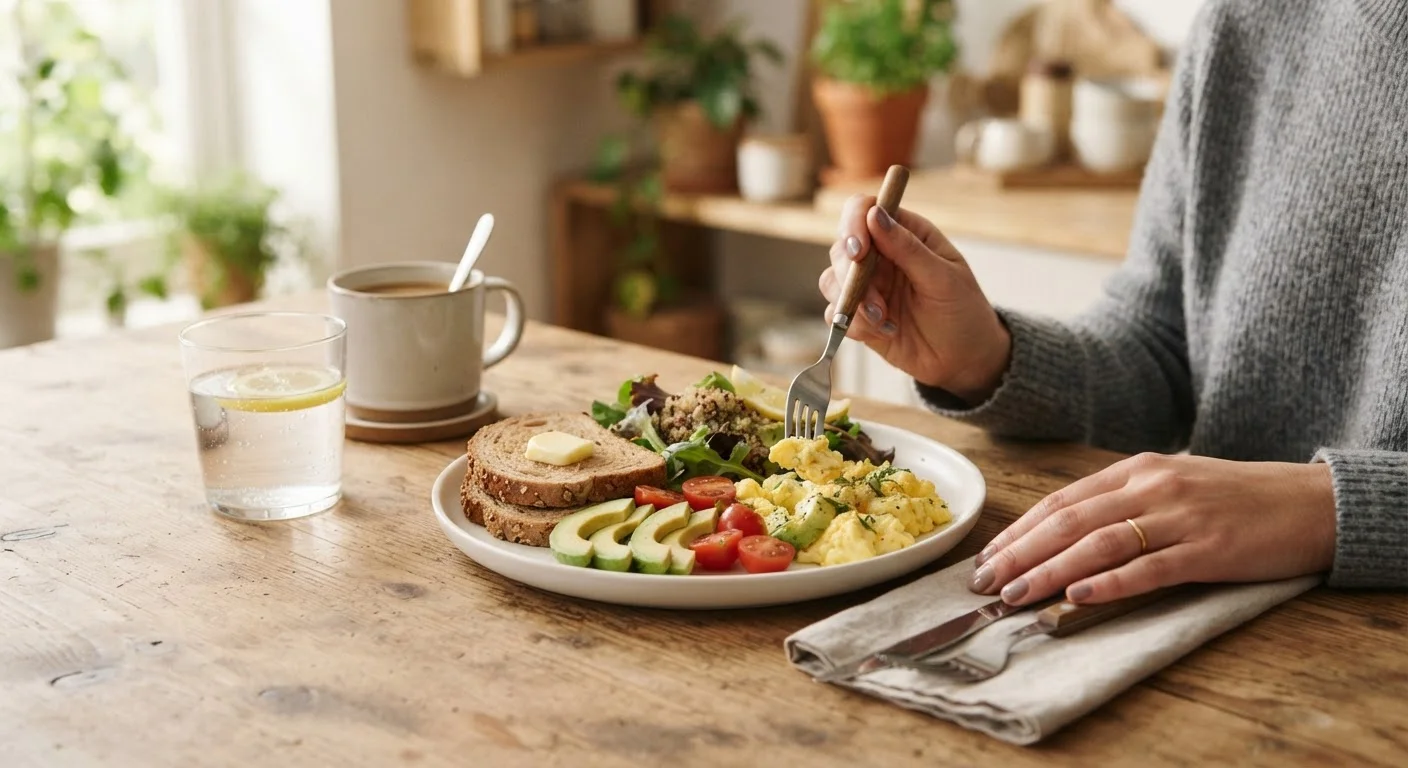
Aim for a Balanced Plate Composition
Rather than measuring specific weights, consider the general proportions on your plate:
- About half the plate filled with non-starchy vegetables or fruit
- About a quarter with a protein source
- About a quarter with a whole grain or starchy vegetable
- A small amount of healthy fat incorporated into cooking or as a topping
This framework - used in various forms by public health organizations - naturally guides reasonable amounts without requiring calorie counts.
Slow Down and Check In During the Meal
It takes roughly 15-20 minutes for fullness signals to travel from your gut to your brain. Eating quickly can mean you've consumed far more than you needed before your body has a chance to register satisfaction.
Simple strategies include putting your utensil down between bites, eating without screens when possible, and pausing halfway through to ask how hungry you still feel. None of these require willpower - they just introduce a small delay that lets your body's signals catch up.
Recalibrate Occasionally, Not Constantly
Every few weeks, it's worth measuring a familiar food - your morning cereal, your pasta serving, your cooking oil - to check how your estimates are holding up. People's pours and scoops tend to drift upward over time without any conscious awareness.
This doesn't need to become a regular ritual. Think of it as a periodic reset rather than a daily requirement - a way to keep your mental benchmarks reasonably accurate without making meals feel like a laboratory exercise.
Portion Focus Is Not a Diet
Paying attention to portions is a general health habit - not a treatment for any medical condition, including obesity, diabetes, or disordered eating. If you have a specific health condition or a complicated relationship with food, please work with a qualified healthcare provider or registered dietitian rather than relying solely on general guidance.
Making It a Sustainable Habit
Portion awareness works best when it becomes a low-effort background habit rather than a rigid daily checklist. The goal isn't perfection at every meal - it's building a generally reliable sense of how much food serves your body well.
One useful frame: think of individual meals as relatively unimportant compared to your overall pattern across days and weeks. An unusually large meal at a celebration doesn't undo consistent, balanced habits the rest of the time. This is precisely why crash diet approaches tend to backfire - they treat food as a problem to be controlled rather than a practice to be understood.
Once portion habits feel natural, many people find it easier to think ahead about meals, making simple weekly meal planning a natural next step. If you're also exploring how food composition affects your choices, our overview of plant-based eating offers a balanced look at shifting toward more vegetables and whole foods.
This article is for general informational purposes only and does not constitute medical or nutritional advice. For guidance tailored to your individual health needs, consult a qualified healthcare provider or registered dietitian.