

Key Takeaways
- Serving size is the foundation of every number on the label - always check it first.
- % Daily Value shows how much a nutrient contributes to a 2,000-calorie reference diet.
- Added sugars, sodium, and saturated fat are the nutrients most Americans need to watch most closely.
- The ingredient list reveals what's actually in the food, ordered by weight from most to least.
- Nutrition labels are a comparison tool - use them to make relative choices, not to count every calorie.
What you will need
Why Nutrition Labels Exist - and What They Actually Show
The U.S. Nutrition Facts label is a federally mandated disclosure, regulated by the Food and Drug Administration (FDA). It was first required in 1994 and underwent a significant update - with most manufacturers required to comply by 2020 - to reflect updated dietary science and more realistic eating patterns.
The label's purpose is transparency: to give consumers standardized, comparable information about the food they are buying. It does not tell you whether a food is 'good' or 'bad' - it gives you data to interpret in the context of your overall diet. Understanding how to read that data is a skill worth developing, particularly given how heavily many Americans rely on packaged and processed foods day to day.
For context on how these labels fit into broader grocery navigation, see our nutritional guide to the American grocery store.
Labels Are a Guide, Not a Prescription
Nutrition labels provide general population reference values, not targets tailored to your body or health conditions. Individual calorie and nutrient needs vary significantly based on age, sex, activity level, and medical history. If you have a chronic condition, are pregnant, or are managing a specific health goal, consult a registered dietitian or your healthcare provider for personalized guidance.
How to Read a Nutrition Facts Label: Step by Step
The following steps walk through each section of a standard U.S. Nutrition Facts panel in the order you should read it. Grab a packaged food item - any will do - and work through each section as you read.
What you will need
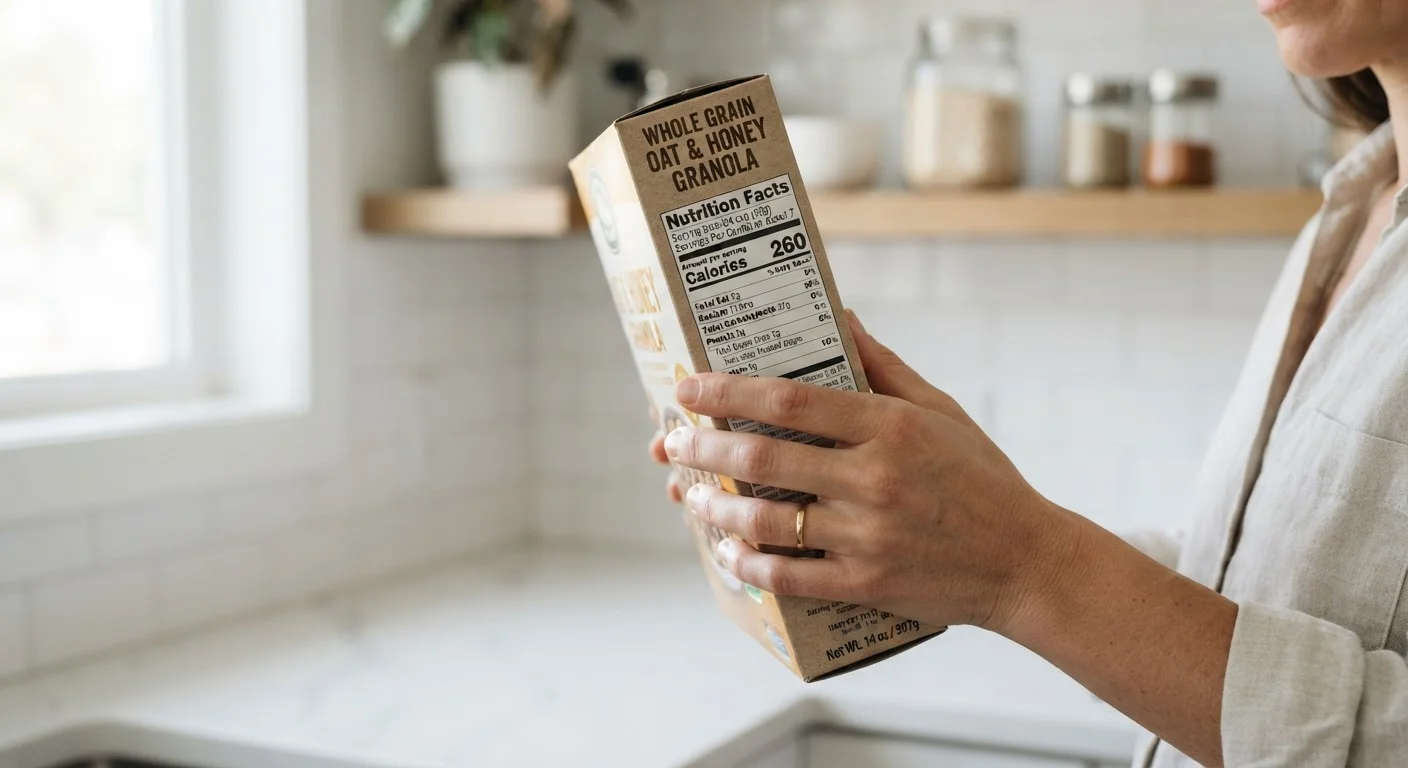
A packaged food item with a Nutrition Facts panel
The primary object you will be reading and interpreting throughout this guide.
FDA Nutrition Facts label reference guide
The official FDA resource that explains each section of the updated Nutrition Facts label format.
Identify the Serving Size and Servings Per Container
The serving size is printed at the very top of every Nutrition Facts panel, and every other number on the label applies to that amount - not to the whole package. The FDA updated label formatting in 2020 to display serving size in a larger, bolder font precisely because this detail is so frequently overlooked.
Check how many servings are in the container. A bag of chips labeled '3 servings' means every calorie and nutrient figure must be multiplied by three if you eat the whole bag. For realistic portion context, see our guide to understanding portion sizes.
Read the Calorie Count in Context
Calories measure total energy per serving. The updated label displays the calorie count in large type. While calories matter for energy balance, they don't distinguish between nutrient-dense and nutrient-poor foods - 200 calories from almonds and 200 calories from a cookie differ substantially in nutritional value.
Use calories as one data point alongside the quality of nutrients, not as the sole measure of a food's value.
Examine the Nutrients to Limit
Three nutrients appear consistently in excess in American diets: saturated fat, sodium, and added sugars. The Nutrition Facts panel lists each with both a gram amount and a % Daily Value (%DV).
- Saturated fat: Dietary guidelines recommend limiting intake. It is listed separately from total fat.
- Sodium: Most Americans consume well above the 2,300 mg daily reference value. Packaged and processed foods are the primary source.
- Added sugars: These are sugars incorporated during processing - distinct from naturally occurring sugars in fruit or dairy. The label now requires them to be listed separately beneath total sugars.
Look for Nutrients to Prioritize
The panel also lists nutrients many Americans under-consume: dietary fiber, vitamin D, calcium, iron, and potassium. Choosing foods with higher %DVs for these supports a more complete diet.
Dietary fiber is particularly worth tracking. Most Americans fall well short of recommended intake - our article on why Americans fall short on dietary fiber explains why it matters and how to close the gap.
Interpret % Daily Value (%DV)
The % Daily Value column shows what percentage of a daily reference amount each nutrient provides per serving. These values are based on a 2,000-calorie-per-day diet, which is a general reference point - not a target for every individual.
%DV is most useful as a comparison tool: use it to compare two versions of the same product, or to see whether a food is a meaningful source of a given nutrient. For a quick rule of thumb, see the tip callout in this article for the 5%/20% guideline.
Read the Ingredient List
The ingredient list is separate from the Nutrition Facts panel but equally informative. Ingredients are listed in descending order by weight - so the first ingredient is the most abundant. A cereal with sugar listed second or third contains a substantial amount of it, regardless of what the front label says.
Watch for multiple forms of sugar under different names (cane syrup, dextrose, maltose, fruit juice concentrate) scattered throughout the list - this is a legitimate way manufacturers can make sugar appear lower in ranking. For a broader look at how these patterns show up across packaged foods, our article on foods commonly labeled healthy that may surprise you is a useful next step.
Use the 5% / 20% Rule for Quick Comparisons
A % Daily Value of 5% or less is generally considered low for a nutrient; 20% or more is considered high. Use this shorthand to quickly gauge whether a food is a significant source of something beneficial - like fiber - or something to limit, like sodium or saturated fat.
Front-of-Package Claims Can Mislead
Terms like 'natural,' 'light,' 'multigrain,' or 'reduced fat' are marketing language, not regulated health claims. A product labeled 'reduced fat' may compensate with added sugar. Always flip to the Nutrition Facts panel and ingredient list rather than relying on front-of-package messaging to form your judgment.
This article is for general informational and educational purposes only and does not constitute medical or dietary advice. Individual nutritional needs vary. Consult a registered dietitian or qualified healthcare professional for guidance specific to your health situation.