

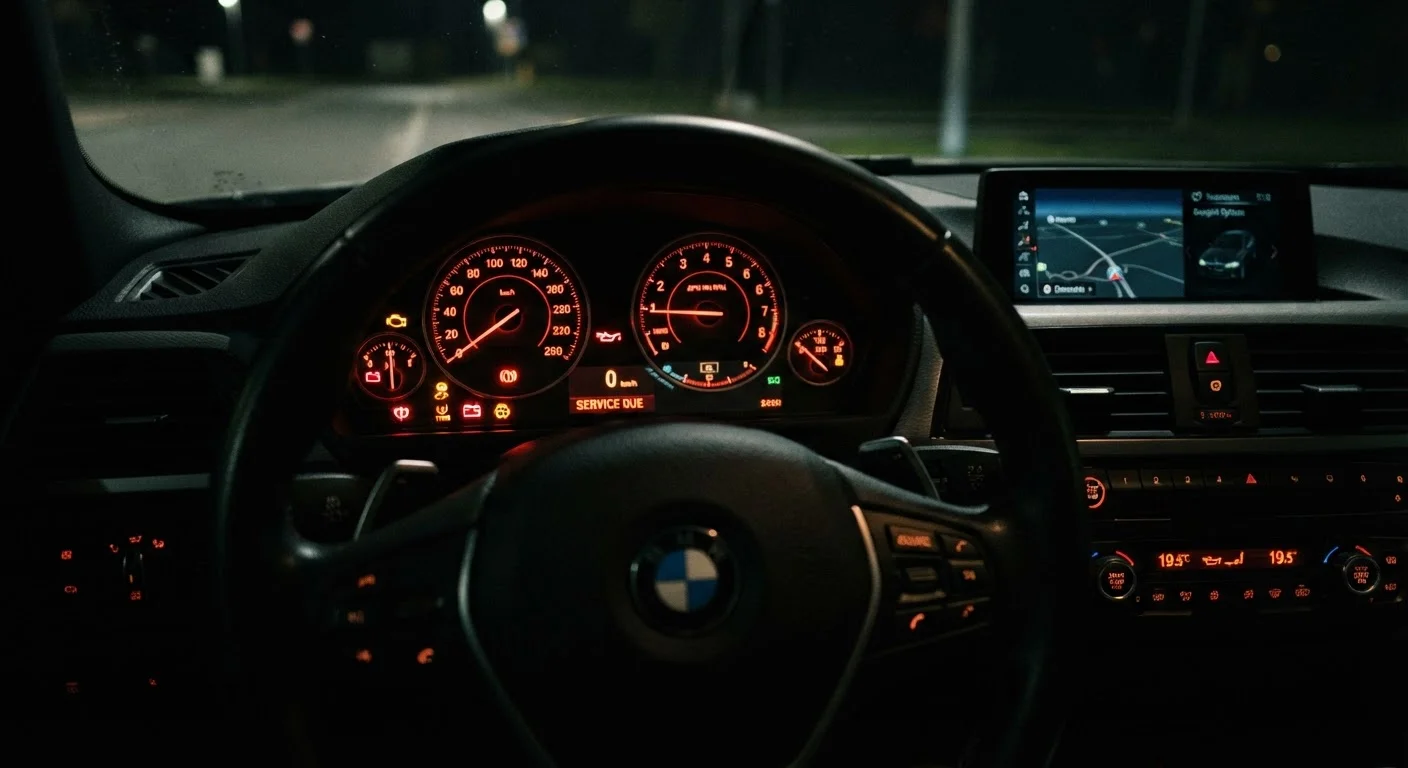
How Dashboard Warning Light Colors Work
Your dashboard uses a traffic-light logic most drivers can learn quickly. Red lights signal immediate danger - pull over safely, stop the engine if indicated, and address the problem before driving further. Amber or yellow lights mean a fault has been detected that needs attention soon, but driving short distances while arranging service is often acceptable. Green and blue lights simply confirm a system is active, such as high-beam headlights or cruise control - these are informational, not warnings.
Understanding this color framework helps you prioritize. A red oil pressure light demands a different response than an amber tire pressure icon, even if both appear on the same drive.
The Most Common Warning Lights Decoded
Check Engine Light (Malfunction Indicator Lamp)
The check engine light - technically called the Malfunction Indicator Lamp, or MIL - covers a broad range of engine and emissions faults. It can be triggered by something as minor as a loose gas cap or as serious as a failing catalytic converter. If it illuminates steadily, schedule a diagnostic soon. If it flashes, reduce speed and seek service immediately - a flashing MIL typically signals engine misfires that can damage your catalytic converter quickly.
Oil Pressure Warning
This red light is one of the most urgent on any dashboard. Low oil pressure means internal engine components may not be receiving adequate lubrication. Pull over safely and turn off the engine as soon as possible. Check the oil level with the dipstick; if the level appears normal, the issue may be a faulty sensor or oil pump - either way, have the vehicle towed rather than risk engine damage.
Battery / Charging System
A battery-shaped amber or red icon usually points to a charging system fault rather than the battery itself. Common causes include a worn alternator, a loose belt, or corroded connections. If this light appears while driving, your vehicle is running on battery power alone and may stall - limit electrical use and get to a shop promptly.
Tire Pressure Monitoring System (TPMS)
The TPMS light - a cross-section of a tire with an exclamation point - activates when one or more tires drops roughly 25% below the recommended pressure. Check and correct tire pressures as soon as safely possible. Note that cold weather causes tire pressure to drop naturally, so this light may appear on cold mornings even when tires were fine the day before. For a deeper look at tire care, see Tire Pressure, Tread Depth, and Rotation.
Temperature Warning
A red thermometer icon means your engine coolant temperature is critically high. Pull over safely, turn off the engine, and do not open the radiator cap while the engine is hot. Overheating can cause severe engine damage within minutes. Once cooled, check the coolant reservoir level. Checking coolant and other fluid levels is a straightforward skill every driver benefits from knowing.
Brake System Warning
This light has two common triggers: the parking brake is engaged, or brake fluid is low. If the light stays on after releasing the parking brake, check the brake fluid reservoir. Low brake fluid can indicate worn brake pads or a potential leak in the system - both merit prompt professional inspection, as braking performance may be compromised.
Traction Control / Stability Control
A flashing traction control light (often shown as a car with wavy lines beneath) typically means the system is actively working to maintain grip - expected in slippery conditions. If it stays on steadily, the system may be disabled or a sensor fault has been detected. A disabled stability control system increases accident risk in poor road conditions.
When to Drive On and When to Stop Immediately
Not every warning light calls for pulling over on the spot, but several do. Use this general framework:
- Stop immediately: Oil pressure warning, engine temperature warning (red), brake system warning (if brakes feel abnormal), or any light accompanied by unusual sounds, smells, or handling changes.
- Get service within 1-2 days: Steadily lit check engine light, battery/charging warning, TPMS light (once tire pressures are corrected and it remains on).
- Schedule at your next service: Maintenance reminders (oil life monitor, service due indicators), steadily lit traction control light with no drivability symptoms.
When buying a used vehicle, a lit warning light is a red flag. The questions to ask before a test drive should always include asking the seller about any active dashboard lights and reviewing recent service history. Routine awareness of your warning lights also complements a broader vehicle maintenance schedule, keeping small issues from becoming expensive ones.