

Key Takeaways
- A documented service history can meaningfully support resale value and buyer confidence.
- Maintenance logs help you track warranty compliance and dispute repair claims.
- Both digital apps and paper notebooks work - consistency matters more than format.
- Logging mileage, dates, and service types makes it easier to stay on schedule.
- Receipts and service records together create a complete, verifiable paper trail.
What a Maintenance Log Actually Is
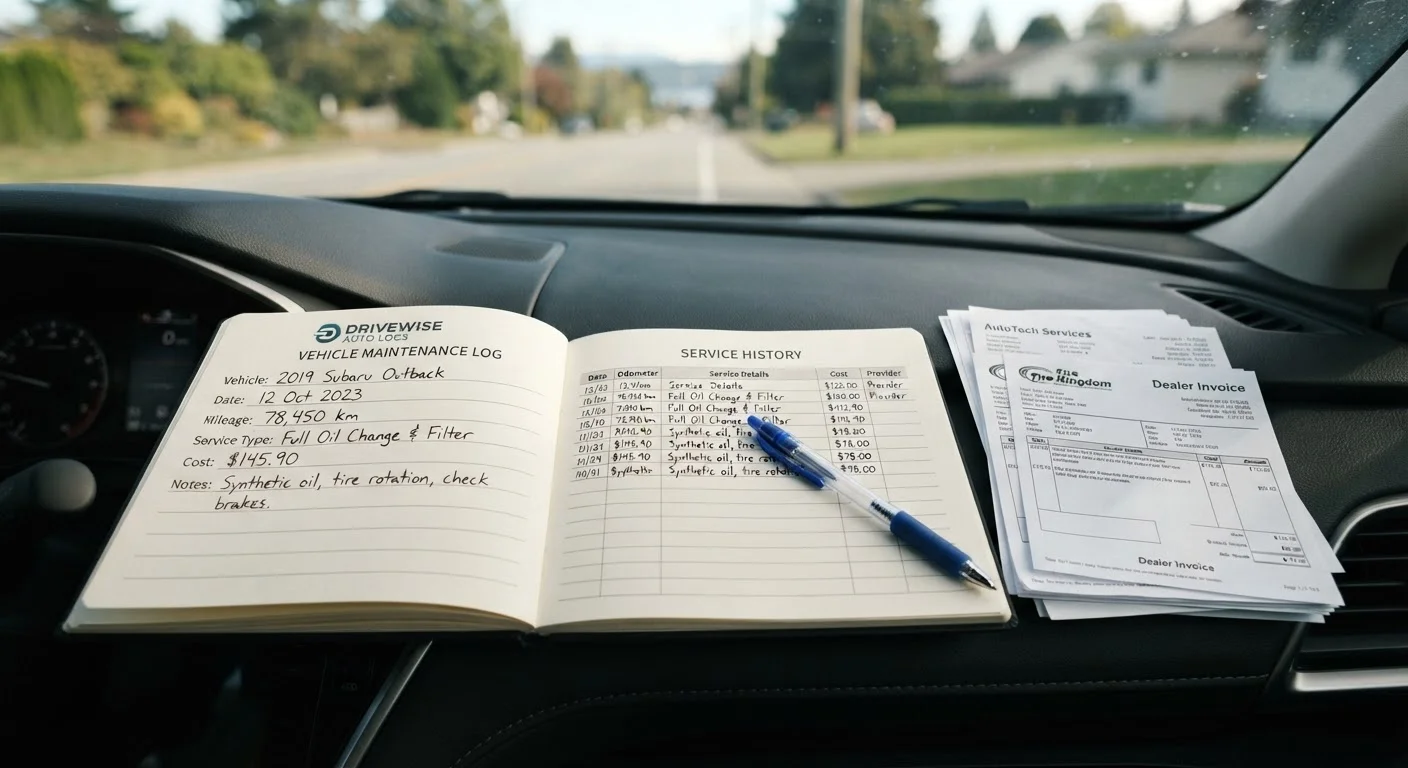
A vehicle maintenance log is a running record of every service, inspection, repair, and part replacement performed on your car. It typically captures the date, current odometer reading, type of service, cost, and - where applicable - the name of the shop or technician who did the work.
Most new vehicles come with a small service booklet in the glove compartment intended for this purpose. But many drivers never use it, relying instead on memory or scattered receipts stuffed in the glovebox. That approach creates gaps that can cost you later - at resale time, during a warranty claim, or when a mechanic asks whether a particular service has ever been done.
Understanding why preventive maintenance matters is the first step; recording it consistently is what makes that knowledge actionable over the life of your vehicle.
Why the Record Matters Beyond the Repair Itself
A maintenance log does more than remind you when your next oil change is due. It creates a documented history that serves several practical functions:
- Resale value: Buyers and dealers are more confident in a vehicle with verifiable service records. A well-maintained car with documented proof is generally easier to sell and may command a stronger price than one without records - though outcomes vary by market and vehicle.
- Warranty compliance: Many manufacturer warranties require that certain maintenance be performed at specified intervals. A log with receipts helps demonstrate compliance if a covered repair is disputed.
- Dispute resolution: If a shop claims a part was recently replaced and you have no record of it, you're negotiating blind. Documentation shifts that dynamic.
- Pattern recognition: Recurring issues in a log - the same component serviced multiple times - can signal an underlying problem worth investigating before it becomes a larger repair.
When evaluating a used vehicle, a vehicle history report captures some of this information, but it doesn't always reflect work done outside dealership networks. A personal log fills that gap from the owner's side.
~30%
Used-car buyers who prioritize service records
Industry surveys conducted by automotive research organizations consistently find that a significant share of used-vehicle buyers rate documented maintenance history as a top factor in purchase decisions.
3-5 years
Typical manufacturer warranty period
Most new vehicle limited warranties in the U.S. run between three and five years, during which documented maintenance compliance can be critical to honoring warranty claims.
Best Practices for Building and Maintaining Your Log
Record every service at the time it happens, not later from memory.
Details fade quickly - exact mileage, part brand, or technician notes are easy to misremember after a few weeks. Logging immediately ensures accuracy and completeness, which matters most when you need to reference the record months or years later.
Keep physical receipts alongside your written or digital log.
A log entry tells you what was done; a receipt proves it. Receipts provide itemized detail - part numbers, labor hours, technician signatures - that a simple log entry cannot replicate. Together, they create a defensible paper trail for warranty or resale purposes.
Log all maintenance, not just major repairs.
Oil changes, air filter replacements, and tire rotations are easy to overlook because they feel routine. But these are precisely the entries that demonstrate diligent ownership to a future buyer or warranty adjuster.
Choose a format you'll actually use consistently.
The best log is the one you maintain. A paper notebook in the glovebox, a dedicated spreadsheet, or a smartphone app all work - what matters is that the format fits your habits and that you return to it reliably.
Note any symptoms or observations at the time of service.
Recording that you brought the car in because of a vibration at highway speeds - not just that the tires were rotated - provides context that a future mechanic or buyer may find valuable. It also helps you track whether a reported issue was actually resolved.
If tire maintenance is part of your routine - and it should be - logging each rotation and pressure check is just as important as recording oil changes. See our guide on tire pressure, tread depth, and rotation for a breakdown of what to track and how often.
Getting Started Today
Starting a log on a vehicle you've owned for years is still worthwhile - begin from today and gather what records you can from past service visits. Many shops can print or email a service history for work they've performed, which gives you a useful starting point.
Whether you're buying your next vehicle or trying to get more from the one you already own, consistent documentation is a low-effort habit with outsized long-term value. For broader context on navigating vehicle ownership, the Buying a Vehicle hub covers everything from evaluating your first purchase to understanding what a solid ownership record looks like to future buyers.
This article is for general informational purposes only and does not constitute professional mechanical, legal, or financial advice. Consult a qualified mechanic or relevant professional for guidance specific to your vehicle and situation.