

Key Takeaways
- New cars depreciate fastest in the first two to three years, often losing 20-30% of value quickly.
- Used cars carry lower sticker prices but may bring higher repair and financing costs.
- Insurance premiums are typically higher for new vehicles than for comparable used ones.
- Certified pre-owned programs can bridge the gap between new-car assurance and used-car pricing.
- Total ownership cost - not just purchase price - is the most meaningful number to compare.
Option A
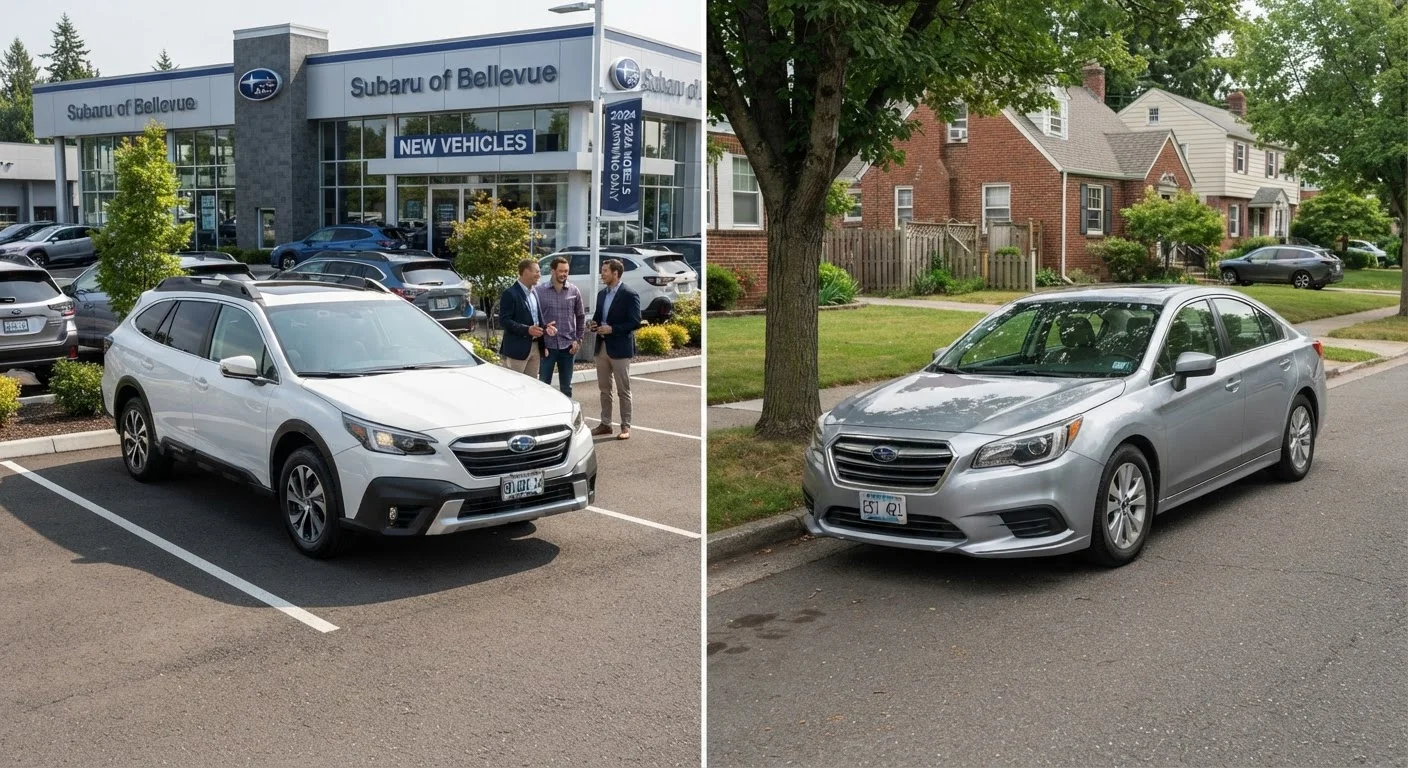
New Car
The full-warranty, latest-tech, higher-cost option.
Best for: Buyers who prioritize peace of mind, the latest safety features, and predictable maintenance costs.
Option B
Used Car
The depreciation-friendly, lower-entry-cost alternative.
Best for: Budget-conscious buyers willing to accept some uncertainty in exchange for a significantly lower purchase price.
If you want the lowest possible long-term payment and can handle some repair uncertainty
Used Car
A two- to four-year-old vehicle avoids the steepest depreciation curve and typically costs significantly less to purchase and insure.
If predictable costs and full manufacturer warranty coverage matter most to you
New Car
New vehicles come with comprehensive warranties and no ownership history, reducing the risk of unexpected repair bills in the near term.
If you want used-car pricing with near-new-car confidence
Used Car
A certified pre-owned (CPO) vehicle from a franchised dealer offers manufacturer-backed inspection standards and extended warranty coverage at a lower price than new.
If you plan to keep your vehicle for ten or more years
New Car
Spread across a decade-plus ownership window, the higher upfront cost of a new car becomes less significant, and you start the reliability clock from zero miles.
If financing terms are a primary concern
New Car
Lenders generally offer lower interest rates on new vehicles, which can partially offset the higher sticker price depending on loan term and credit profile.
The Depreciation Gap: Where the Real Difference Lives
Depreciation is the single largest cost most vehicle owners never see on a bill. A new car typically loses a meaningful portion of its value within the first few years - industry estimates commonly place the drop at roughly 20-30% after year one and as much as 50% after five years, though actual figures vary by make, model, and market conditions.
That depreciation curve is the used-car buyer's primary advantage. When you purchase a two- or three-year-old vehicle, someone else has absorbed that steepest slide. You pay a price closer to what the car is actually worth at that point in its life. The trade-off is that you inherit whatever wear, history, and potential issues accumulated during those first years.
New-car buyers, on the other hand, pay for something real: a vehicle with zero prior ownership, a full factory warranty, and no unknown maintenance history. The question is whether that certainty is worth the premium - and that answer varies by driver. For a deeper look at every expense that shapes what a vehicle truly costs over time, see our guide to total cost of vehicle ownership.
| Criterion | New Car | Used Car |
|---|---|---|
| Purchase Price | Higher - full market value | Lower - depreciation already taken |
| Depreciation Risk | Steepest in years 1-3 | Curve already partially absorbed |
| Financing Rates | Generally lower APR | Typically higher APR |
| Insurance Costs | Higher premiums (higher value) | Lower premiums possible |
| Warranty Coverage | Full factory warranty included | Varies; may be none or CPO |
| Maintenance Predictability | High - covered under warranty | Lower - depends on vehicle history |
| Vehicle History | None - clean slate | Unknown; requires verification |
| Latest Safety Tech | Current model-year features | Depends on model year purchased |
Financing, Insurance, and the Costs That Follow You Home
Purchase price is only the opening number. Financing terms differ substantially between new and used vehicles. Lenders - including banks, credit unions, and captive auto lenders - typically extend lower annual percentage rates (APRs) on new cars because the collateral is considered lower risk. Used-car loans often carry rates that are one to several percentage points higher, depending on the vehicle's age and the borrower's credit profile. On a multi-year loan, that spread can add up to hundreds or even thousands of dollars in additional interest.
Auto insurance premiums also tend to be higher for new vehicles. Comprehensive and collision coverage - which most lenders require when there's an outstanding loan - reflects the replacement cost of the car. A newer, more expensive vehicle costs more to replace, so it costs more to insure. A used vehicle with a lower market value may allow for a higher deductible or reduced coverage levels, lowering monthly premiums.
~20%
Typical new-car value loss in year one
Industry analysts broadly estimate new vehicles lose roughly 20% of their value within the first 12 months, though rates vary by brand and market.
1-4 pts
Typical APR difference, new vs. used loans
Used-car loan rates are frequently one to four percentage points higher than new-car rates, according to Federal Reserve consumer credit data.
~50%
Estimated value remaining after five years
Many vehicles retain roughly half their original value after five years, making the used market especially attractive for two- to three-year-old models.
Maintenance presents a different picture. New cars are typically under warranty for bumper-to-bumper repairs for three years or more, and powertrain coverage often extends further. Used vehicles may arrive with no remaining warranty at all, shifting repair costs entirely to the owner. Certified pre-owned (CPO) programs, offered by many manufacturers through franchised dealerships, provide inspected used vehicles with extended manufacturer-backed coverage - a middle path worth considering.
Registration fees and taxes also vary. Many states base annual registration fees partly on a vehicle's value or model year, meaning new cars often carry higher annual fees in the early years of ownership.
Making the Call: What to Weigh Before You Decide
Neither choice is universally better. The right decision depends on how long you plan to keep the vehicle, how much payment predictability you need, and how comfortable you are with some degree of mechanical uncertainty.
A few practical considerations worth examining before you commit:
- Vehicle history: For any used car, a vehicle history report (such as those from CARFAX or AutoCheck) and a pre-purchase inspection by an independent mechanic are standard due diligence steps. These don't eliminate uncertainty, but they reduce it.
- Loan term length: Longer loan terms lower monthly payments but increase total interest paid - on either a new or used vehicle. Be cautious about extending loan terms so far that you owe more than the car is worth.
- Where you buy: The purchase channel matters as much as the vehicle type. Our comparison of private sale vs. dealership purchases covers how each route changes your protections and negotiating position.
- Window sticker literacy: If you're shopping new, understanding every line on the Monroney label helps you separate standard equipment from dealer-added costs. See our guide to reading a window sticker for a full breakdown.
Ultimately, calculating your projected total cost of ownership - purchase price, financing costs, insurance, estimated maintenance, and depreciation over your intended ownership period - gives you a far more accurate comparison than sticker price alone.
This article is for general informational purposes only and does not constitute financial or purchasing advice. Actual costs vary by vehicle, location, credit profile, and individual circumstances. Consult a licensed financial professional for guidance specific to your situation.