

Key Takeaways
- Spreadsheets offer powerful customization and are ideal for data-heavy planners who enjoy building their own systems.
- Travel apps provide real-time syncing and sharing, making them strong choices for group trips.
- Notebooks suit tactile thinkers who prefer analog tools and low-distraction planning sessions.
- The best system is whichever one you'll actually maintain throughout the planning process.
- Many travelers use a hybrid approach - combining tools for different stages of the trip.
Our Verdict
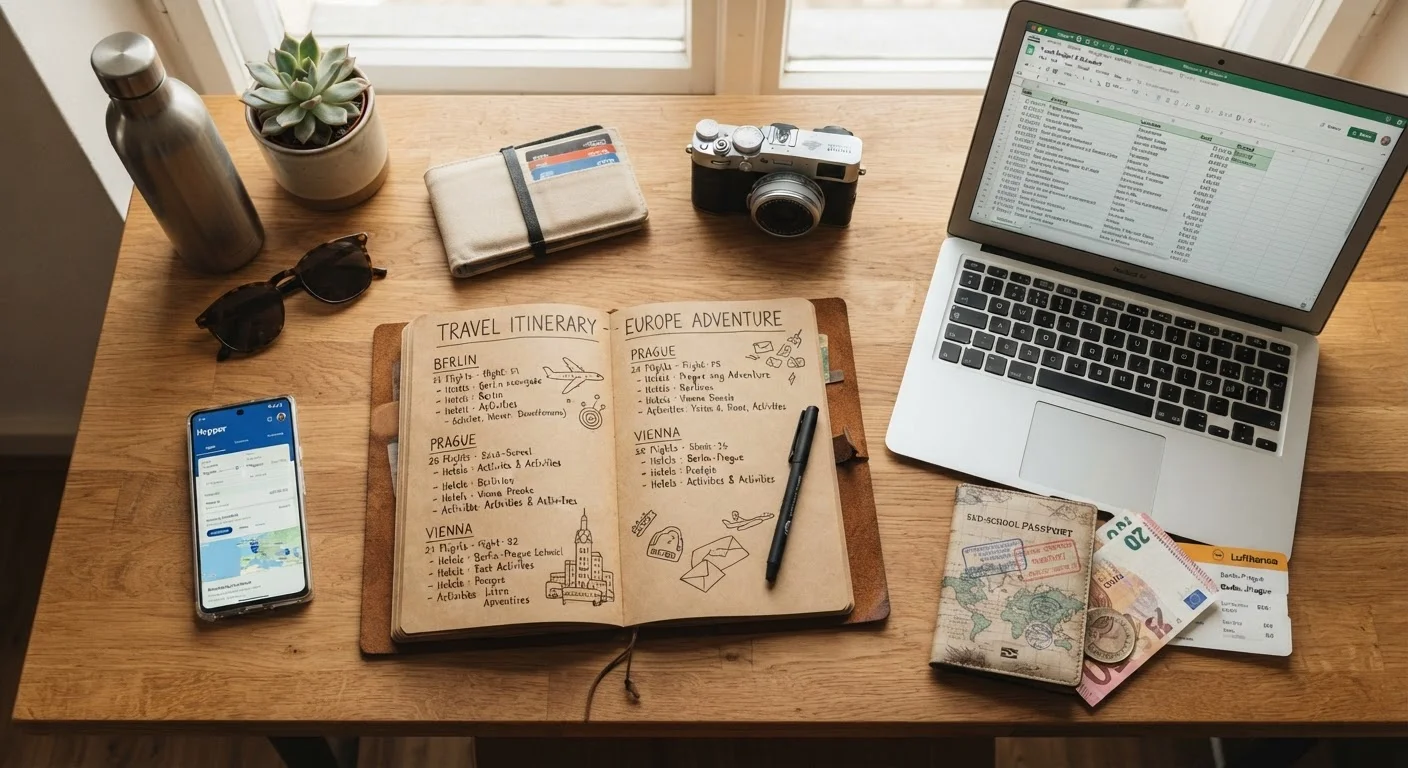
No single tool wins for every traveler. Spreadsheets reward detail-oriented planners who want full control; apps excel when coordination or offline access matters; notebooks work best for those who think better on paper. The real goal is picking one primary method and committing to it so nothing slips through the cracks.
| Best for | Recommended |
|---|---|
| Data-driven planners tracking budgets, bookings, and logistics in one place | Spreadsheets |
| Group travelers who need shared, real-time access to an itinerary | Travel apps |
| Solo planners who prefer distraction-free, analog brainstorming | Notebooks |
| First-time trip planners who want a guided structure from the start | Travel apps |
Why Your Planning Tool Actually Matters
When you're piecing together flights, accommodations, activities, and a travel budget, the system you use to track it all can quietly determine whether the trip feels smooth or chaotic. A poorly organized plan - or no plan at all - leads to double-booked nights, missed reservations, and unnecessary stress before you've even left home.
The good news: you don't need an expensive app or a perfectly designed template to plan well. What matters is choosing a format that fits how you naturally think and process information. Before diving into the comparison, it helps to read up on what every solid itinerary should include so you know what you're organizing in the first place.
| Spreadsheets | Travel Apps | Notebooks | |
|---|---|---|---|
| Setup effort | High - build from scratch | Low - guided interface | Minimal - just start writing |
| Customization | Full control | Limited by app design | Fully flexible, analog |
| Group sharing | Possible via cloud link | Built-in, real-time | Not practical |
| Offline access | Yes, if downloaded | Varies by app | Always available |
| Budget tracking | Excellent with formulas | Basic in most apps | Manual, no calculations |
| Best trip type | Complex, multi-city | Group or first-time | Solo brainstorming |
Spreadsheets: Full Control for Detail-Oriented Planners
Spreadsheet tools like Google Sheets or Excel give you a blank canvas to build exactly the system you want. You can create tabs for your day-by-day schedule, a separate budget tracker, a packing list, and a confirmation-number log - all within one file. Formulas can automatically calculate running totals, which pairs well with general budgeting strategies you may already use at home.
The trade-off is setup time. A useful travel spreadsheet doesn't build itself, and if you're not already comfortable with basic spreadsheet formatting, the learning curve can eat into planning momentum. Spreadsheets also aren't inherently mobile-friendly, though cloud-based versions have improved significantly.
Start With a Template to Save Time
If you want the power of a spreadsheet without starting from zero, search for free travel itinerary templates in Google Sheets. Many are pre-built with tabs for lodging, transportation, and daily schedules. Customize from there rather than building column by column. This approach can cut initial setup time significantly.
Spreadsheets shine brightest for longer or more complex trips - think international travel with multiple cities, or any trip where you're tracking costs per person across a group. For simpler weekend getaways, they can feel like overkill.
Travel Apps: Convenience and Collaboration Built In
Dedicated travel planning apps are designed specifically for the job. Many can import confirmation emails automatically, display your itinerary in a clean timeline view, and work offline once your plans are loaded. For group trips, shared access is often a built-in feature - everyone sees the same itinerary in real time, which cuts down on back-and-forth messages. See our guide to coordinating group travel logistics for more on keeping everyone aligned.
The limitations: apps vary in how much they let you customize, and some useful features may sit behind a subscription. You're also dependent on the app continuing to function as expected - syncing issues or a discontinued service can disrupt access to your plans. It's worth keeping a simple backup (even a screenshot) of critical booking details.
For first-time independent planners, apps often provide the most guided experience. Pair one with our first-timer's planning walkthrough to build confidence from the ground up.
Notebooks: Low-Tech, High-Focus Planning
A physical notebook has real advantages that digital tools can't replicate. Writing by hand encourages slower, more deliberate thinking - useful when you're deciding between destinations or mapping out a realistic daily pace. There are no notifications, no syncing errors, and no dead batteries to worry about mid-brainstorm.
Notebooks work particularly well in the early, creative phase of trip planning: jotting down ideas, sketching out rough day flows, or making wish lists before anything is booked. Many travelers use a notebook alongside a digital tool - analog for thinking, digital for logistics. That said, a notebook alone can become unwieldy once bookings accumulate and you need searchable confirmation numbers or shared access with travel companions.
Whatever tool you use, be careful not to over-engineer your schedule. Over-scheduling a vacation is a common pitfall that even the most organized planners fall into. A good plan leaves room to breathe.
Choosing What Works for Your Trip
Rather than chasing the "right" tool, focus on the one you'll consistently update. An abandoned spreadsheet or a half-filled notebook is worse than a simple notes app you actually maintain. Consider these practical factors when deciding:
- Trip complexity: More moving parts favor spreadsheets or apps with timeline views.
- Group size: Solo trips can work with any format; groups benefit from shared digital access.
- Your existing habits: If you already use a planner notebook daily, a travel notebook is a natural extension.
- Offline needs: In destinations with unreliable connectivity, a downloaded app or printed spreadsheet beats a cloud-only setup.
Many travelers find a hybrid approach works best: brainstorm in a notebook, build the master plan in a spreadsheet or app, and carry a printed one-page summary on the trip itself. You can explore more practical advice in our travel tips hub. The goal isn't a perfect system - it's a system that keeps your trip on track without adding stress to the process.