

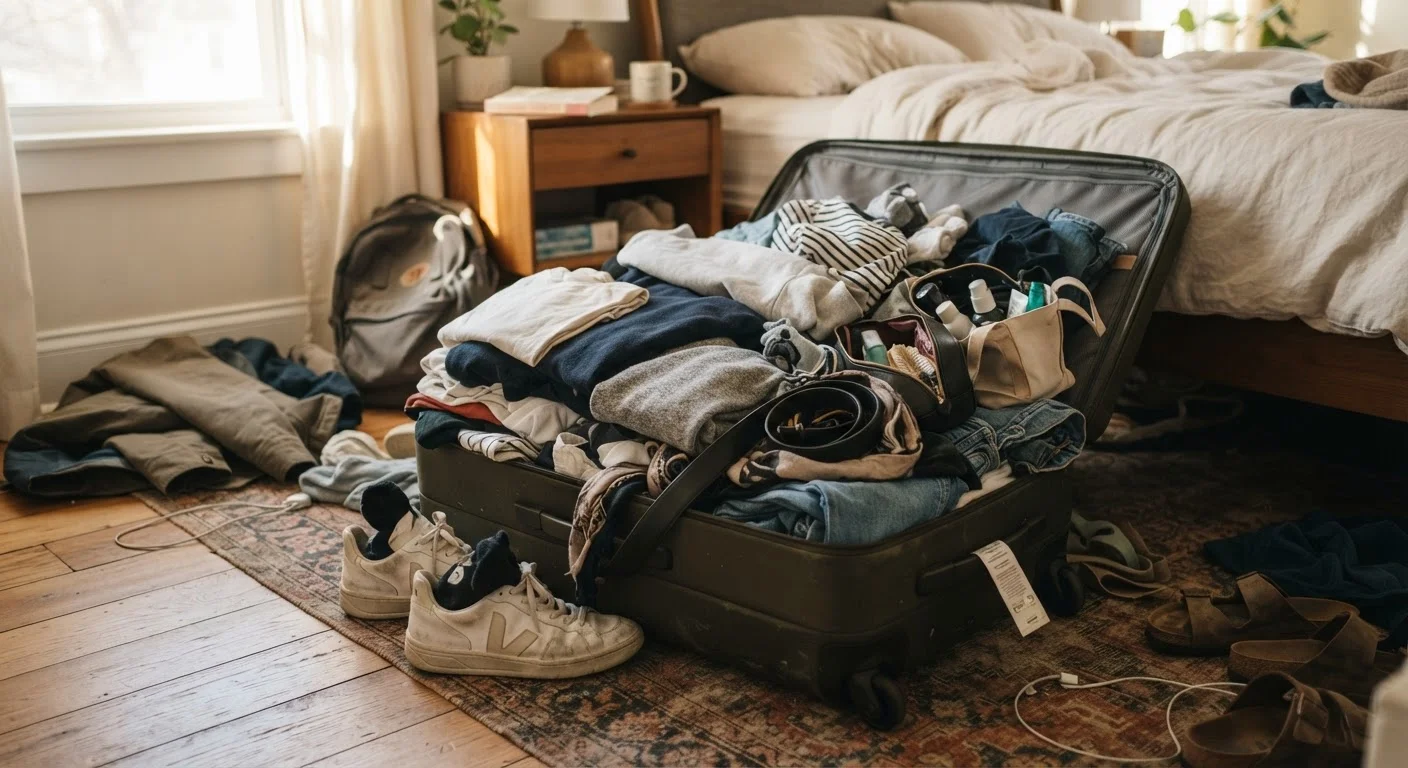
Key Takeaways
- Overpacking is usually driven by anxiety and poor planning habits, not a lack of packing skill.
- Most travelers wear far fewer outfits than they pack, making wardrobe versatility more valuable than volume.
- A firm packing list built days before departure consistently reduces last-minute over-stuffing.
- Understanding your airline's baggage rules before packing prevents reactive over-preparation.
- Lighter luggage reduces stress, speeds up transit, and lowers the risk of checked-bag fees.
Why Overpacking Is Rarely About the Bags
Most travelers who consistently overpack aren't short on good luggage or folding techniques - they're responding to anxiety. The urge to bring more is rooted in a desire for control: if you pack for every contingency, nothing can catch you off guard. Unfortunately, that logic leads to a 50-pound bag that creates its own set of problems, from checked-bag fees to aching shoulders navigating cobblestone streets.
Understanding the behavioral patterns behind overpacking is the first step toward breaking the habit. The mistakes below aren't about poor packing mechanics - they're about the decisions made before a single item goes into the bag. Addressing those decisions directly, rather than just trying to squeeze things in more efficiently, is what actually leads to lasting change.
For context on how similar planning anxiety plays out in other aspects of travel, it's worth noting that the same instinct driving overpacking often drives over-scheduling. Over-scheduling a vacation produces a mirror-image problem: too much crammed in, too little room to breathe.
Packing for every possible scenario instead of the most likely ones.
Why it happens: Travelers imagine worst-case situations - a sudden cold snap, a formal dinner, a medical emergency - and pack reactively for each one, even when the odds are low.
Treating the suitcase as a just-in-case storage unit rather than a curated selection.
Why it happens: Without a firm packing list, travelers fill available space instinctively - adding items in the final hour that feel like they "might be useful" without evaluating the real likelihood.
Packing duplicate or redundant items out of habit.
Why it happens: Many travelers pack the same way for every trip regardless of length, carrying four pairs of shoes for a four-day trip or two laptops' worth of entertainment for a short flight.
Failing to plan a travel wardrobe around mix-and-match versatility.
Why it happens: Travelers often think outfit-by-outfit rather than building a coordinated capsule, resulting in items that only work together in one specific combination.
Not accounting for items you can access at your destination.
Why it happens: Travelers default to bringing everything from home because it feels safer and more familiar, overlooking that most destinations have pharmacies, laundromats, and general stores.
Building Habits That Actually Stick
Breaking the overpacking cycle isn't a one-trip fix - it's a set of habits built over time. The most effective approach is to shift from reactive packing (adding things until the bag is full) to intentional packing (building a list and committing to it).
Verify Airline Baggage Rules Before You Pack
Carry-on size limits and checked-bag fees vary significantly between airlines and fare classes. Always check your specific carrier's current policy before finalizing your bag choice. Showing up at the gate with an oversized bag can result in mandatory gate-checking and unexpected fees.
Start by separating your packing list from your packing session. Create the list at least two days ahead and resist adding to it in the final hours before departure, when anxiety peaks. Then evaluate your bag choice early: knowing whether your trip calls for a checked bag or a carry-on before you start packing sets a firm physical constraint that prevents gradual over-stuffing.
Finally, debrief after each trip. Which items did you use? Which stayed untouched? A short honest review builds real data about your actual travel habits - data that's far more useful than packing advice written for an abstract traveler. Over several trips, that feedback loop produces a personalized packing system that travels light without leaving you unprepared.
If your travels take you to destinations with genuinely unpredictable conditions, the solution isn't a larger bag - it's smarter item selection. For practical guidance, see packing for unpredictable weather.