

Key Takeaways
- Layering with lightweight, versatile pieces outperforms packing for every possible scenario.
- Moisture-wicking and quick-dry fabrics reduce the total number of items you need to carry.
- A compact rain layer and a mid-layer fleece cover the majority of unpredictable weather situations.
- Checking a multi-day forecast and typical climate patterns narrows your packing decisions significantly.
- Keeping your bag manageable makes adapting to changing conditions on the ground much easier.
What you will need
Why unpredictable weather doesn't mean an unpredictable bag
Many travelers respond to weather uncertainty by packing more - bulkier coats, backup shoes, extra layers for every scenario. The result is an overloaded bag that is harder to manage and rarely solves the actual problem. Weather variability calls for a different approach: versatility over volume.
The goal is a bag that covers a realistic range of conditions through layering and material choices, not one that tries to account for every possible outcome. Most destinations - even those known for variable weather - have a predictable range of temperature and precipitation that a well-planned layering system can address in six to eight clothing items.
For travelers deciding how to structure their luggage overall, the carry-on versus checked bag decision is worth thinking through before you start selecting individual pieces.
What you will need
What to pack and how to use it
The tools below represent the core items that make a weather-adaptive packing strategy work. None of them are highly specialized or expensive - the key is choosing items that serve multiple functions rather than single-purpose pieces.
Packable rain jacket
Provides wind and water resistance without taking up significant bag space when compressed.
Lightweight mid-layer (fleece or insulated jacket)
Adds warmth between your base layer and outer shell without adding significant bulk.
Moisture-wicking base layer tops
Regulates body temperature and dries quickly, reducing how many shirts you need to pack.
Neutral-toned bottoms (2-3 pairs)
Versatile pants or jeans that mix and match with multiple tops across different temperatures.
Packing cubes
Keeps clothing organized by layer type so you can access the right items quickly.
Small day bag or tote
Allows you to carry a layer with you during the day without wearing it when temperatures rise.
Research your destination's climate patterns
Before selecting a single item, look up both the historical climate range and a current multi-day forecast for your destination. Pay attention to daily temperature swings - many destinations are 30°F warmer at midday than at dawn or dusk. Note whether rain is likely to be brief and light or sustained and heavy, since that affects how serious your rain layer needs to be.
Focus on the range of conditions, not just the average. Packing for the extremes of that range with versatile pieces is the core of this strategy.
Build your layering system around three core layers
A classic three-layer approach works well across most climates:
- Base layer: A moisture-wicking top worn closest to your skin. Synthetic or merino wool fabrics regulate temperature in both warm and cool conditions and dry quickly after washing.
- Mid-layer: A fleece or light insulated jacket that traps heat when needed. Choose one that compresses into its own pocket or a small stuff sack.
- Outer layer: A packable rain jacket that fits over both other layers. Prioritize breathability so it doesn't become uncomfortable during active sightseeing.
This combination handles a wide range of conditions from cool and rainy to mild and breezy without requiring separate outfits for each scenario.
Choose bottoms and footwear that work across conditions
Bottoms are often where travelers overpack. Two to three pairs of neutral-toned pants, jeans, or convertible trousers typically cover a week or more when combined with different tops. Prioritize fabrics that dry quickly and don't wrinkle badly after being packed.
For footwear, aim for one pair that handles walking and light rain, and one lightweight option for warmer days or indoor settings. Waterproof or water-resistant shoes remove the need to pack rain-specific alternatives.
Limit single-use or weather-specific items
Scrutinize any item that only works in one specific weather condition. A heavy wool sweater that only makes sense in cold weather takes up significant space; a packable mid-layer serves the same function and can be worn under your rain jacket for extra warmth in colder conditions.
Apply the same logic to accessories: a lightweight scarf can function as a sun cover, wind barrier, or extra warmth layer depending on conditions. A baseball cap and a foldable sun hat are both single-use items - choose the one more appropriate for your destination or find one hat that covers both needs.
Pack layers so they are easy to access mid-trip
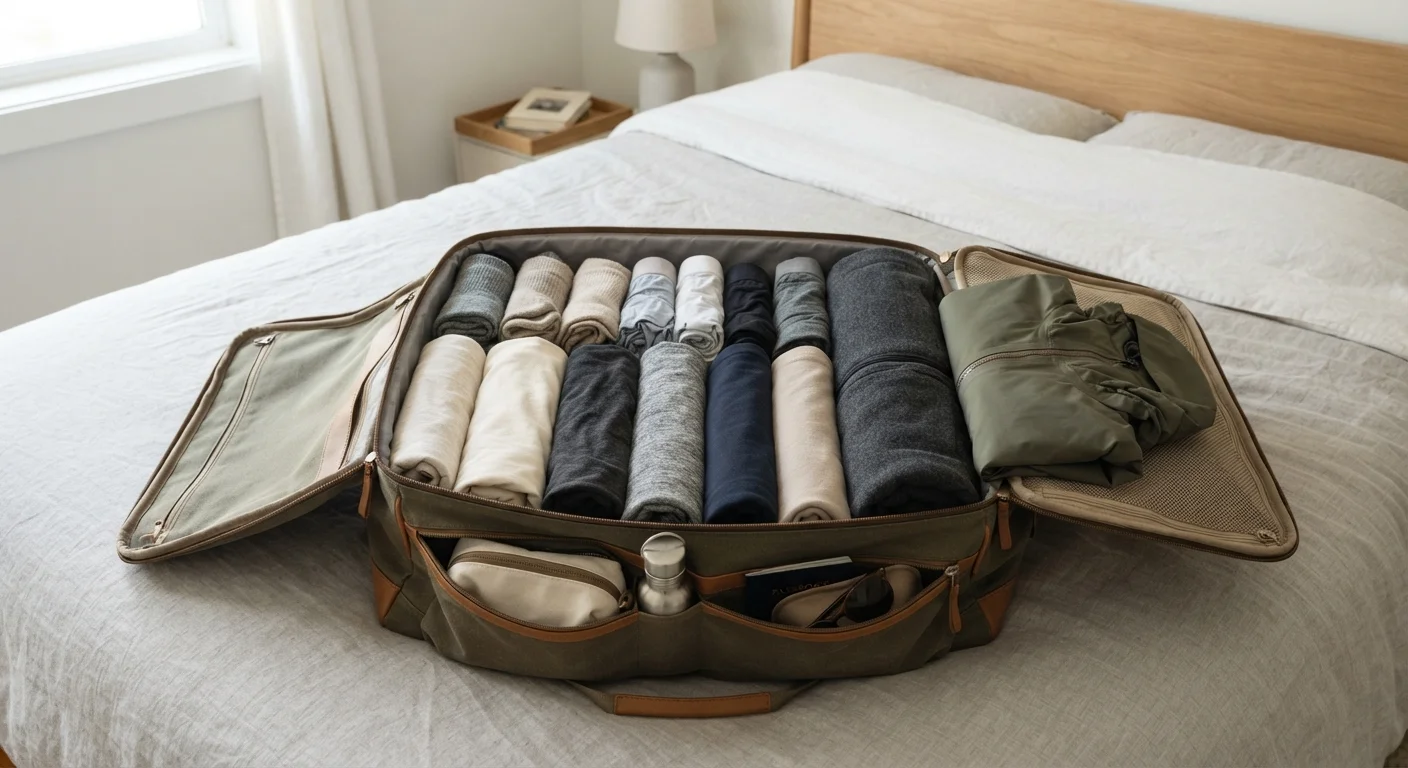
Organization matters as much as selection. Place your outer rain layer and mid-layer near the top of your bag or in an external pocket so you can reach them without unpacking everything. If you are using a carry-on, consider keeping your rain jacket in the personal item or day bag for immediate access during transit.
Packing cubes help separate your layers by type - all base layers in one cube, mid-layers in another - so you are not rummaging when the weather shifts unexpectedly. For guidance on maximizing carry-on space, see our carry-on packing guide.
Leave a small buffer for on-the-ground adjustments
Even the best packing plan may need a minor correction. If your destination turns out to be significantly colder than expected, you should be able to buy a single inexpensive layer locally without stress. Packing your bag to absolute capacity removes that flexibility.
Aim to leave roughly 20% of your bag's volume free when you depart. This also accommodates any small items you pick up along the way without forcing you to check a previously carry-on bag at the gate.
Plan for what you'll wear in transit
Your travel day outfit is also part of your packing strategy. Wearing your bulkiest layer - typically your mid-layer or rain jacket - on the plane frees up meaningful space in your bag. If the aircraft is warm, most jackets can be stowed in the overhead bin or under the seat without issue.
Common mistakes that undermine a smart packing plan
Even travelers who understand layering in theory often make a few consistent errors when they actually start packing:
- Packing for worst-case instead of likely conditions. A heavy winter parka may be theoretically useful if temperatures drop dramatically, but a packable mid-layer plus a rain shell handles the realistic range in most destinations.
- Ignoring fabric choices. Cotton is comfortable but dries slowly and loses insulating value when wet. Synthetic and merino wool fabrics perform better across a wider range of weather conditions.
- Overpacking tops, underpacking versatile bottoms. Most travelers bring too many shirts and not enough mix-and-match bottoms, when the reverse often serves them better.
- Forgetting that layers must actually fit together. Test your layering combinations at home before you pack. A base layer, mid-layer, and rain jacket should all fit comfortably together without restricting movement.
Avoid packing based solely on recent reviews
Traveler reviews and blog posts about weather at a destination can be months or years old and reflect unusual conditions at the time of writing. Use official meteorological sources and current forecasts to form your own picture of what to expect, and treat anecdotal reports as supplementary context rather than authoritative guidance.
Packing for unpredictable weather is ultimately a planning exercise, not a shopping one. The traveler who spends 20 minutes researching their destination's climate range will almost always make better packing decisions than one who buys new gear in response to a vague sense of uncertainty.