

Key Takeaways
- Bourbon Street is just one block of a much larger, layered city worth exploring.
- New Orleans has distinct neighborhoods, each with its own character, architecture, and vibe.
- The city's food, music, and history are deeply rooted in African, French, and Caribbean influences.
- Summer heat and humidity are significant; spring and fall are generally more comfortable for visitors.
- Street flooding after rain is common - practical footwear and flexible plans matter.
- Crime varies significantly by area; staying oriented to well-trafficked neighborhoods helps.
The Real Layout of New Orleans
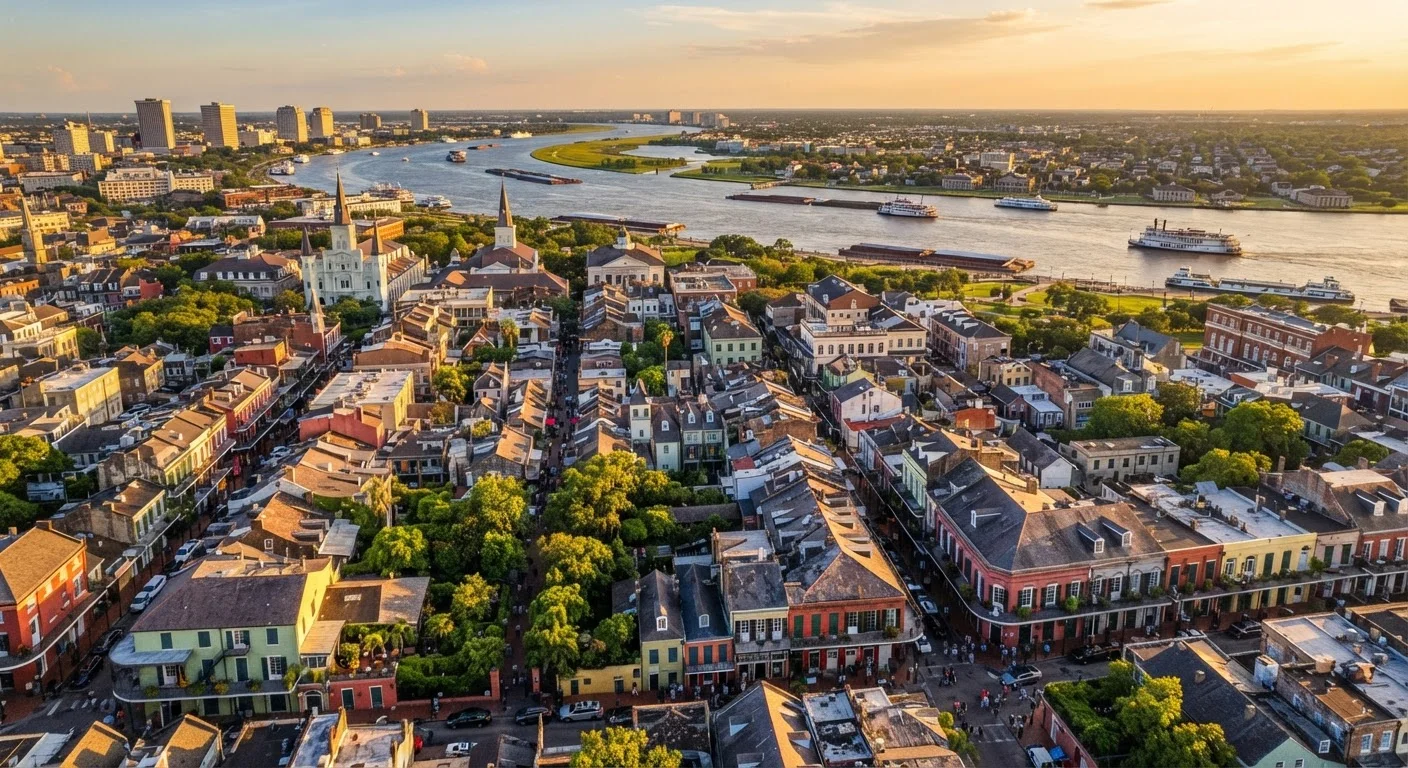
New Orleans sits on a crescent-shaped bend of the Mississippi River, which is why longtime locals sometimes refer to it as the Crescent City. The geography is unusual: streets don't run perfectly north-south or east-west, and compass directions can be confusing. Locals often use "riverside" and "lakeside" (toward Lake Pontchartrain) to orient themselves.
The city is largely below sea level and surrounded by water on multiple sides, which shapes everything from its infrastructure to its culture. This also means drainage matters - after a heavy rain, low-lying streets can flood quickly, even in tourist areas. That's not a reason to avoid visiting; it's simply a condition to be aware of.
The French Quarter is the oldest neighborhood and the most visited, but it represents a small slice of the city. Most of New Orleans' lived experience happens in its many other distinct neighborhoods, which are worth your time if you want to understand what the city actually is.
~390,000
Estimated city population
According to U.S. Census Bureau estimates, New Orleans has a population of approximately 390,000 residents as of recent years.
~19 million
Annual visitors to the region
The New Orleans & Company tourism organization has cited figures in this range for pre-pandemic annual visitation to the greater New Orleans area.
~6 feet
Below sea level in some areas
Parts of New Orleans sit as much as six feet below sea level, according to the U.S. Army Corps of Engineers, making water management a defining feature of the city.
Neighborhoods Worth Exploring
Each New Orleans neighborhood has a distinct personality. Here's a practical overview of the areas most relevant to visitors:
- The French Quarter: Dense with history, architecture, bars, and tourists. The wrought-iron balconies and narrow streets are genuinely beautiful. Bourbon Street is just one block within the Quarter - the surrounding streets (Royal, Frenchmen, Decatur) have more character and less chaos.
- Marigny and Bywater: Directly adjacent to the Quarter, these neighborhoods are where local music venues, small restaurants, and creative businesses thrive. Frenchmen Street is a legitimate live-music corridor with no cover charges at many spots.
- Garden District: Accessible by the St. Charles streetcar, the Garden District features antebellum mansions, shaded sidewalks, and a noticeably quieter atmosphere. Magazine Street runs through it with independent shops and cafés.
- Mid-City: A working residential neighborhood less visited by tourists, but home to City Park - one of the largest urban parks in the country - and the New Orleans Museum of Art.
- Tremé: Considered one of the oldest African American neighborhoods in the United States, Tremé has deep roots in the city's musical and cultural history. Visit with awareness of its significance.
Walk or take the streetcar rather than relying on rideshares for short distances. You'll notice details - architectural ironwork, corner grocery stores, neighborhood murals - that you'd miss entirely from a car window.
New Orleans' urban texture is its main attraction. Slow travel through residential streets gives you a much more accurate picture of how the city actually functions than any curated tourist corridor.
If you want to hear live jazz without a cover charge, check smaller venues and bars in Marigny before booking a dinner show in the Quarter. The music is often just as good - or better.
Many of the city's most respected working musicians perform in neighborhood venues where the overhead is low and the atmosphere is more genuine. You're also more likely to hear locally rooted performers rather than acts catering to tourist expectations.
Food Culture: What to Eat and Where to Look
New Orleans food is its own culinary tradition - shaped by West African, French, Spanish, and Caribbean influences over centuries. A few things to understand before you arrive:
Creole vs. Cajun is a distinction locals care about. Creole cooking is traditionally urban, using tomatoes and butter-based sauces, associated with the city itself. Cajun cooking originates from rural south Louisiana - spicier, heartier, and less reliant on tomatoes. Many restaurants blend both, but knowing the difference helps you order more intentionally.
Dishes you're likely to encounter include gumbo (a roux-based stew), red beans and rice (traditionally served on Mondays, a tradition dating to laundry day), po'boys (sandwiches on French bread), and beignets (fried dough squares dusted with powdered sugar). Crawfish, oysters, and shrimp are central to the local seafood tradition.
Some of the most memorable meals in New Orleans come from neighborhood spots with short menus and long histories - not from the tourist-facing restaurants along Bourbon Street. If you're unsure where to start, researching dining options as part of your trip planning before you go can help you build a better food itinerary.
History, Music, and Culture
New Orleans is one of the most historically layered cities in the United States. It was colonized by the French, then the Spanish, then purchased by the United States in 1803. Enslaved Africans and their descendants shaped the city's culture profoundly - its music, food, language, spiritual traditions, and architecture all bear that influence.
Jazz originated here, emerging in the early 20th century from a convergence of African rhythms, blues, gospel, and European instrumentation. The city remains a living music city, not a museum of one - brass bands still play second-line parades through neighborhoods on Sundays, and local musicians perform in intimate venues year-round.
“New Orleans is unlike any other place in America. It has a way of holding onto its culture with both hands, even as everything around it changes.”
— Wynton Marsalis, Jazz musician and New Orleans native
The National WWII Museum, located in New Orleans, is one of the most significant history museums in the country and draws visitors from across the world - it's unrelated to the city's local history but worth knowing about if your group has interest in that subject.
Mardi Gras is real and deeply local, but it's also one specific window of the year. The city's cultural calendar includes Jazz Fest (held in late spring), Voodoo Fest, French Quarter Festival, and dozens of smaller neighborhood celebrations throughout the year.
Practical Expectations for First-Time Visitors
A few honest points that will help you plan more realistically:
- Weather: Summers are hot and humid - temperatures regularly exceed 90°F with high humidity from June through September. Spring (March-May) and fall (October-November) are generally more comfortable for walking. Hurricane season runs June through November; most visitors aren't affected, but it's worth having travel insurance.
- Getting around: The French Quarter and adjacent neighborhoods are walkable. The St. Charles streetcar line is a practical and affordable way to reach the Garden District and Uptown. Rideshares are widely available. Driving in the Quarter is generally inadvisable - parking is limited and streets are narrow.
- Safety: Like any major American city, New Orleans has areas with higher crime rates. Staying in well-lit, populated areas and being aware of your surroundings - especially late at night - is standard advice. The French Quarter and main tourist corridors are heavily patrolled. Use the same judgment you'd apply in any urban environment.
- Flooding: Even moderate rain can cause temporary street flooding. Waterproof shoes or sandals with good grip are genuinely useful, not just a quirky tip.
If this is your first time planning a trip entirely on your own, the first-timer's trip planning walkthrough covers the logistics end-to-end. And if you're drawn to cities with similarly complex cultural layers, our realistic overview of Mexico City for U.S. travelers applies a similar honest lens to another deeply layered destination.