

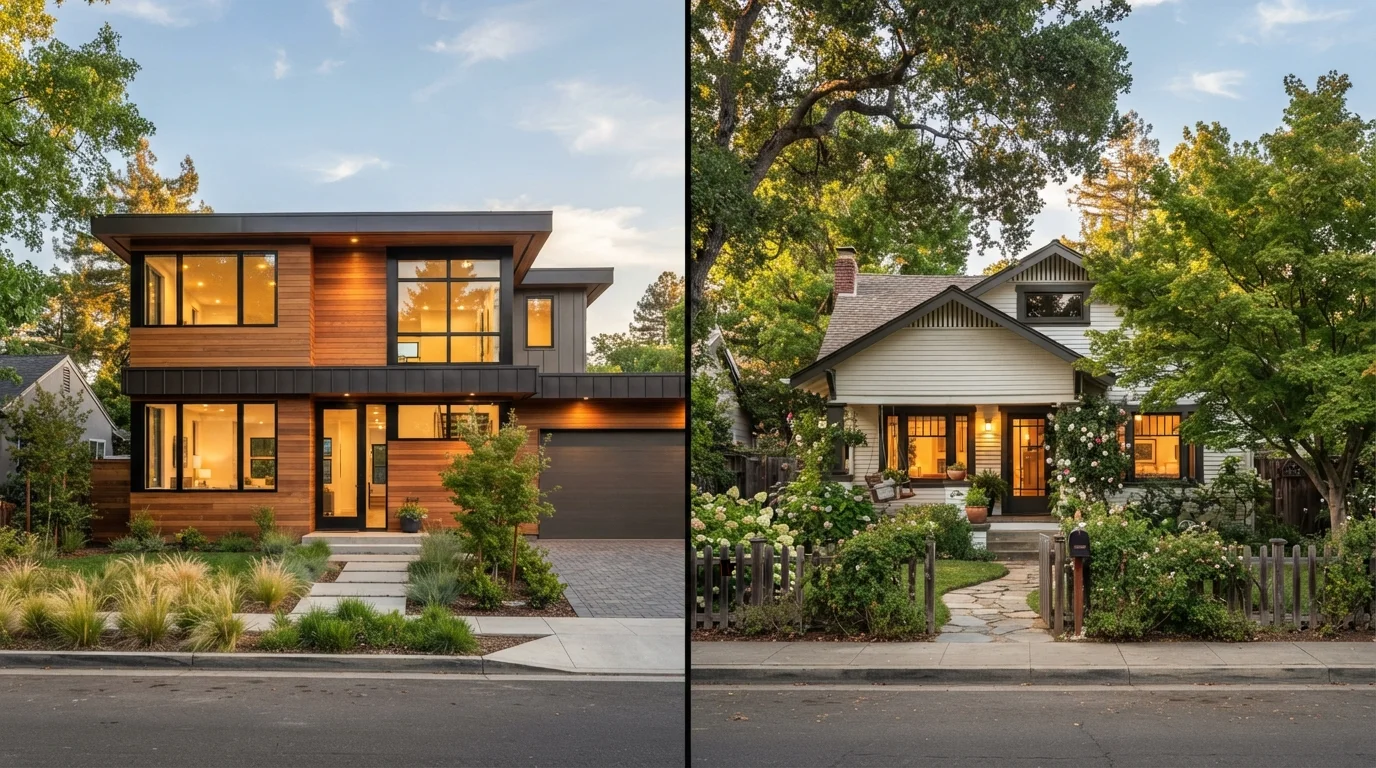
Key Takeaways
- New construction offers customization and modern features but typically costs more and takes longer to close.
- Existing homes are move-in ready sooner and often located in established neighborhoods with mature landscaping.
- Negotiation dynamics differ significantly - builders have different leverage than individual sellers.
- Both paths carry unique inspection and warranty considerations buyers must understand before committing.
Our Verdict
Neither new construction nor an existing home is universally superior - the right choice depends on your timeline, budget flexibility, and tolerance for uncertainty. New builds suit buyers who want modern finishes and can wait, while resale homes fit those prioritizing location, character, and a faster process.
| Best for | Recommended |
|---|---|
| Buyers who want modern layouts, energy efficiency, and minimal maintenance from day one | New Construction |
| Buyers prioritizing established neighborhoods, mature trees, and a faster closing | Existing Home |
| Buyers with flexible timelines and strong customization preferences | New Construction |
| Buyers with limited budgets seeking more negotiating leverage | Existing Home |
The Core Differences at a Glance
When you're deciding between a brand-new build and a previously owned home, the differences go well beyond paint color and countertop choices. They affect your timeline, negotiating power, financing options, and even how much surprises will cost you down the road.
If you're still laying the financial groundwork before comparing home types, see what first-time homebuyers should know before starting the search - it covers credit, budgeting, and realistic timelines before any touring begins.
| New Construction | Existing Home | |
|---|---|---|
| Typical Timeline to Close | 6-18 months (to-be-built) | 30-60 days once under contract |
| Price Predictability | Base price firm; upgrades add up fast | Negotiable; may require repair budget |
| Customization | High (finishes, layouts, options) | Limited to what's already built |
| Inspection Importance | Critical - builder errors still occur | Critical - unknown repair history |
| Warranty Coverage | Builder warranty included (varies) | No structural warranty; optional add-ons |
| Neighborhood Maturity | Developing; fewer amenities initially | Established schools, trees, community |
| Negotiation Leverage | Upgrades and closing costs more likely | Price and repairs more negotiable |
Cost, Customization, and What You're Really Paying For
New construction homes generally carry a higher price per square foot than comparable resale homes in the same market. Part of that premium reflects modern building codes, energy-efficient systems, and warranties - but part of it is simply that builders price for margin. Upgrades selected at the design center (hardwood floors, upgraded appliances, finished basements) add cost quickly, and buyers sometimes underestimate how much those selections compound.
Existing homes, by contrast, often reflect decades of accumulated improvements - or deferred maintenance. A resale home might have a mature landscape and an updated kitchen that would cost significantly more to replicate from scratch. The trade-off is unpredictability: contingency clauses and inspection periods become critical tools when buying a home with unknown mechanical history.
Get Pre-Approved Before Visiting Builder Sites
Builder sales offices may offer in-house financing and encourage buyers to use it - sometimes with incentives. Before committing, get pre-approved through an independent lender so you have a genuine benchmark for comparison. This puts you in a stronger position to evaluate whether a builder's financing offer actually benefits you.
Timelines, Negotiations, and Closing Realities
Buying new construction typically means waiting. A to-be-built home can take six to eighteen months to complete, depending on the builder's backlog, material supply, and local permit timelines. Even spec homes (already under construction) rarely close as quickly as resale transactions. During that window, interest rate changes can affect your locked rate's validity, and life circumstances can shift.
The negotiation dynamic is also fundamentally different. Individual sellers have emotional stakes and may be motivated by timing or life changes. Builders are businesses - they may resist price reductions to protect neighborhood comps, but they often negotiate on upgrades, closing cost contributions, or rate buydowns instead. Neither approach is inherently more buyer-friendly; they just require different strategies.
Resale buyers also need to move faster in competitive markets. Multiple-offer situations can compress due diligence windows, and sellers may decline offers with too many contingencies. Understanding common timing mistakes can help buyers avoid misreading when urgency is real versus manufactured.
Inspections, Warranties, and Long-Term Maintenance
A common misconception is that new construction doesn't need a home inspection. It does. Municipal inspectors check code compliance, but they don't advocate for the buyer. An independent inspector can identify issues with grading, HVAC installation, or framing before you close - when the builder is still contractually obligated to address them.
New construction homes typically come with a builder's warranty that covers workmanship and systems for one to two years, and structural defects for up to ten years in many states. That warranty has real value, but it also comes with conditions, exclusions, and timelines buyers should read carefully before assuming coverage.
Existing homes have no such blanket coverage, which is why a thorough inspection and, in some cases, a home warranty purchased at closing makes sense. Once you own either type of property, understanding maintenance priorities becomes essential - what first-time homeowners should tackle first is a useful starting point for building a maintenance rhythm regardless of home age.
Ultimately, both paths lead to homeownership. What differs is the experience along the way - and which risks you're more prepared to manage. If you're still deciding whether buying makes sense at all, the broader rent vs. buy trade-offs are worth reviewing first.