

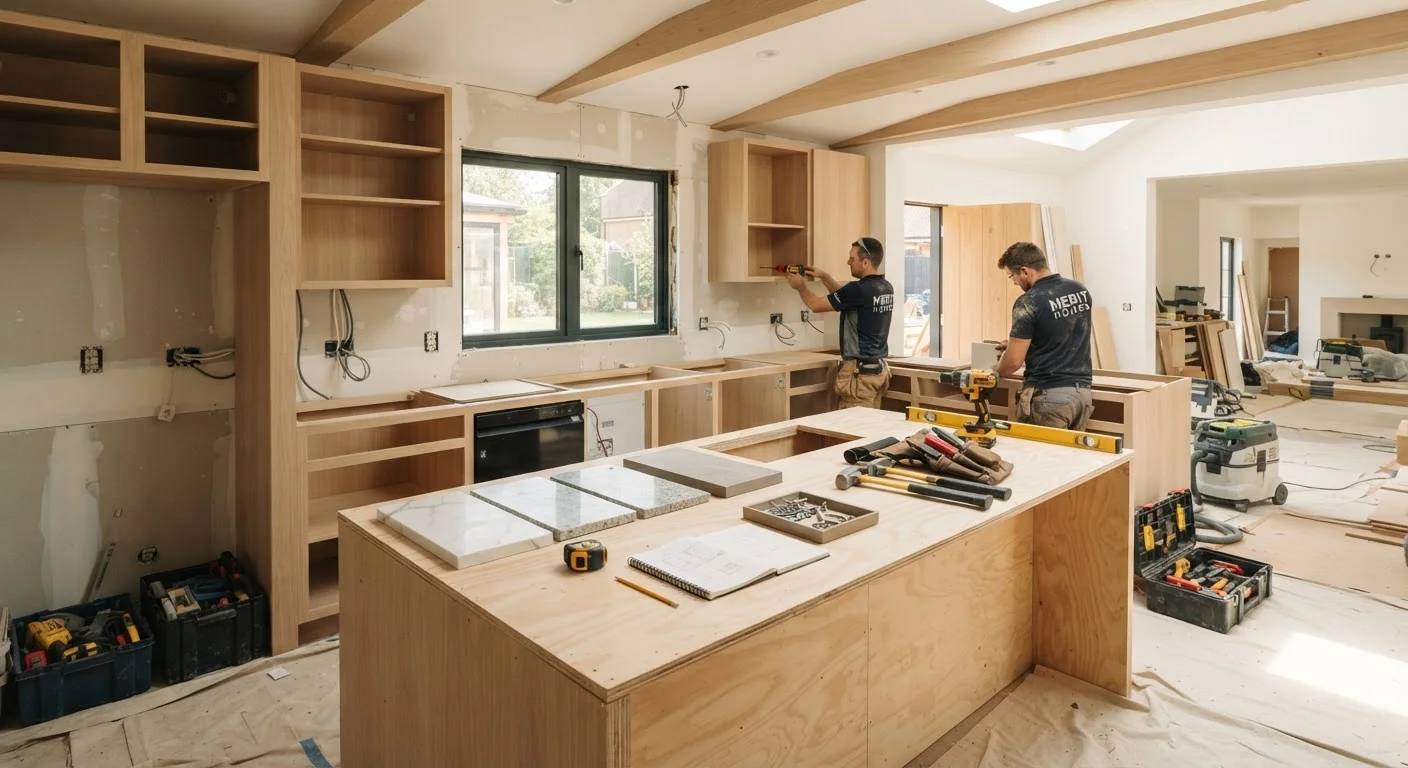
What Drives Kitchen Renovation Costs
Kitchen renovation costs vary enormously - from roughly $15,000 for a modest update to well over $75,000 for a high-end full remodel. What determines where your project lands on that range comes down to four core factors: the size of your kitchen, the scope of work, the materials you choose, and your local labor market.
Scope is the single biggest lever. A cosmetic refresh - new hardware, a coat of paint, updated lighting - costs a fraction of a layout-changing gut renovation that moves plumbing and electrical. Most mid-range kitchen remodels fall between $25,000 and $50,000, though actual costs depend heavily on your specific home and region.
It's worth noting that industry estimates suggest homeowners consistently underestimate kitchen renovation costs by 20-30% before getting contractor bids. Building in a contingency fund from the start - typically 10-20% of your total budget - is standard practice among renovation professionals. Before breaking ground, run through a homeowner's planning checklist to avoid surprises that blow budgets.
Where the Money Actually Goes
Understanding how renovation dollars are typically allocated helps you prioritize. Cabinetry and hardware routinely represent the largest single line item - often 30-40% of total budget. Labor (installation, plumbing, electrical, carpentry) typically accounts for 20-35%. Countertops, appliances, and flooring each take meaningful shares, while permits, design fees, and demolition round out the rest.
Scope of Work
A detailed description of all tasks, materials, and deliverables included in a renovation project. A clearly defined scope helps prevent cost overruns and disputes with contractors.
Contingency Fund
A reserved portion of your renovation budget - typically 10-20% - set aside to cover unexpected costs like hidden water damage or required code upgrades discovered during construction.
Semi-Custom Cabinets
Factory-built cabinets that offer more size, style, and finish options than stock cabinets, but are less expensive and time-intensive than fully custom-built units.
Building Permit
Official approval from a local government authority authorizing specific construction or renovation work. Permits ensure the work is inspected for code compliance and safety.
General Contractor (GC)
A licensed professional who manages a renovation project, coordinating subcontractors (plumbers, electricians, carpenters) and overseeing the overall schedule, budget, and quality.
Load-Bearing Wall
A structural wall that supports the weight of the building above it. Removing or altering a load-bearing wall requires engineering assessment and permitted work by licensed professionals.
Labor Costs
Labor rates vary by trade and region. General contractors typically charge a markup on subcontractor work or a flat project fee. Licensed plumbers and electricians bill hourly - rates commonly range from $75 to $150+ per hour depending on your market. Any work involving gas lines, structural walls, or load-bearing elements must be performed by licensed professionals, and most jurisdictions require permits for this work.
Materials and Finishes
Cabinet choices alone can swing costs dramatically. Stock cabinets from home improvement stores are the most affordable option; semi-custom and fully custom cabinetry can cost three to five times more. Similarly, countertop materials range from budget-friendly laminate to mid-range quartz to premium natural stone - each with distinct maintenance trade-offs, not just price differences.
Hidden and Overlooked Costs
Older homes frequently reveal unexpected issues once walls open: outdated wiring, galvanized pipes, water damage, or mold. These discoveries require immediate remediation and add cost. Other commonly overlooked expenses include temporary kitchen setup during construction, debris removal and disposal fees, and any required code upgrades to bring the space into compliance with current standards. For a broader view of how renovation expenses fit into your household finances, see a room-by-room look at hidden household costs.
Permits Protect Your Investment
Unpermitted work can create serious problems when you sell your home - buyers' inspectors and lenders often flag it, and you may be required to bring work up to code at your expense before closing. Some homeowner insurance policies may also deny claims related to unpermitted work. Always pull the required permits, even if a contractor suggests skipping them to save time or money.
Permits, Financing, and Planning Your Budget
Permits are required in most U.S. jurisdictions for any work involving electrical panels, plumbing rough-in, gas connections, or structural changes. Costs vary by municipality - typically from a few hundred dollars to over a thousand. Skipping permits can complicate home sales, void insurance claims, and create safety liability. Always verify local requirements with your building department before work begins.
On the financing side, homeowners commonly use home equity lines of credit (HELOCs), home equity loans, personal loans, or cash savings to fund renovations. Each option carries different terms, interest rates, and risk profiles. For a plain-English overview of how these mechanisms work, see home renovation financing options explained. This article is general information - consult a licensed financial professional for advice specific to your situation.
Comparing kitchen renovation costs to bathroom projects can also help calibrate expectations. Bathrooms share many of the same trade costs but in a smaller footprint - for a useful contrast, see bathroom remodeling from the ground up.
Whatever your budget target, get at least three detailed bids from licensed contractors, ask for itemized breakdowns, and verify references. A lower bid that omits permit fees or uses unlicensed labor often costs more in the long run.