

Key Takeaways
- Checking accounts are designed for frequent transactions; savings accounts are built for storing money.
- Savings accounts typically earn interest; checking accounts generally do not, or earn very little.
- Federal rules once capped savings account withdrawals at six per month - though that limit has been relaxed, many banks still enforce it.
- Most people benefit from having both account types working together.
- FDIC insurance covers both account types up to $250,000 per depositor per institution.
Option A
Checking Account
The workhorse of your daily financial life.
Best for: Best for paying bills, making purchases, and managing everyday cash flow.
Option B
Savings Account
The dedicated home for money you're not spending yet.
Best for: Best for building an emergency fund, setting aside short-term goals, and earning modest interest.
If you need to pay bills, buy groceries, and move money regularly
Checking Account
Checking accounts are built for unlimited transactions and give you direct access via debit card, checks, and online transfers without restriction.
If you want to set aside money for an emergency fund or a near-term goal
Savings Account
Savings accounts keep your reserve money separate and earn interest, making them the right tool for money you want to grow but not touch daily.
If you're just starting out and can only open one account
Checking Account
Day-to-day financial life runs on a checking account. Add a savings account once you have even a small amount to set aside consistently.
If you want to explore higher returns on your savings
Savings Account
A high-yield savings account or other savings vehicle can meaningfully outpace a standard checking account's interest rate over time.
What Each Account Is Actually Built For
At their core, checking and savings accounts serve opposite purposes - and understanding that distinction makes every other detail easier to follow.
A checking account is a transactional account. It's designed to move money in and out frequently: direct deposits land here, bills get paid from here, and your debit card draws from here. There's no meaningful limit on how many times you can access the funds. Convenience is the entire point.
A savings account is a storage account. The goal is to hold money you don't need right now, keep it separate from your spending, and let it earn a small amount of interest in the meantime. It's not optimized for frequent access - and that friction is actually a feature, not a flaw. It keeps you from dipping into reserves without thinking.
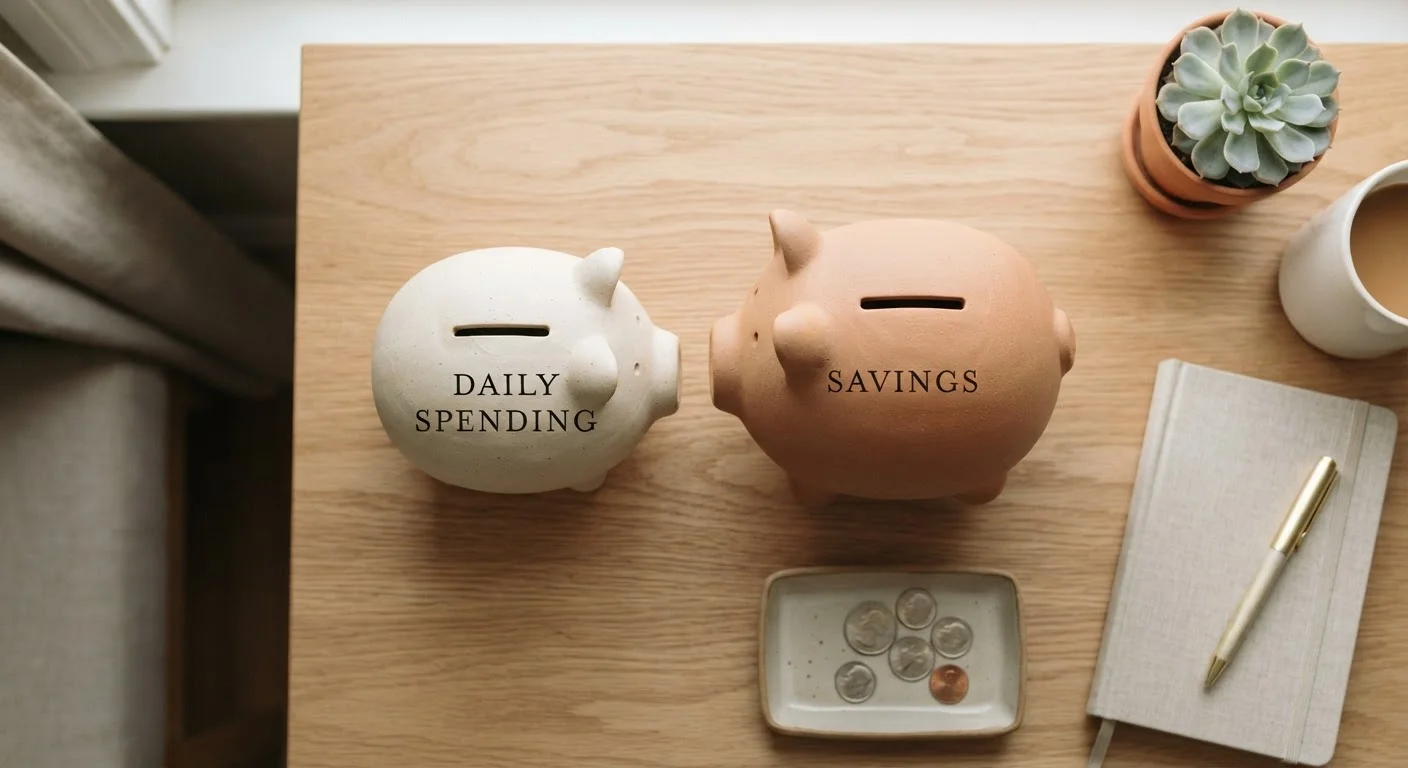
Most households need both. Your checking account handles the flow; your savings account holds the reserve. Think of it like a wallet versus a safe - both have a role, but you wouldn't run all your transactions out of a safe.
| Criterion | Checking Account | Savings Account |
|---|---|---|
| Primary purpose | Daily transactions and cash flow | Storing and growing reserves |
| Interest earned | Little to none | Yes, varies by institution |
| Transaction limits | Unlimited | Often limited (varies by bank) |
| Debit card access | Standard | Rare or restricted |
| Overdraft protection | Commonly available | Rarely offered |
| FDIC/NCUA insured | Yes, up to $250,000 | Yes, up to $250,000 |
| Best used for | Bills, groceries, payroll | Emergency fund, short-term goals |
The Key Differences That Actually Matter
Interest earnings: Savings accounts pay interest on your balance; most traditional checking accounts don't, or pay so little it's negligible. The rate varies widely depending on the institution and account type. For a deeper look at savings options that go beyond a standard account, see savings account types and when each makes sense.
Transaction limits: Federal Regulation D historically capped savings account withdrawals at six per month. The Federal Reserve removed that requirement in 2020, but many banks still apply their own limits or fees for excess withdrawals. Checking accounts carry no such restriction.
Overdraft behavior: Checking accounts commonly offer overdraft protection (sometimes for a fee). Savings accounts rarely do, and most banks won't allow you to overdraw a savings account at all.
Access methods: Checking accounts come with debit cards, check-writing, and full ATM access as standard. Savings accounts may offer limited ATM access but generally aren't paired with a debit card for everyday spending.
$250,000
FDIC insurance limit per depositor per institution
The FDIC insures deposits at member banks up to this amount, covering both checking and savings accounts.
~5%
Peak high-yield savings APY in recent rate environment
Some savings accounts offered annual percentage yields near this level during elevated interest rate periods, compared to near-zero rates on most standard checking accounts.
Understanding how interest compounds in either direction is worth your time - how compound interest works and why it cuts both ways breaks that math down clearly.
How to Use Both Accounts Together
The most practical setup for most people is straightforward: your paycheck hits your checking account, your fixed bills and daily spending draw from it, and a set amount transfers automatically to savings each pay period. That transfer doesn't need to be large to matter - consistency beats size at the start.
Keeping the accounts at the same bank simplifies transfers. But keeping your savings account at a different institution - particularly one offering a higher interest rate - can also reduce the temptation to raid it on a whim.
If you're not sure how much to set aside, the budgeting basics framework is a useful starting point for understanding your income and expense picture first. Once you have a number in mind, automating your savings removes the willpower equation entirely.
One common question: should that savings go toward an emergency fund, or toward paying down debt first? That's a genuine trade-off, and emergency fund vs. paying down debt walks through the math on both sides.
Both account types are insured by the FDIC (for bank accounts) or NCUA (for credit union accounts) up to $250,000 per depositor per institution - so the money is protected either way. To keep a broader eye on how your accounts fit into your overall financial picture, consider doing a yearly credit and savings health check.
This article is for general informational and educational purposes only and does not constitute personalized financial advice. Consult a licensed financial professional for guidance specific to your situation.