

| Typical U.S. Shop Labor Rate Range | $80-$175 per hour (AAA Auto Repair Insights) |
| Common Parts Markup Range | 20%-50% above wholesale cost (Standard industry practice) |
| Labor Guide Sources | Mitchell, Chilton, AllData |
| Diagnostic Fee Typical Range | $50-$150 (Varies by region and shop type) |
| Shop Supplies Fee Typical Range | $5-$30 or ~2-5% of labor (Common industry practice) |
| Common Estimate Types | Written, verbal, not-to-exceed (Many states require written estimates by law) |
The Basic Structure of a Repair Estimate
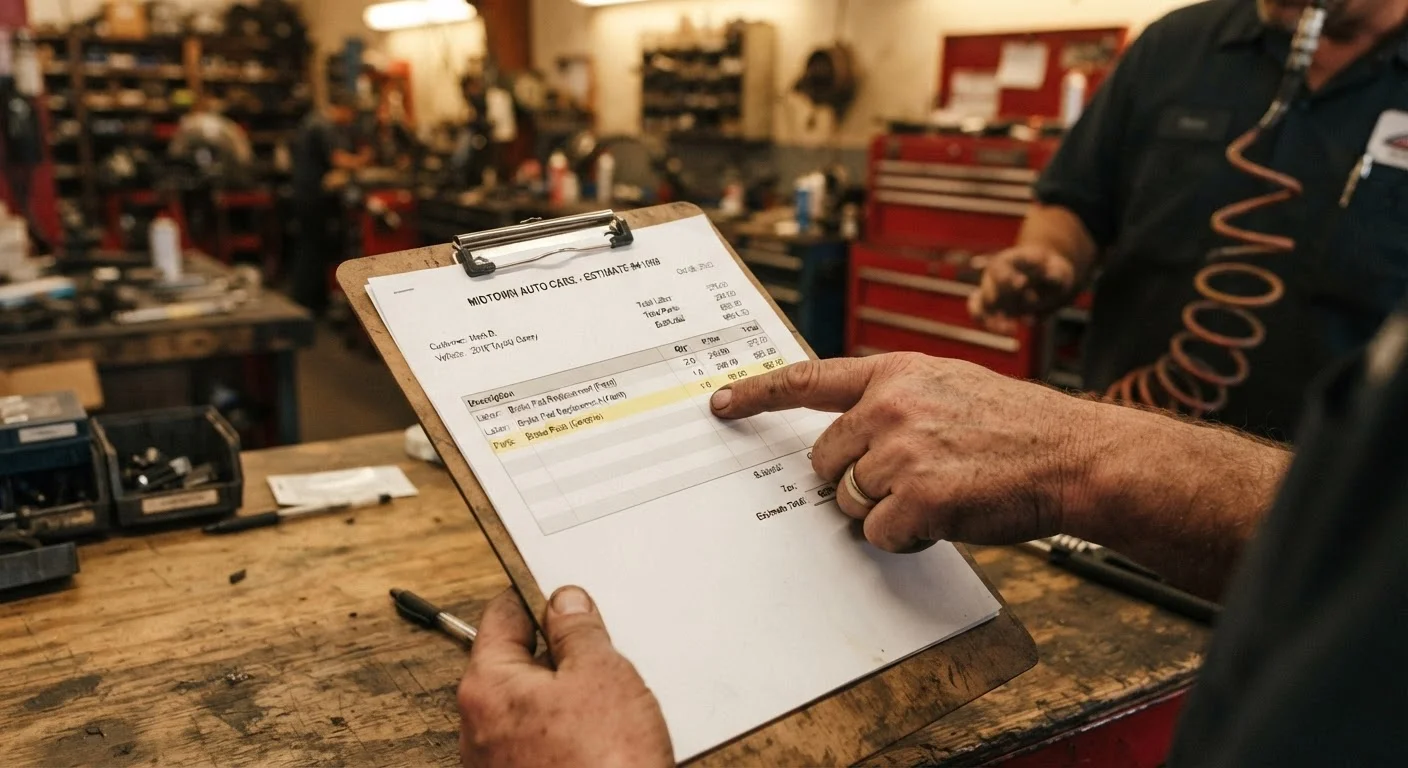
A mechanic's estimate is more than a total dollar figure - it's a line-by-line breakdown of how the shop arrived at that number. Most estimates are organized into three main categories: labor, parts, and fees. Understanding each category prevents surprises when you pick up your vehicle.
Labor is usually the largest line. Shops charge a set hourly rate and multiply it by the number of hours the job is expected to take. Those hours come from standardized industry labor guides rather than an actual stopwatch - a practice called flat-rate pricing. If a guide says a water pump replacement takes 2.5 hours and the shop charges $120/hr, labor comes to $300 regardless of the technician's actual time.
Parts are listed individually with a unit price. Shops typically purchase parts at wholesale and charge a marked-up retail price - a standard, disclosed industry practice. The type of part matters: OEM or aftermarket. It's reasonable to ask which is being quoted and why.
Fees cover smaller but sometimes puzzling items: shop supplies, hazardous waste disposal, and in some cases a diagnostic fee. These are legitimate costs of doing business. The glossary below defines the terms you're most likely to encounter on a real estimate.
Labor Rate
The hourly charge a shop applies to diagnostic and repair work. Rates vary by region, shop type, and technician certification level - typically ranging from around $80 to $175 per hour in the U.S.
Flat-Rate Hours
Standardized time estimates from industry labor guides (such as Mitchell or Chilton) that shops use to price jobs. A job priced at 2.0 flat-rate hours costs the same whether the technician finishes in less or more actual time.
OEM Parts
Original Equipment Manufacturer parts made to the same specifications as those installed when the vehicle was built. Generally more expensive but designed to match factory tolerances exactly.
Aftermarket Parts
Parts manufactured by third-party suppliers rather than the vehicle's original maker. Quality varies widely; some meet or exceed OEM specs, while others may not perform as well.
Shop Supplies Fee
A line item covering consumables used during the repair - rags, cleaning solvents, fasteners, and similar items - usually calculated as a flat fee or a small percentage of the total bill.
Diagnostic Fee
A charge for the technician's time and equipment used to identify the root cause of a problem, such as scanning fault codes or performing a system test. May be applied toward the repair cost if you authorize the work.
Labor Hours and the Flat-Rate System
The flat-rate system can feel counterintuitive at first: if the technician finishes in half the estimated time, you still pay for the full quoted hours. Conversely, if the job runs longer than the guide allows, you typically don't owe extra - unless unforeseen complications arise and the shop contacts you for authorization to proceed.
This structure matters for two reasons. First, a written estimate is a meaningful commitment from the shop, not a rough guess. Second, it explains why labor costs can seem high relative to parts on straightforward jobs - experienced technicians who work efficiently are rewarded within this system rather than penalized for speed.
| Typical U.S. Shop Labor Rate Range | $80-$175 per hour (AAA Auto Repair Insights) |
| Common Parts Markup Range | 20%-50% above wholesale cost (Standard industry practice) |
| Labor Guide Sources | Mitchell, Chilton, AllData |
| Diagnostic Fee Typical Range | $50-$150 (Varies by region and shop type) |
| Shop Supplies Fee Typical Range | $5-$30 or ~2-5% of labor (Common industry practice) |
| Common Estimate Types | Written, verbal, not-to-exceed (Many states require written estimates by law) |
When reviewing labor, check whether the shop itemizes individual operations separately - for example, listing "remove and replace brake pads" distinct from "resurface rotors." Itemized labor makes it easier to understand exactly what's proposed and, if budget is tight, to ask which items are most urgent. For a broader view of how maintenance costs fit into what a vehicle truly costs to own, see our article on total cost of vehicle ownership.
Parts: OEM, Aftermarket, and Remanufactured
Parts pricing is where estimates can vary most dramatically between shops. Three main categories appear on estimates:
- OEM (Original Equipment Manufacturer): Made by or for the vehicle manufacturer to exact factory specifications. Typically the highest price point on an estimate.
- Aftermarket: Third-party parts that fit your vehicle but weren't made by the original manufacturer. Quality ranges from excellent to poor depending on the supplier. Asking whether a part meets OEM specifications is a fair and reasonable question.
- Remanufactured ("reman"): Used cores rebuilt to original specifications - common for alternators, starters, and brake calipers. Generally less expensive than new OEM parts and often carry their own warranties.
Your choice of parts may affect any existing warranty coverage. If your vehicle is still under a manufacturer's warranty or a dealer service contract, confirm that using aftermarket parts won't affect those terms before authorizing the work. Our comparison of dealer service centers vs. independent mechanics covers how shop type relates to parts sourcing and warranty considerations.
Written Estimates Are Often Required by Law
Many U.S. states require shops to provide a written estimate before beginning work and to obtain your authorization before exceeding that amount. Requirements vary by state - check your state's consumer protection or automotive repair statutes. Always ask for a written estimate even when it isn't legally mandated; it protects both you and the shop.
Fees and the Right Questions to Ask Before You Sign
Beyond labor and parts, estimates include line items that can catch drivers off guard. Shop supplies fees cover consumables used during the repair - cleaning agents, fasteners, shop rags - and are a normal cost of professional repair work. Hazardous waste disposal fees cover safe handling of used fluids and materials like motor oil or refrigerant, which are regulated by federal and state environmental rules.
A diagnostic fee covers the technician's time and equipment used to pinpoint a problem before repairs begin. Many shops credit this fee toward the repair total if you authorize the work - but that policy varies, so ask upfront.
Before signing any estimate, these questions are worth asking:
- Is this a not-to-exceed estimate, or could the total change?
- Will you contact me before going over the quoted amount?
- Are these parts OEM, aftermarket, or remanufactured?
- Does the repair come with a parts-and-labor warranty, and for how long?
If you're wondering whether some maintenance items are worth doing yourself to manage costs, see our guide on DIY car maintenance - it draws an honest line between what's practical at home and what's best left to a professional. And for the full picture of ongoing vehicle expenses, our maintenance schedule overview explains how to plan ahead and avoid costly surprises.