

Key Takeaways
- Most car batteries last three to five years under normal driving conditions.
- Extreme temperatures - both heat and cold - accelerate battery degradation.
- Warning signs include slow engine cranking, dimming lights, and a swollen battery case.
- A failing battery can cause cascading electrical issues across the vehicle.
- Regular testing at oil changes can catch a weak battery before it leaves you stranded.
Car Battery
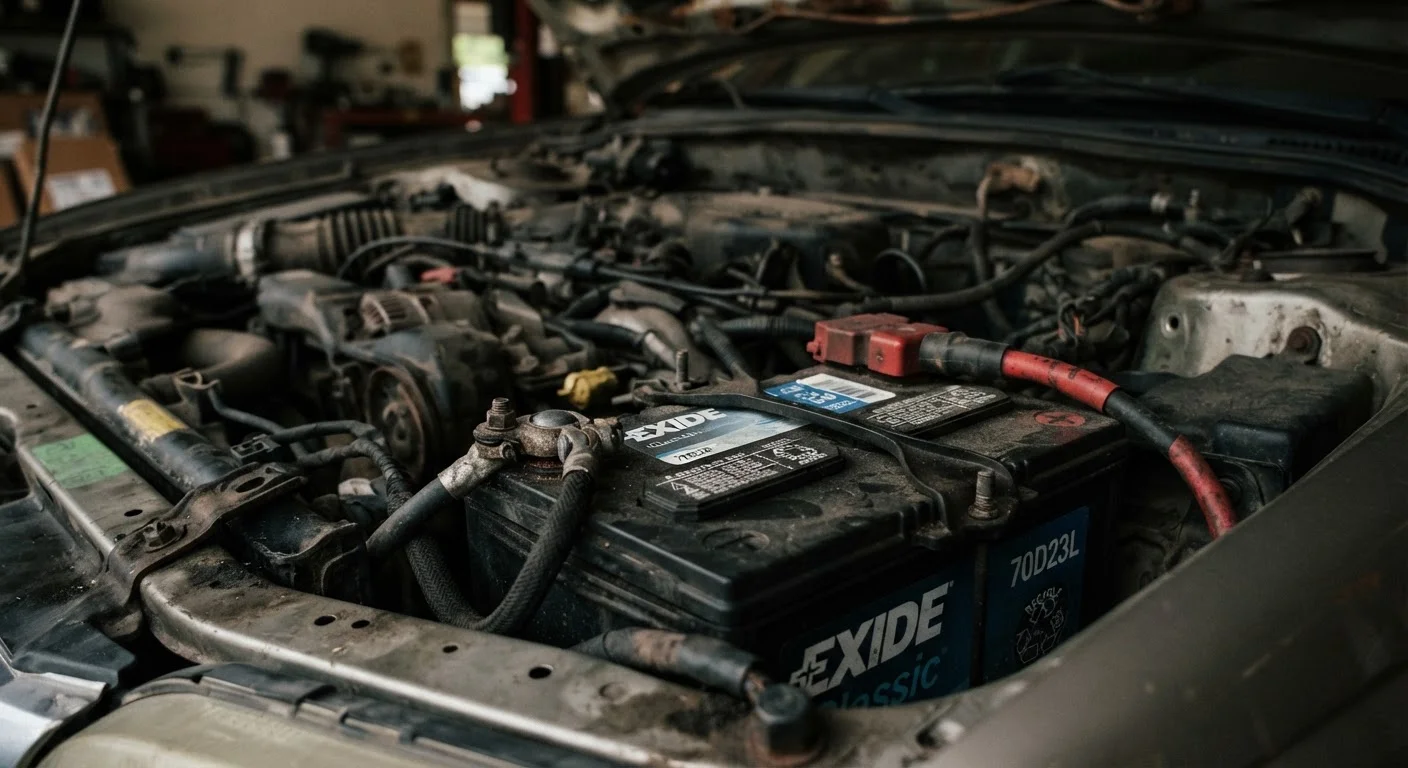
A car battery is a rechargeable device that provides the electrical energy needed to start your engine and power accessories when the engine isn't running. It works alongside the alternator, which recharges the battery while the engine is on. Without a functioning battery, your vehicle cannot start and many electrical systems will fail.
Most passenger vehicles use a 12-volt lead-acid battery. Some newer hybrids and electric vehicles use high-voltage lithium-ion battery packs in addition to a conventional 12-volt auxiliary battery.
How Long a Car Battery Actually Lasts
The typical car battery has a useful service life of three to five years, though this varies considerably depending on where you live and how you drive. Heat is actually the leading cause of early battery failure - sustained high temperatures accelerate the chemical reactions inside the battery, causing internal breakdown over time. Drivers in consistently hot climates may see batteries wear out closer to the three-year mark.
Cold weather presents a different problem. It doesn't degrade the battery as quickly, but it dramatically reduces the battery's ability to deliver cranking power. A battery that's already weakened may simply not have enough output to start the engine on a frigid morning.
Driving patterns also matter. Vehicles used primarily for short trips - commutes under 20 minutes - may never give the alternator enough running time to fully recharge the battery. Over months and years, this partial-charge cycling chips away at overall battery capacity. For a broader look at how seasonal conditions stress your vehicle, see our seasonal vehicle prep guide.
3-5 years
Typical car battery lifespan
Industry guidance from automotive maintenance organizations consistently places average battery life in this range under normal driving conditions.
~50%
Battery capacity lost in extreme cold
At 0°F, a lead-acid battery can deliver roughly half its rated capacity compared to performance at 80°F, according to battery industry data.
1 in 4
Vehicles with a weak or failing battery
Automotive service industry surveys have estimated that a significant share of vehicles on the road at any given time have batteries testing below optimal capacity.
Warning Signs to Watch For
Car batteries rarely fail without providing at least a few clues beforehand. Recognizing those clues early is the difference between scheduling a replacement and calling for a tow.
- Slow or labored cranking: If the engine turns over sluggishly when you start the car - especially on a warm day when temperature isn't a factor - the battery may not be delivering full voltage.
- Frequent need for jump-starts: A battery that needs jumping more than once is not simply having a bad day. This pattern indicates it can no longer hold an adequate charge.
- Dimming headlights or interior lights: Lights that visibly dim at idle but brighten when you rev the engine suggest the battery's reserve capacity is low and the alternator is compensating.
- Battery warning light: This dashboard indicator can signal either a battery or charging system problem. Either way, it warrants prompt attention from a qualified mechanic.
- Swollen or misshapen battery case: A bloated battery case is a sign of excessive heat exposure or overcharging. A physically distorted battery should be inspected immediately and handled with caution.
- Corrosion on terminals: White or blue-tinted buildup around the battery terminals can interfere with the electrical connection and is often associated with a battery nearing the end of its life.
Ask for a Battery Test at Your Next Oil Change
Most service centers can run a battery load test in just a few minutes while your vehicle is already in for maintenance. This test reveals whether the battery's actual output has dropped meaningfully from its rated capacity - information a visual inspection alone cannot provide. Catching a marginal battery during a scheduled service visit is far less disruptive than an unexpected no-start.
What Happens When a Battery Fails
A complete battery failure typically announces itself in one of two ways: either the car won't start at all, or it starts and then stalls due to insufficient voltage for the ignition and fuel systems. In either case, the vehicle is effectively immobile until the battery is replaced or jump-started.
The consequences can extend beyond a no-start situation. As a battery degrades, voltage output becomes erratic. Modern vehicles rely on stable electrical power for engine control modules, transmission computers, anti-lock braking systems, and safety features. Unstable voltage can trigger false error codes, confuse sensors, and in some cases require professional diagnosis to clear - even after the battery itself is replaced.
A struggling battery also puts extra load on the alternator. Over time, this added strain can shorten the alternator's service life, turning what should have been a routine battery replacement into a more expensive repair. This kind of component interdependency is worth keeping in mind - similar to how worn brake components affect neighboring parts, as covered in our guide to braking system wear.
Practical Steps to Stay Ahead of Battery Failure
The most effective preventive measure is periodic battery testing. Many auto parts retailers and service shops offer free or low-cost load testing that measures whether the battery can still deliver adequate power under real-world demand. Requesting a battery test at each oil change adds no significant time to a service visit and can identify a weakening battery well before it fails completely.
A few habits that help preserve battery life:
- Avoid leaving lights, the radio, or charging accessories running when the engine is off for extended periods.
- If a vehicle sits unused for weeks at a time, consider a battery maintainer (sometimes called a trickle charger) to keep the charge level stable.
- Keep terminals clean and free of corrosion - a simple inspection during routine maintenance is enough to catch early buildup.
When a battery does need replacement, a qualified mechanic can verify that the new battery's specifications - particularly its cold cranking amps and reserve capacity - match what the vehicle requires. Installing an undersized battery can shorten its service life and may not adequately support the vehicle's electrical demands.
This article is for general informational purposes only. Consult a qualified mechanic for diagnosis and repair decisions specific to your vehicle.