

Key Takeaways
- CPO programs are not standardized - coverage and inspection criteria differ by automaker and dealer.
- Manufacturer CPO programs generally offer stronger protections than dealer-run certifications.
- Most CPO vehicles must meet age and mileage limits to qualify for the program.
- A CPO warranty does not replace the need to review a vehicle history report or ask detailed questions.
- Powertrain coverage and bumper-to-bumper terms vary widely, so reading the actual warranty document matters.
- CPO vehicles typically cost more than non-certified used cars - understanding what that premium buys is essential.
Certified Pre-Owned (CPO) Vehicle
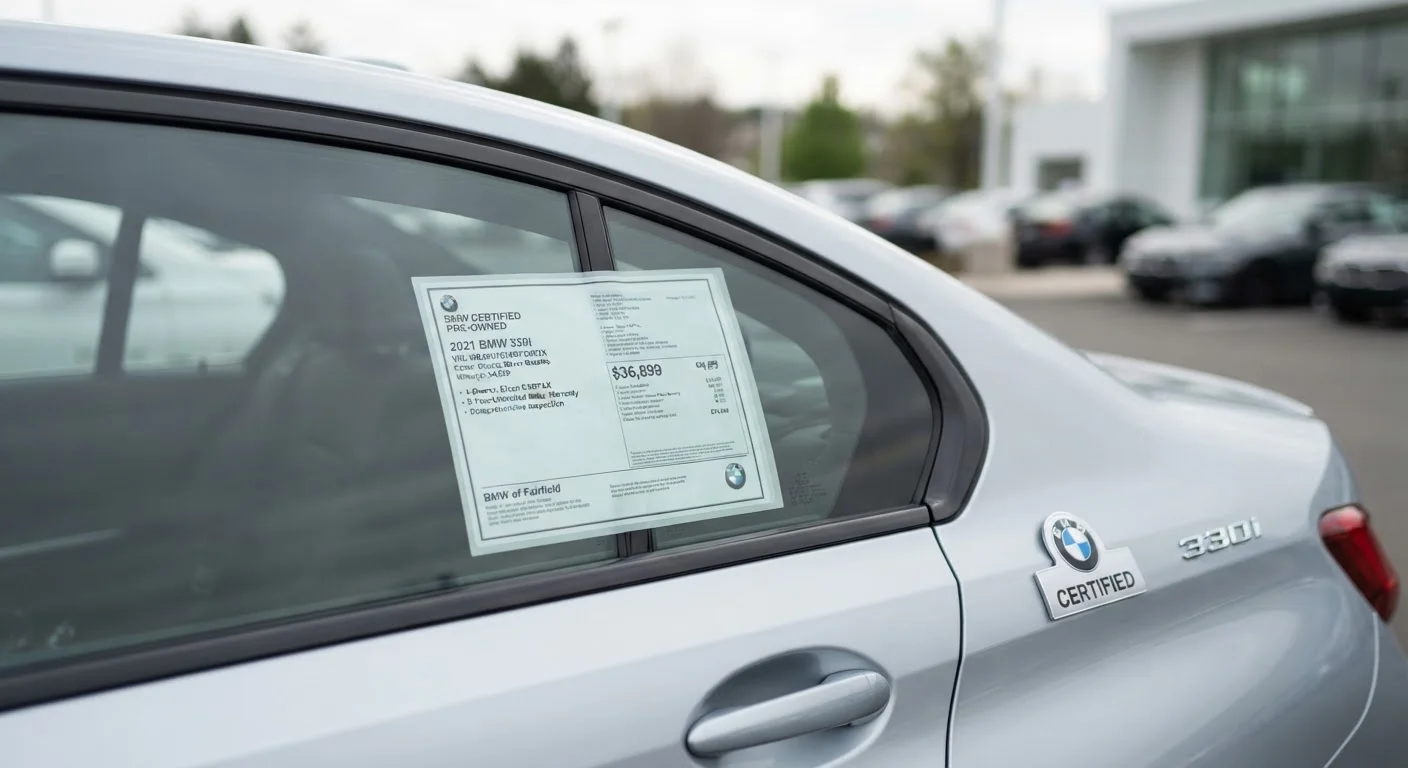
A certified pre-owned vehicle is a used car that has been inspected, reconditioned, and backed by a warranty through either the manufacturer or a dealership. The CPO label signals that the vehicle has met a defined set of quality standards before resale. However, what those standards include - and how comprehensive the warranty protection is - varies significantly depending on who is running the program.
Manufacturer-sponsored CPO programs are distinct from dealer-certified programs; only the former are backed by the automaker and typically include factory warranty extensions transferable to subsequent buyers.
What CPO Actually Means - and Who Sets the Rules
The term "certified pre-owned" carries significant marketing weight, but it has no single legal definition in the United States. Any dealership can call a vehicle "certified" under a loose in-house standard. What separates a meaningful CPO program from a marketing label is whether it is backed by the automaker itself - and whether the inspection and warranty terms are publicly documented and consistently applied.
Manufacturer-sponsored CPO programs - run by brands such as Honda, Toyota, Ford, BMW, and others - establish minimum eligibility criteria, standardized multi-point inspection checklists, and warranty terms that apply at any participating dealer nationwide. These programs are regulated at the federal level by the Federal Trade Commission's Used Car Rule, which requires clear disclosure of warranty terms at the point of sale.
Dealer-run certifications, by contrast, are created and managed at the individual dealership or dealer group level. They may involve a legitimate inspection, but the warranty backing that certification often comes from a third-party service contract rather than the automaker. That distinction matters when a repair is needed.
What the Inspection Typically Covers
Most manufacturer CPO programs require a multi-point inspection - commonly ranging from 100 to 200 inspection points depending on the brand. These checks generally cover the engine and drivetrain, brakes, suspension, tires, electrical systems, interior condition, and structural integrity. Vehicles that fail the inspection criteria must be reconditioned or are excluded from the program.
Eligibility criteria typically include age limits (often five to seven model years) and mileage caps (commonly under 60,000 to 80,000 miles, though this varies). Vehicles with certain title designations - such as salvage, flood damage, or lemon law buyback - are usually disqualified outright from manufacturer programs.
Ask for the Inspection Report
Before finalizing a CPO purchase, request a copy of the completed multi-point inspection checklist. A reputable dealer running a legitimate CPO program should be able to provide this documentation. It tells you exactly what was checked, what was repaired, and what passed - giving you a factual baseline for the vehicle's condition at sale.
Even so, an inspection performed by the selling dealership is not the same as an independent evaluation. The pre-purchase inspection process by a neutral mechanic can surface concerns that a CPO inspection is not designed - or motivated - to flag.
Understanding the Warranty: What's Covered, What Isn't
A CPO warranty typically has two layers. The first is a powertrain warranty covering the engine, transmission, and related components - often extending several years beyond the original factory coverage. The second is a bumper-to-bumper or limited comprehensive warranty covering most other systems, though usually for a shorter duration.
100-200+
Inspection points in typical manufacturer CPO programs
The number of inspection criteria varies by automaker; luxury brands tend to require more points than mainstream programs.
5-7 years
Typical maximum vehicle age for CPO eligibility
Most manufacturer CPO programs cap eligible vehicles at five to seven model years old, though exact limits vary by brand.
60,000-80,000 miles
Common mileage ceiling for CPO qualification
Mileage limits differ across automakers; some luxury brands set lower thresholds while others allow higher mileage with additional inspection requirements.
What CPO warranties almost universally exclude are wear-and-tear items: brake pads, rotors, tires, wiper blades, filters, and similar consumables. Some programs also exclude infotainment systems or charge separate deductibles per repair visit. Reading the actual warranty document - not just the summary sheet - reveals these specifics.
Roadside assistance is frequently bundled with manufacturer CPO programs, covering services like towing, flat tire assistance, and battery jump-starts for the warranty period. This benefit alone can be meaningful for drivers without separate roadside coverage through their auto insurance policy.
For a full picture of any vehicle's history before relying on CPO status, reviewing a vehicle history report remains a sound step - CPO certification does not substitute for that transparency.
The Price Premium - and Whether It's Justified
CPO vehicles command a higher price than equivalent non-certified used cars. That premium reflects the warranty coverage, the reconditioning work performed, and in some cases, access to manufacturer financing rates that may be competitive with new-car offers. Whether the premium is justified depends on the gap between the CPO price and what a comparable non-certified vehicle would cost after factoring in an independent inspection and any needed repairs.
It also depends on the specific program. A CPO warranty with broad coverage, low deductibles, and genuine manufacturer backing offers different value than a dealer-certified label attached to a third-party service contract with numerous exclusions. Finance office add-ons, such as extended service contracts pitched after a CPO purchase, deserve particular scrutiny - they may overlap significantly with coverage already included.
Before finalizing any CPO purchase, asking the right questions upfront - including who backs the warranty, what the deductible is, and where repairs must be performed - puts you in a stronger negotiating and decision-making position.
“The word 'certified' on a used car can mean many things - from a rigorous factory-backed inspection program to little more than a wash and a sticker. Consumers owe it to themselves to read the warranty document, not just the label.”
— Consumer Reports Automotive Division, Independent automotive research and consumer advocacy organization