

Key Takeaways
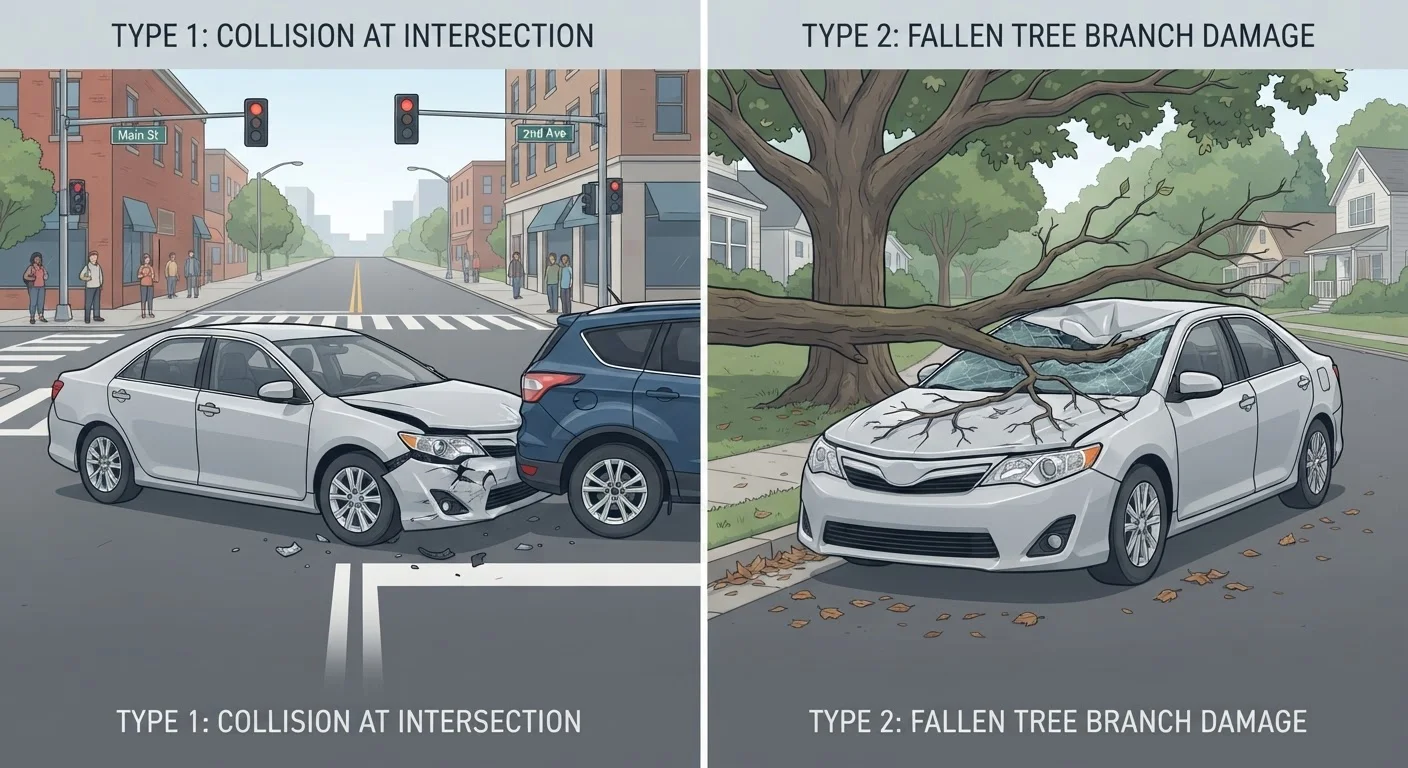
- Collision coverage pays for vehicle damage resulting from crashes with other vehicles or stationary objects.
- Comprehensive coverage handles non-collision incidents like theft, hail, flooding, and animal strikes.
- Both coverage types apply to your own vehicle, not the other driver's property.
- Lenders typically require both coverages when you're financing or leasing a vehicle.
- Each coverage type has its own separate deductible, which you choose when setting up your policy.
Option A
Collision Coverage
The coverage designed for crashes and road impacts.
Best for: Drivers who want protection for vehicle damage caused by accidents with other cars or objects, regardless of fault.
Option B
Comprehensive Coverage
The coverage for everything that isn't a collision.
Best for: Drivers who want protection from theft, weather events, falling objects, and other non-collision incidents.
If you're financing or leasing your vehicle
Both Collision and Comprehensive Coverage
Most lenders and leasing companies require both as a condition of the loan or lease agreement - carrying only one is typically not an option.
If you drive frequently in high-traffic urban areas
Collision Coverage
Higher crash frequency in dense traffic means collision risk is elevated, making this coverage especially relevant to everyday commuters.
If you live in an area prone to severe weather, flooding, or high vehicle theft
Comprehensive Coverage
Comprehensive handles hail, flood damage, and theft - all disproportionately common in certain U.S. regions.
If you own an older vehicle with a low market value
Neither may be cost-effective
When the vehicle's actual cash value is low, the annual premiums for both coverages may exceed the potential payout, making the cost-benefit case weaker.
If you want broader protection for your vehicle beyond liability-only
Both Collision and Comprehensive Coverage
Together, they form what insurers commonly call 'full coverage' for your own vehicle, addressing both crash and non-crash scenarios.
The Core Distinction: Impact vs. Everything Else
The simplest way to separate collision and comprehensive coverage is to ask one question: did the vehicle make contact with something? If the damage came from a physical crash - your car hitting another vehicle, a guardrail, a light pole, or even a pothole - that's collision territory. If the damage came from an outside force that had nothing to do with driving impact - a hailstorm, a deer, a flood, a break-in - that falls under comprehensive.
Both coverages protect your own vehicle. They are not liability coverages and do not pay for damage to another person's car or property. For a broader look at how all three core coverage types fit together, see Liability, Collision, and Comprehensive: The Core Coverage Types Decoded.
| Criterion | Collision Coverage | Comprehensive Coverage |
|---|---|---|
| What triggers a claim | Physical crash or impact | Non-collision external event |
| Common covered scenarios | Crashes, rollovers, hitting objects | Theft, hail, flood, animal strike, fire |
| Whose vehicle is covered | Your own vehicle only | Your own vehicle only |
| At-fault requirement | Pays regardless of fault | Fault not applicable |
| Separate deductible | Yes | Yes |
| State-mandated | No | No |
| Required by lenders/lessors | Typically yes | Typically yes |
| Animal strike (e.g., deer) | Not covered | Covered |
What Each Coverage Actually Pays For
Collision coverage activates when your vehicle sustains damage from a crash - whether you're at fault, partially at fault, or even if the other driver is uninsured and can't cover your repairs. Common covered scenarios include rear-end collisions, side-impact crashes, and single-vehicle accidents like running into a fence or rolling into a ditch.
Comprehensive coverage steps in for events largely outside the driver's control. The covered event list is broad: theft or attempted theft, vandalism, damage from hail or windstorms, flooding, fire, falling trees or debris, and collisions with animals (a deer running into your path is classified as a comprehensive claim, not a collision claim). That last point surprises many drivers.
~6M
Annual vehicle crashes in the U.S.
The National Highway Traffic Safety Administration reports approximately 6 million police-reported crashes occur on U.S. roads each year, underscoring collision risk for everyday drivers.
~1M
Deer-vehicle collisions annually
The Insurance Institute for Highway Safety estimates nearly one million deer-vehicle collisions occur in the U.S. each year - all typically classified as comprehensive claims.
$1,000+
Average collision claim cost
Industry data consistently shows the average auto collision repair claim runs well above $1,000, illustrating why the coverage can offset significant out-of-pocket expense.
Both coverage types are subject to a deductible - the amount you pay out of pocket before your insurer covers the rest. You select this amount when purchasing your policy, and lower deductibles mean higher premiums. Each coverage type carries its own separate deductible, so you may have a $500 collision deductible and a $250 comprehensive deductible on the same policy.
When Are These Coverages Required?
Neither collision nor comprehensive coverage is legally mandated by any U.S. state - unlike liability insurance, which most states require by law. However, there's a major practical exception: if you're financing or leasing a vehicle, the lender or leasing company almost always requires both coverages as a condition of the agreement. They have a financial stake in the vehicle and need it protected.
Once a vehicle is owned outright, the decision becomes yours. The general consideration is whether the potential payout justifies the annual cost of premiums plus your deductible. For newer or higher-value vehicles, the math often favors keeping both. For older vehicles with lower market values, it may not. This trade-off is explored in more depth in State Minimum vs. Full Coverage: Understanding the Real Trade-Off.
Gap Insurance: A Related Consideration
If you're financing a new vehicle, you may also hear about gap insurance. This optional coverage pays the difference between what you owe on a loan and the vehicle's actual cash value if the car is totaled - because a standard collision or comprehensive payout only covers what the car is worth at the time of loss, which can be less than the outstanding loan balance. Ask your lender or insurer whether gap coverage makes sense for your situation.
Drivers who want a complete picture of their policy options - including liability, uninsured motorist, and medical payments coverage - can find a thorough grounding in Auto Insurance Explained: What Every Driver Actually Needs to Know.
This article provides general information about auto insurance coverage types and is not personalized insurance or financial advice. Coverage terms, exclusions, and costs vary by insurer, policy, and state. Always review your actual policy documents and consult a licensed insurance agent for guidance specific to your situation.