

Key Takeaways
- Sedona's scenery is genuinely spectacular, but crowds and costs can dampen the experience without advance planning.
- Many popular trailheads require timed-entry permits, especially during spring and fall peak seasons.
- The town's metaphysical and wellness offerings are optional extras - not the core of what draws most visitors.
- Shoulder seasons (late fall and early winter) often offer better conditions than the busiest spring weeks.
- Sedona is not a budget destination; lodging, dining, and parking add up faster than many travelers expect.
What Sedona Actually Delivers
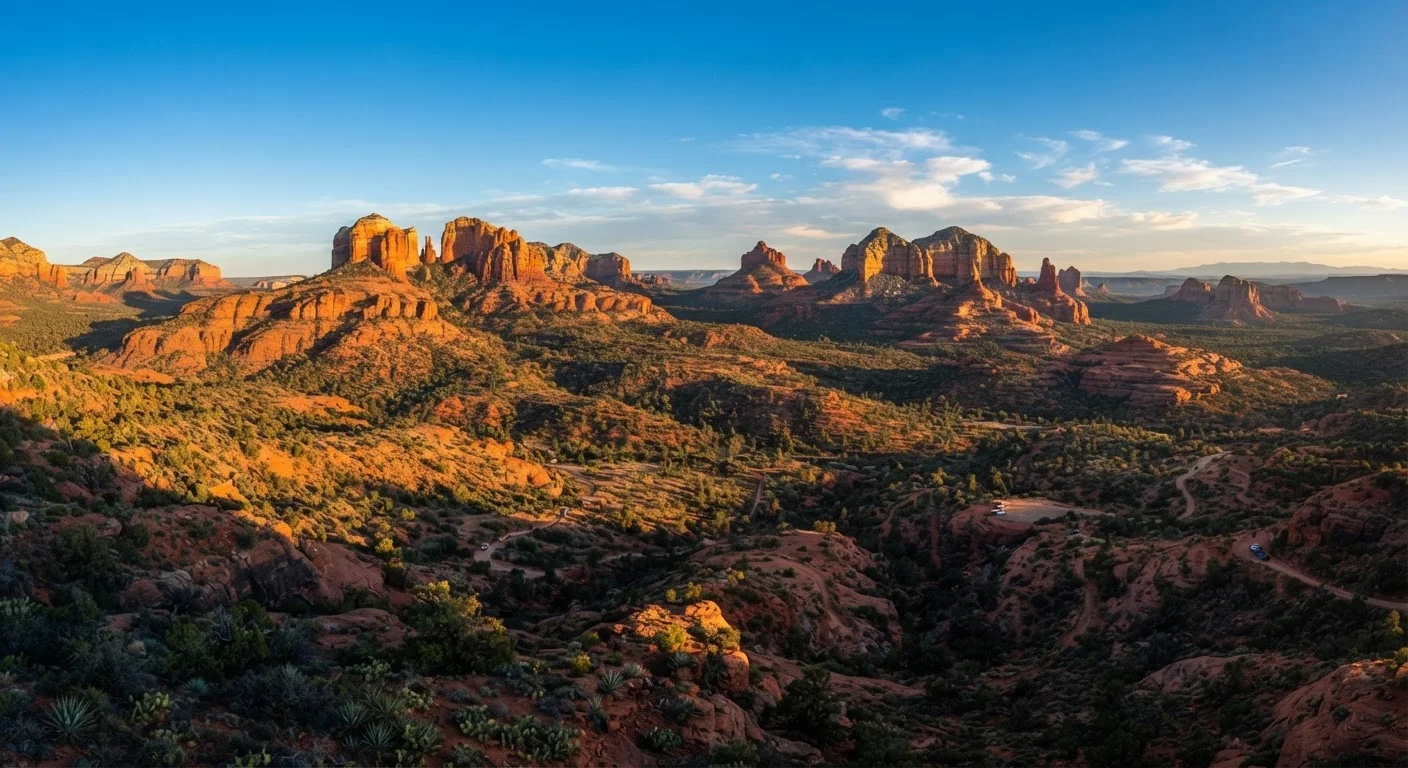
Sedona sits in a narrow canyon corridor in north-central Arizona, roughly 115 miles north of Phoenix and 30 miles south of Flagstaff. The red rock landscape - carved sandstone buttes, mesas, and canyons in shades of rust, ochre, and burgundy - is not exaggerated in photographs. It is genuinely one of the more visually striking settings in the American Southwest.
The town itself is small, with a permanent population under 12,000, but it absorbs well over three million visitors annually. That gap matters. Visitors come for wide-open solitude and instead find congested two-lane roads, packed trailhead parking lots, and restaurants with long weekend waits. The landscape delivers; the logistics require realistic expectations.
Hiking is the most direct way to engage with the terrain. Trails range from flat, accessible loops to strenuous technical routes. Cathedral Rock, Bell Rock, and Devil's Bridge are frequently cited as highlights - and frequently photographed to the point that first-time visitors may recognize them on arrival. For a broader look at how Sedona fits into a larger regional itinerary, see our Southwest road trip planning guide.
3M+
Annual visitors to Sedona
Coconino National Forest and City of Sedona tourism data consistently place annual visitation in the multi-million range for the region.
~115 mi
Distance from Phoenix to Sedona
The drive north on I-17 and SR-179 takes roughly two hours under normal traffic conditions, making Sedona a common day-trip or weekend destination from the Phoenix metro area.
Common Myths, Corrected
Sedona carries a particularly dense layer of built-up reputation - as a spiritual vortex site, an uncrowded escape, and a place where the rules of ordinary travel logistics don't apply. Most of that reputation deserves a closer look.
Myth
Sedona is a quiet, off-the-beaten-path escape from the city.
Fact
Sedona is one of the most-visited destinations in Arizona, drawing millions of visitors annually to a compact geographic area.
The town's relative smallness makes heavy visitation feel more concentrated than it would in a larger destination. On peak spring weekends, trailhead parking lots often reach capacity before 9 a.m., and some require advance timed-entry permits through the Red Rock Pass system or federal recreation reservation platforms. Visitors expecting a remote wilderness experience often find the most iconic spots resemble a busy state park rather than a backcountry retreat.
Myth
Sedona's 'energy vortexes' are a scientifically recognized natural phenomenon.
Fact
Vortex sites are culturally significant and draw genuine interest, but there is no scientific evidence supporting claims of measurable electromagnetic or spiritual energy at these locations.
The vortex concept became widely associated with Sedona in the 1980s and has since become a central part of local tourism marketing. Sites like Airport Mesa and Boynton Canyon are real, accessible, and scenic - worth visiting on their own merits as viewpoints and hiking destinations. Visitors who approach them as cultural curiosities or scenic overlooks tend to leave satisfied; those expecting a measurable physical or metaphysical effect may be disappointed.
Myth
You can visit Sedona's major trails without permits or advance planning.
Fact
Several popular trailheads now require timed-entry permits or Red Rock Passes, and these can sell out days in advance during peak season.
The Red Rock Pass is required for parking at many Coconino National Forest trailheads - as of the time of writing, it covers day-use parking fees that would otherwise apply per vehicle. Some specific corridors, including the Palatki Heritage Site, require separate advance reservations for access. Planning a visit without checking current permit requirements is a common mistake that results in turned-away vehicles during busy periods. Check the Coconino National Forest and Recreation.gov websites for current requirements before travel.
Myth
Sedona's best scenery is only accessible to experienced hikers.
Fact
Many of Sedona's most dramatic viewpoints are reachable on short, relatively flat trails suitable for most fitness levels.
Bell Rock Pathway, Airport Mesa Loop, and the Cathedral Rock short approach are all under two miles and do not require technical climbing or significant elevation gain for the core viewpoints. More demanding trails - such as the full West Fork Trail or Bear Mountain - exist for those who want them, but the defining landscape of Sedona is accessible without advanced fitness. Footwear with decent grip and sun protection matter more than hiking experience for most visitors.
Myth
Sedona is equally enjoyable year-round without planning around seasons.
Fact
Summer temperatures regularly exceed 100°F, making midday outdoor activity uncomfortable and potentially unsafe; winter offers cooler conditions but some trails can become icy.
Spring (March-April) and fall (September-October) are considered the most comfortable seasons but also the most crowded. Summer mornings before 9 a.m. are manageable, but afternoon heat limits trail activity significantly and requires extra hydration planning. December through February brings cooler, quieter conditions; snowfall occasionally dusts the red rocks, creating unusually photogenic scenes, though trail surfaces can be slippery. Each season involves a real tradeoff between comfort, crowds, and cost.
Practical Considerations Before You Go
Sedona is served by State Route 89A and State Route 179 - both two-lane roads that funnel all traffic through the same narrow corridors. During peak weekends in March, April, and October, traffic backups of an hour or more are not unusual near the Village of Oak Creek and Uptown Sedona. Arriving early - before 8 a.m. - and planning to be off popular trails by midday substantially improves the experience.
Heat and Hydration Are Serious Risks
Summer temperatures in Sedona regularly reach or exceed 100°F, and the dry air can mask how quickly dehydration develops. Carry significantly more water than you think you'll need - at least one liter per person per hour of active hiking in warm conditions. Know the signs of heat exhaustion, and turn back if conditions feel unsafe. Desert rescues in the Sedona area increase sharply during summer months.
Lodging runs toward the higher end of the price spectrum for Arizona. Budget motels are scarce within city limits; most properties skew toward resort and boutique pricing. Camping is available at nearby Coconino National Forest sites, which offer a more affordable and often quieter alternative, though sites fill quickly during peak months and reservations are typically required well in advance.
Travelers with limited time who value solitude over iconic overlooks may find value in comparing Sedona with less-visited destinations. Our guide to underrated U.S. national parks covers options that offer comparable scenery with a fraction of the foot traffic.
Travel conditions, permit requirements, and fee structures change over time. Verify current entry requirements, road conditions, and reservation availability through official Arizona state and Coconino National Forest sources before your trip.