

Key Takeaways
- Oahu offers the most infrastructure and attractions, making it ideal for first-time visitors.
- Maui balances resort amenities with outdoor adventure and is consistently popular with couples and families.
- Kauai is the most remote-feeling island, suited to nature lovers and those seeking seclusion.
- The Big Island's sheer size and active volcanoes make it unique among all Hawaiian islands.
- Molokai and Lanai are small, quiet, and best reserved for travelers seeking an off-the-beaten-path experience.
- Flight access, accommodation range, and budget should all factor into which island you choose.
Our Verdict
No single Hawaiian island is objectively the best - the right choice depends on what kind of experience you're after. Oahu suits travelers who want variety and convenience; Kauai and the Big Island reward those who prioritize scenery and outdoor exploration; Maui appeals to those seeking a polished yet adventurous holiday. Molokai and Lanai serve a niche audience looking for quietude and exclusivity.
| Best for | Recommended |
|---|---|
| First-time visitors and those wanting urban amenities | Oahu |
| Couples, families, and resort travelers with adventure interests | Maui |
| Nature lovers and hikers who prefer fewer crowds | Kauai |
| Travelers fascinated by volcanic landscapes and diverse ecosystems | The Big Island |
How Hawaii's Islands Stack Up
Hawaii's six main islands - Oahu, Maui, Kauai, the Big Island (Hawaii Island), Molokai, and Lanai - are often grouped together in travelers' minds, but they feel remarkably different on the ground. Choosing wisely starts with understanding what each island actually delivers, not what a brochure promises.
Below is a side-by-side look at key factors: scenery type, crowd level, accommodation range, and the kind of traveler each island suits best.
| Oahu | Maui | Kauai | Big Island | Molokai | Lanai | |
|---|---|---|---|---|---|---|
| Best known for | Waikiki, Pearl Harbor, city life | Road to Hana, whale watching | Na Pali Coast, Waimea Canyon | Active volcanoes, diverse climate zones | Kalaupapa, rural authenticity | Seclusion, luxury, diving |
| Crowd level | Very high | High | Moderate | Moderate | Very low | Very low |
| Accommodation range | Budget to luxury | Mid-range to luxury | Budget to upscale | Budget to mid-range | Very limited | Luxury only |
| Direct mainland flights | Yes, many | Yes | Some | Yes (Kona & Hilo) | No | No |
| Best traveler type | First-timers, families | Couples, resort-seekers | Nature lovers, hikers | Explorers, science buffs | Off-the-grid seekers | Luxury travelers |
| Rainy season consideration | Nov-Mar, windward side | Nov-Mar, East Maui | Year-round North Shore | Year-round, Hilo side | Moderate year-round | Generally dry |
Oahu and Maui: The High-Demand Islands
Oahu is Hawaii's most visited island and home to Honolulu, Waikiki Beach, and Pearl Harbor. It has the widest range of accommodation at every price point, a reliable public bus system (TheBus), and the state's busiest international airport. That convenience comes with crowds - Waikiki in particular can feel densely packed. Still, Oahu's North Shore, Manoa Valley, and Ko'olau Mountains offer genuine breathing room.
Maui splits neatly into resort-heavy West Maui and the rural, windswept East Maui. The Road to Hana is one of America's most celebrated scenic drives. Whale watching (humpback season runs roughly December through May) and snorkeling in Molokini Crater draw repeat visitors. Accommodation skews upscale, particularly in Wailea and Ka'anapali, though mid-range options exist in Kihei.
Consider Island-Hopping Strategically
Inter-island flights are relatively short (often 30-45 minutes) and can let you combine two islands in one trip without excessive cost or time. A common pairing is Oahu plus Maui, or Maui plus the Big Island. Book inter-island flights separately and check Hawaiian Airlines and Southwest Airlines routes - both serve the main islands. Confirm baggage and schedule details directly with your carrier before booking.
Kauai and the Big Island: For the Explorer
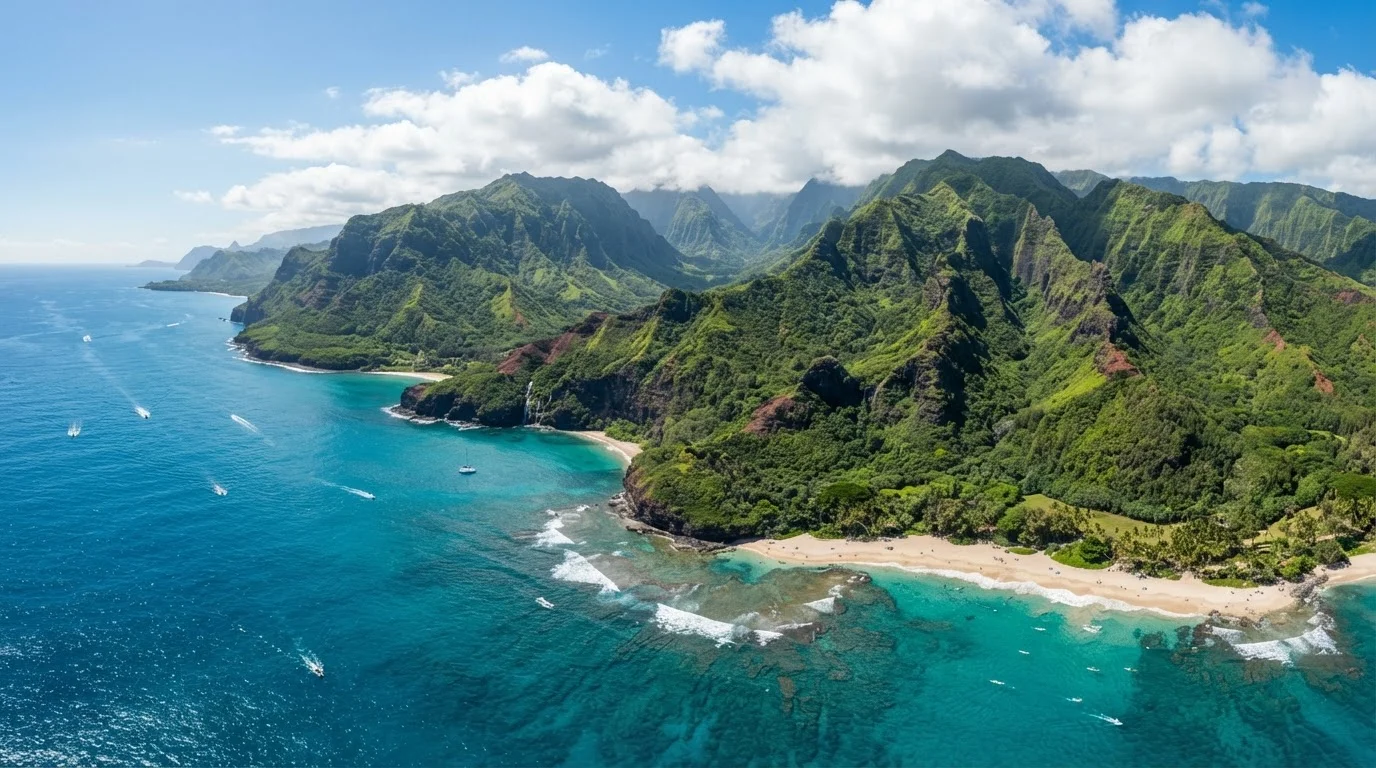
Kauai, often called the Garden Isle, is the oldest of the main islands geologically and the most dramatically eroded - its Na Pali Coast cliffs and Waimea Canyon are genuinely breathtaking. There are no large cities and no traffic lights in most of the island's interior. Flights connect through Lihue Airport, usually via Honolulu or the mainland. Travelers should note that the North Shore can receive significant rainfall year-round.
The Big Island is nearly twice the size of all other Hawaiian islands combined. It contains 11 of the world's 13 climate zones and is home to Hawaii Volcanoes National Park, where you can observe active volcanic activity (conditions permitting - always check National Park Service advisories). Hilo on the wet eastern side contrasts sharply with sunny, resort-lined Kailua-Kona on the west. Budget travelers find more affordable lodging here than on Maui.
Molokai and Lanai: The Quiet Alternatives
Molokai has a population of roughly 7,000 and has deliberately resisted large-scale resort development. There are no traffic lights, no shopping malls, and lodging options are limited. The Kalaupapa National Historical Park - accessible only by guided mule ride, on foot, or by small plane - preserves the site of a former leprosy settlement and is historically significant. Molokai is genuinely authentic but demands flexibility and self-sufficiency from visitors.
Lanai, privately owned in large part, offers two high-end resorts and little else in terms of commercial infrastructure. Its appeal lies in seclusion, world-class diving at Cathedrals dive site, and red-dirt backcountry roads. Day trips from Maui by ferry are a practical alternative to overnight stays for those curious about the island without committing to its premium price tag.
Travel conditions, entry requirements, and local advisories can change. Always verify current information with official sources - including the Hawaii Tourism Authority and the U.S. National Park Service - before booking or traveling.