

| Total AT Length | Approximately 2,190 miles (Appalachian Trail Conservancy) |
| States Crossed | 14 (Georgia to Maine) (Appalachian Trail Conservancy) |
| ATC Headquarters | Harpers Ferry, West Virginia |
| Peak Hiking Season | March - October (varies by section) |
| Trail Towns Featured Here | Damascus VA, Hot Springs NC, Harpers Ferry WV, Waynesboro VA, Millinocket ME |
What Is an Appalachian Trail Town?
The Appalachian Trail (AT) stretches roughly 2,190 miles from Springer Mountain, Georgia to Mount Katahdin, Maine. Along the way, it passes through or near dozens of small communities that have become known as trail towns - places where hikers can resupply, rest, and recover before heading back into the backcountry.
Trail towns aren't a formal designation. They range from tiny villages with a single general store to mid-size historic towns with full lodging, dining, and outfitter options. What connects them is a shared relationship with the trail and the culture it brings.
For non-hikers, many of these towns offer genuine appeal: historic architecture, local craft scenes, outdoor recreation, and a distinct sense of place rooted in Appalachian heritage. You don't need a backpack to enjoy them.
Appalachian Trail (AT)
A roughly 2,190-mile long-distance hiking trail running along the spine of the Appalachian Mountains from Georgia to Maine. It is managed through a partnership of the National Park Service, the U.S. Forest Service, and the Appalachian Trail Conservancy.
Trail town
An informal term for a community located near or along the Appalachian Trail that provides services to hikers, including lodging, food resupply, and gear shops. Many also welcome non-hiking visitors.
Thru-hiker
A hiker attempting to walk the entire length of the Appalachian Trail in a single continuous journey, typically taking five to seven months. Thru-hikers are the heaviest users of trail town services.
Resupply
The practice of restocking food, fuel, and supplies at a town stop during a long-distance hike. Resupply options - grocery stores, post offices, outfitters - are a key reason trail towns matter to hikers.
Appalachian Trail Conservancy (ATC)
The nonprofit organization responsible for the overall management and protection of the Appalachian Trail, headquartered in Harpers Ferry, West Virginia. It coordinates volunteer trail maintenance clubs and advocates for the trail corridor.
Snapshot: Five Notable Trail Towns
The following communities are among the most well-known along the corridor. Each has its own character, and none should be treated as interchangeable.
| Total AT Length | Approximately 2,190 miles (Appalachian Trail Conservancy) |
| States Crossed | 14 (Georgia to Maine) (Appalachian Trail Conservancy) |
| ATC Headquarters | Harpers Ferry, West Virginia |
| Peak Hiking Season | March - October (varies by section) |
| Trail Towns Featured Here | Damascus VA, Hot Springs NC, Harpers Ferry WV, Waynesboro VA, Millinocket ME |
Damascus, Virginia
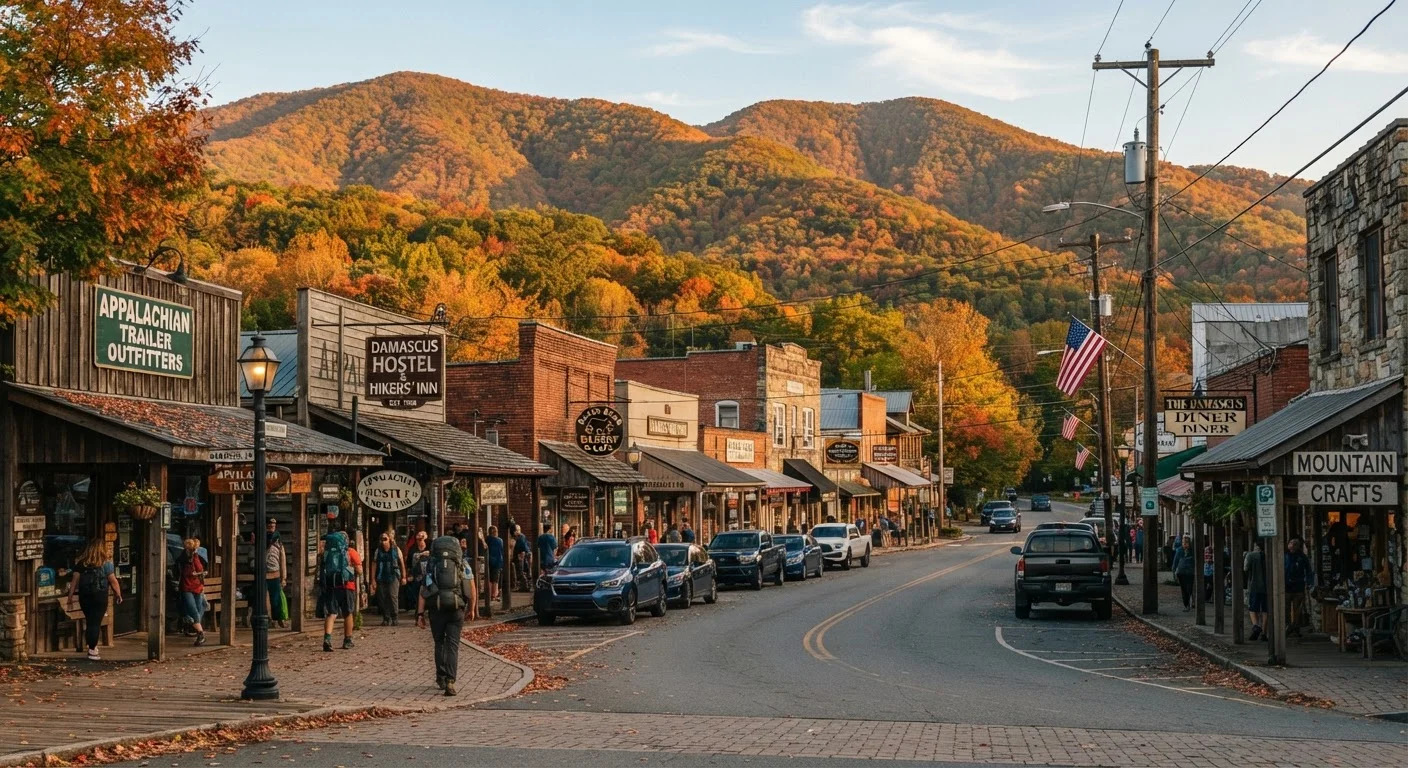
Often called "Trail Town USA" by the hiking community, Damascus sits at a crossroads of multiple long-distance trails, including the AT, the Virginia Creeper Trail, and the TransAmerica Bicycle Trail. It's a compact, walkable town with hostels, outfitter shops, and a strong volunteer trail culture. The annual Trail Days festival draws hikers and trail enthusiasts each spring. Damascus is also a good base for rail-trail cycling and trout fishing.
Hot Springs, North Carolina
Hot Springs is one of the few places where the AT passes directly through a town's downtown. It has natural mineral springs that have attracted visitors since the 1800s. Today it offers a handful of inns, restaurants, and outfitter services. The surrounding Pisgah National Forest provides additional day-hiking and paddling opportunities on the French Broad River.
Harpers Ferry, West Virginia
Harpers Ferry is a National Historical Park town at the confluence of the Shenandoah and Potomac rivers. The AT's psychological midpoint (not the exact geographic center) passes through here, and the Appalachian Trail Conservancy's headquarters is located in town. History, river scenery, and easy access from the Washington, D.C. area make it a popular weekend destination for non-hikers as well.
Waynesboro, Virginia
Located at the southern end of Shenandoah National Park, Waynesboro serves as a gateway for both the AT and Skyline Drive. The town has invested in trail-friendly infrastructure and has a growing arts and dining scene. It's a practical stop with grocery access, laundry facilities, and lodging at multiple price points.
Millinocket, Maine
Millinocket is the last town most northbound thru-hikers pass through before the final push to Katahdin. It has the feel of a classic New England mill town in transition - former timber industry roots, a small-but-dedicated trail community, and dramatic access to Baxter State Park. It's more remote than the Virginia and North Carolina stops and requires planning to reach.
What to Expect When You Visit
Trail towns vary significantly in size and amenities. Before visiting, it helps to set realistic expectations.
Check Conditions and Entry Requirements Before You Go
Trail town access, park entry fees, and local regulations can change. Baxter State Park (near Millinocket) requires reservations and has specific entry rules. Harpers Ferry National Historical Park may have vehicle fees. Always verify current requirements with the relevant park or land management agency before your trip.
- Services can be seasonal. Many hostels, outfitters, and even restaurants operate on reduced hours outside of peak hiking season (roughly March through October). Call ahead.
- Lodging options are often limited. In smaller towns like Hot Springs or Damascus, there may be only a handful of places to stay. Reservations during trail season are advisable.
- The towns are genuinely small. Don't expect the range of dining or shopping you'd find in a resort destination. The appeal is authenticity, not abundance.
- Cell service and internet access vary. Some trail town areas have spotty connectivity. Download offline maps and confirm any reservations before you leave a larger hub.
Visitors who approach these towns with curiosity rather than high expectations tend to find them rewarding. The people who live and work in these communities often have deep ties to the land and the trail - and that makes for unusually genuine travel experiences.
Resources for Planning a Trail Town Visit
Several reliable resources can help you learn more about specific towns and plan logistics before you go. The Appalachian Trail Conservancy (appalachiantrail.org) maintains town guides with current information on services, access points, and local contacts. State tourism offices for Georgia, North Carolina, Virginia, West Virginia, Maryland, Pennsylvania, and other AT states also publish regional guides covering trail-adjacent communities.
For historical context, Harpers Ferry National Historical Park and many county historical societies along the corridor offer free online materials. If you plan to hike any portion of the trail - even a short day hike out of town - check current trail conditions and any permit requirements with the relevant land management agency before you go.
Appalachian Trail Conservancy Town Guides
The ATC's official website (appalachiantrail.org) offers town-by-town service guides covering lodging, resupply, transportation, and emergency contacts - useful for hikers and curious visitors alike.
National Park Service - Appalachian Trail
The NPS maintains an AT resource page with information on park units, regulations, safety, and access points throughout the trail corridor.
Harpers Ferry NHP Visitor Information
The National Park Service's Harpers Ferry site covers park hours, fees, historic site access, and shuttle options - essential reading before visiting this popular destination.