

Key Takeaways
- Advertised wireless plan prices routinely exclude taxes, regulatory fees, and carrier-added surcharges.
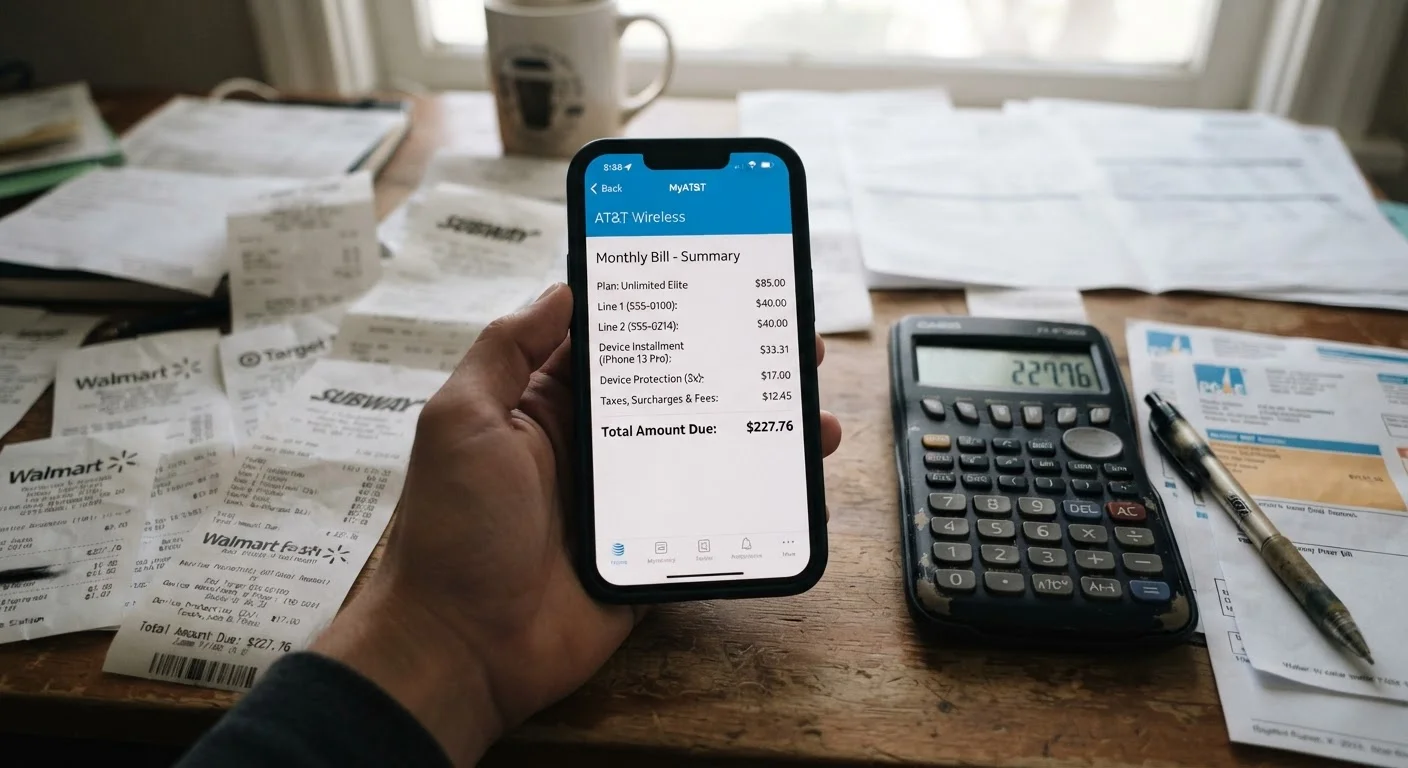
- Device protection plans and equipment installment charges can add $15-$25 per line monthly.
- Auto-pay discounts are often required to reach the price shown in carrier advertisements.
- Reading every line of your bill at least once can reveal charges you never intentionally authorized.
- Comparing plans requires calculating total out-of-pocket cost, not just the base rate.
Why Your Bill Never Matches the Advertised Price
Wireless carriers are not legally required to include taxes, government-imposed fees, or their own administrative surcharges in the prices they advertise. The result is a consistent gap between what draws you to a plan and what appears on your first bill. For many households with multiple lines, that gap is significant.
The charges that inflate your total fall into three broad categories: government-mandated taxes (which vary by state and city), carrier-imposed surcharges (which carriers set themselves and can change), and optional add-on services that may have been activated without your clear consent. Understanding how each category works is the first step to getting an accurate cost estimate before you commit. See our breakdown of what every line item on your bill actually means for a closer look at each charge type.
Advertised Prices Are Not Your Real Price
Federal, state, and local taxes plus carrier-imposed surcharges are almost never included in the plan price shown in ads or on carrier websites. The gap between the advertised rate and your actual monthly total can reach $15-$30 per line. Always request a full price estimate - including all fees - before switching or signing up for a new plan.
This pattern is not unique to wireless service. Anyone who has worked through the hidden costs of renting an apartment or reviewed a broadband contract knows that the headline price is almost never the final number.
Common Mistakes That Inflate Your Monthly Total
Most overcharges on wireless bills are not the result of billing errors - they stem from decisions made at sign-up that go unreviewed for months or years. The mistakes below are among the most frequent, and each one is avoidable once you know where to look.
Comparing plans using only the advertised base price without accounting for taxes and regulatory fees.
Why it happens: Carriers are not required to include government taxes in advertised prices, so the number displayed in promotions is almost always a pre-tax, pre-fee figure.
Accepting device protection plans without evaluating whether the coverage is necessary or duplicative.
Why it happens: Protection plans are presented as essential during checkout, and many customers assume their phone is otherwise completely uninsured - even when homeowners or renters insurance may already cover it.
Missing the auto-pay and paperless billing discount requirement to reach the advertised plan rate.
Why it happens: Carriers advertise the lowest achievable price, which typically requires enrolling in automatic payments from a bank account - not a credit card - and opting into paperless billing.
Keeping an outdated plan long after cheaper or higher-value options became available on the same carrier.
Why it happens: Carriers rarely proactively move existing customers to newer, lower-cost plans. Legacy plan holders often pay more for fewer features than a comparable current plan would offer.
Overlooking line-item surcharges that carriers add independently of government taxes.
Why it happens: Labels like 'Administrative Fee,' 'Regulatory Recovery Fee,' or 'Network Access Charge' sound official and government-mandated, but many are carrier-set charges that go directly to the company's revenue.
$15-$30
Average monthly gap between advertised and actual bill
Consumer advocacy research consistently finds that taxes, fees, and surcharges add this range per line to most postpaid wireless plans.
~22%
Portion of wireless bill that can be fees and taxes
A Tax Foundation analysis found that combined wireless taxes, fees, and government surcharges averaged around 22% of the customer's total bill in several U.S. states.
$17/mo
Typical device protection plan cost per line
Carrier-sold device protection plans commonly range from $10 to $25 per month depending on the device tier and coverage level offered.
A similar dynamic plays out with home internet. If you have ever compared equipment rental costs on a broadband plan, the real cost of renting versus owning your router illustrates how recurring small charges accumulate into meaningful annual spending.
How to Build a True Cost Picture Before You Switch
Meaningful plan comparison requires replacing the advertised price with a realistic monthly total. Before switching carriers or adding a line, work through the following:
- Request an itemized estimate. Use the carrier's checkout flow or call their sales line and ask for a quote that includes all taxes and fees for your address. Carriers are generally able to provide this.
- Identify any auto-enrollment add-ons. Ask specifically whether any services - device protection, streaming bundles, cloud storage - are included during a promotional trial period.
- Confirm discount conditions. Determine whether the quoted price depends on auto-pay, paperless billing, or a specific payment method.
- Account for device costs separately. If you are financing a phone through the carrier, the installment amount is a separate line on your bill that adds to your monthly total regardless of plan price.
Auto-Enrollment in Add-Ons Is Common
Many carriers automatically enroll new customers in device protection, cloud storage, or streaming bundles during activation. These add-ons often carry a free trial period, after which charges begin without a separate notification. Review your first two or three bills closely and cancel any service you did not intentionally choose.
For the same due diligence applied to broadband, reading an internet plan contract carefully covers how promotional rates, data caps, and equipment fees create similar surprises in home internet billing.
This article is for general informational purposes only. Fee structures, tax rates, and carrier practices vary by location and change over time. Verify current pricing directly with your carrier before making any service decisions.