

Key Takeaways
- Earnest money typically ranges from 1% to 3% of the purchase price, though competitive markets often see higher amounts.
- Funds are held in escrow by a neutral party - not handed directly to the seller - until closing.
- Contingencies written into the purchase contract are the primary mechanism that protects your deposit if the deal falls through.
- Buyers who back out without a valid contingency can forfeit their earnest money to the seller.
- Sellers who breach the contract may be required to return the deposit and could face additional legal consequences.
Earnest Money Deposit
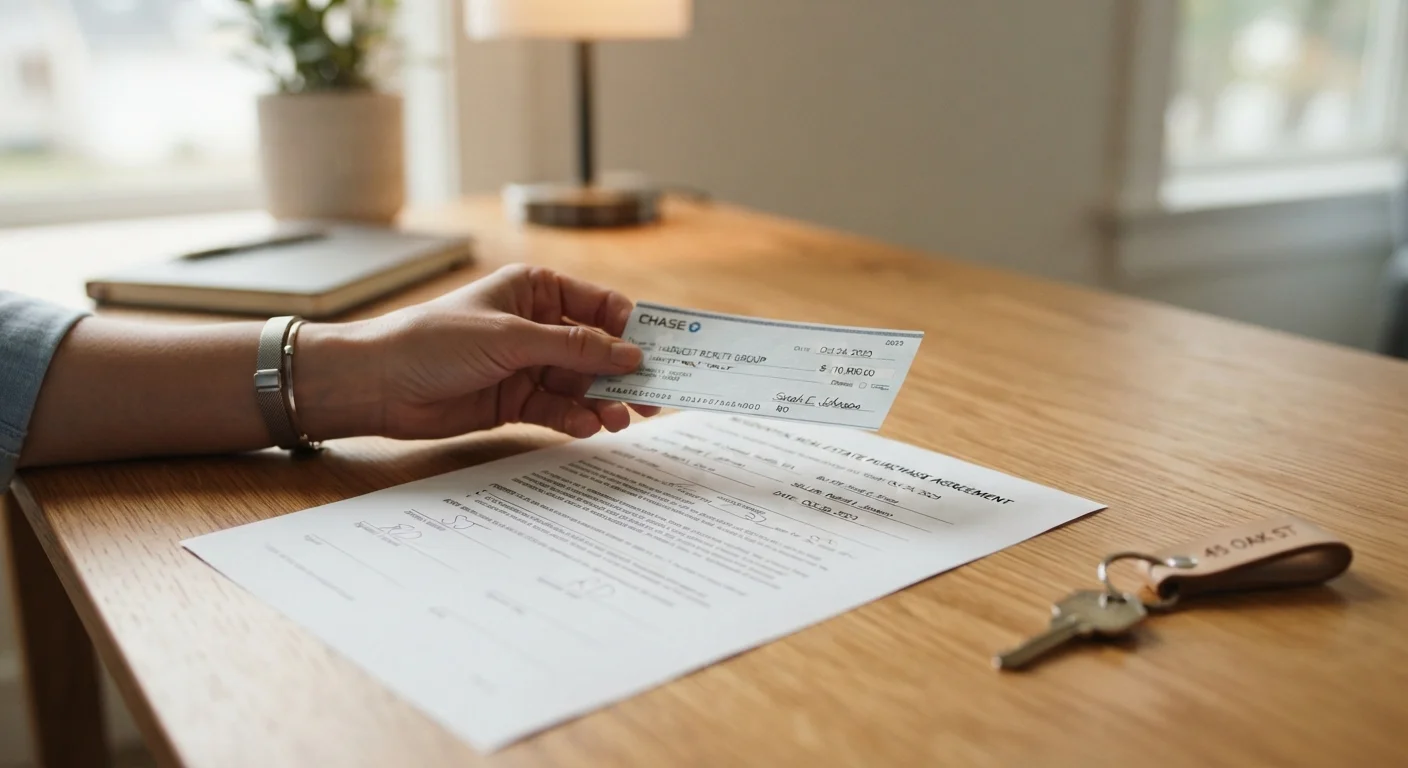
An earnest money deposit is a sum of money a homebuyer submits shortly after a seller accepts their offer. It signals that the buyer is genuinely committed to completing the purchase. The funds are held in escrow - a neutral third-party account - until the transaction closes or falls apart. If the sale completes, the deposit typically applies toward the buyer's down payment or closing costs.
Earnest money is distinct from a down payment; it is an upfront good-faith gesture held in trust, whereas the down payment is the portion of the purchase price paid at closing.
How Earnest Money Works in a Home Purchase
Once a seller accepts your offer, you typically have one to three business days to submit your earnest money deposit. The funds go into an escrow account - not to the seller directly - where they remain untouched until the transaction either closes or is terminated. This structure protects both parties: the seller has evidence of the buyer's commitment, and the buyer retains a degree of protection through the contract's contingency clauses.
The deposit amount is negotiable and varies by market. In slower markets, 1% of the purchase price may be standard. In competitive markets, buyers sometimes offer 2% to 5% - or even more - to make their offer more attractive. On a $350,000 home, 2% equals $7,000, so the stakes are real.
1%-3%
Typical earnest money range as a share of purchase price
Industry practice in most U.S. markets, though competitive conditions can push deposits significantly higher.
~3 days
Common deadline to submit earnest money after offer acceptance
Exact timelines vary by contract and market - always confirm the specific deadline in your purchase agreement.
Contingencies: Your Main Line of Defense
A contingency is a condition written into the purchase contract that must be met for the sale to proceed. If the condition isn't satisfied, the buyer can typically exit the deal and recover their earnest money. The three most common contingencies are:
- Inspection contingency: Allows the buyer to back out - or request repairs - after a professional home inspection reveals significant issues.
- Financing contingency: Protects the buyer if their mortgage application is ultimately denied. Without this clause, losing your loan approval could also mean losing your deposit.
- Appraisal contingency: Lets the buyer renegotiate or exit if the home appraises below the agreed purchase price, protecting against overpaying.
In fast-moving markets, some buyers waive contingencies to make offers more competitive. This can be a risky strategy - understand clearly what you're giving up before agreeing to remove a contingency. Consult a licensed real estate attorney or agent before making that decision.
Keep Contingency Deadlines on Your Calendar
Once you're under contract, map every contingency deadline onto a shared calendar with your agent immediately. Missing an inspection or financing deadline - even unintentionally - can void your contractual protection and put your deposit at risk. Set reminders two to three days before each deadline to give yourself time to act.
When Earnest Money Is Refunded - and When It Isn't
Buyers get their earnest money back when they exit the transaction through a valid contingency. Common refund scenarios include a failed inspection with no resolution, a mortgage denial covered by a financing contingency, or an appraisal that falls short. In these cases, the escrow holder releases the funds back to the buyer, often within a few business days of receiving written notice.
Buyers forfeit their deposit when they walk away from a deal without a valid contractual exit. This includes backing out simply because of cold feet, missing contract deadlines, or - in some cases - voluntarily waiving contingencies and then failing to perform. The seller keeps the earnest money as compensation for taking the home off the market.
If a seller breaches the contract - for instance, by refusing to close without justification - the buyer is generally entitled to the deposit back and may have additional legal remedies. Disputes over earnest money that can't be resolved through negotiation may require mediation, arbitration, or legal action depending on what the contract specifies.
Understanding earnest money is part of a broader financial picture when buying a home. If you're still building the savings needed to make a competitive offer, our overview of emergency fund basics can help you think through your overall cash reserves.
Practical Steps to Protect Your Deposit
A few deliberate steps can significantly reduce the chance your earnest money is at risk:
- Read the contract before signing. Understand exactly which contingencies are included, what deadlines apply, and how disputes are handled. Don't rely solely on a verbal explanation.
- Meet every deadline. Missing an inspection or financing deadline - even by a day - can void a contingency and put your deposit in jeopardy.
- Communicate in writing. If you intend to invoke a contingency, do so in writing within the timeframe specified. Verbal notice is rarely sufficient.
- Verify escrow arrangements. Confirm who holds the funds and under what conditions they can be released. A reputable title company or escrow firm provides a clear paper trail.
- Work with a licensed professional. A buyer's agent and, where appropriate, a real estate attorney can help you navigate the process and avoid costly missteps.
This article is for general informational and educational purposes only and does not constitute legal, financial, or real estate advice. Consult a licensed real estate professional or attorney for guidance specific to your situation and location.