

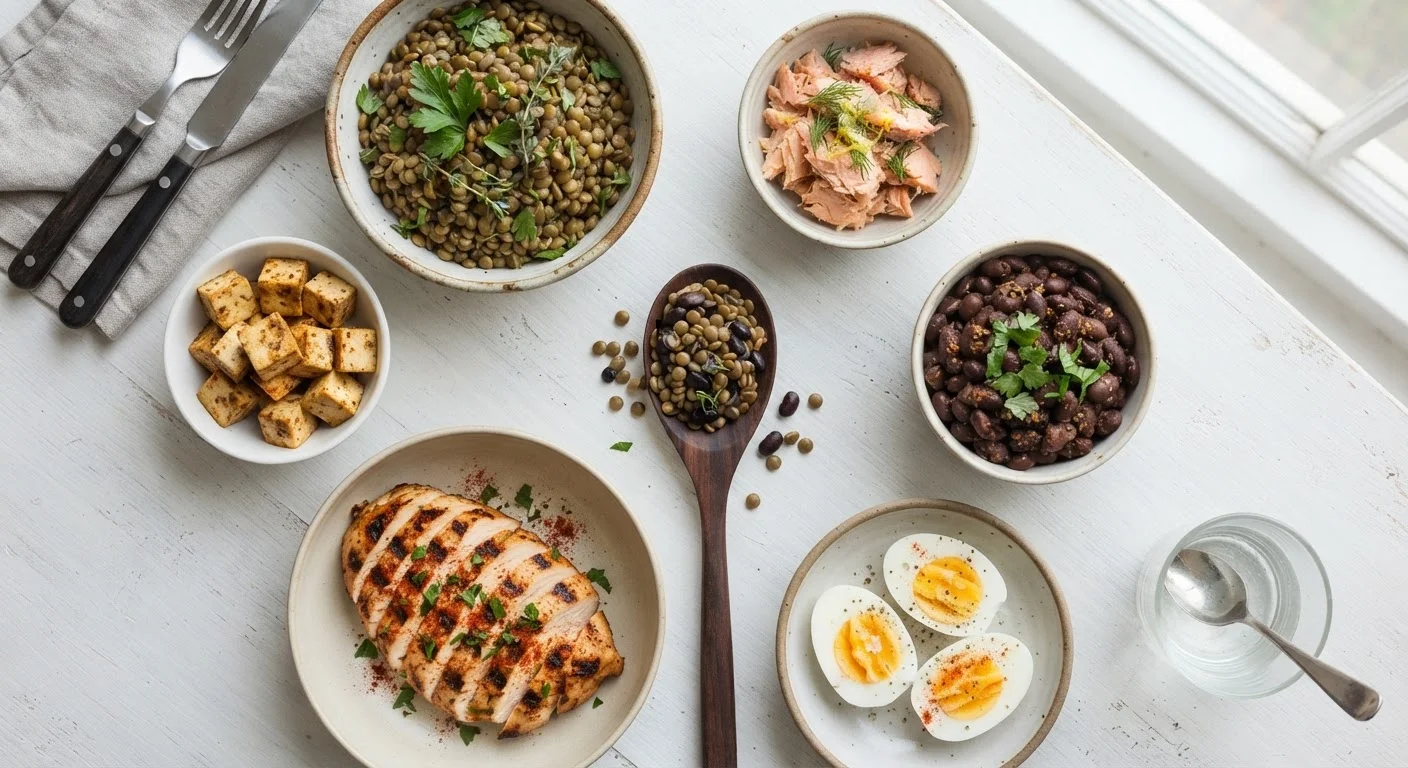
Key Takeaways
- Animal proteins typically provide all essential amino acids in a single source, while most plant proteins do not.
- Plant proteins often come packaged with fiber, antioxidants, and beneficial phytonutrients absent in meat.
- Combining different plant proteins throughout the day can meet complete amino acid needs effectively.
- Saturated fat and processing level matter as much as protein quantity when comparing sources.
- Most Americans can meet protein needs through a varied diet that includes both animal and plant sources.
Our Verdict
No single protein source is universally superior. Animal proteins offer complete amino acid profiles and high bioavailability, while plant proteins deliver fiber and phytonutrients that support long-term health. A diet drawing from both categories - or a well-planned plant-exclusive approach - can meet nutritional needs for most healthy adults. Individual health goals, preferences, and medical history should guide personal choices.
| Best for | Recommended |
|---|---|
| Those prioritizing amino acid completeness and simplicity | Animal proteins (chicken, eggs, fish) |
| Those seeking heart-health and digestive benefits alongside protein | Legumes and plant proteins (lentils, beans, edamame) |
| Those following a plant-exclusive diet | Soy-based proteins (tofu, tempeh, edamame) |
| Those balancing omega-3 intake with protein quality | Fatty fish (salmon, sardines) |
Why Protein Quality Goes Beyond Grams
Most nutrition labels tell you how many grams of protein a food contains, but that number only tells part of the story. Protein quality depends on two key factors: amino acid profile and bioavailability - how much of the protein your body can actually absorb and use.
Proteins are built from 20 amino acids, nine of which are classified as essential because the human body cannot synthesize them on its own. A food that contains all nine in sufficient quantities is called a complete protein. Animal sources - meat, poultry, fish, eggs, and dairy - are generally complete proteins. Most individual plant sources are not, though soy is a notable exception.
Bioavailability is measured by tools like the PDCAAS and DIAAS. Egg white and whey score near the top of these scales; legumes and grains score lower, though still meaningfully contribute to daily intake. Understanding these distinctions helps you make smarter decisions about how to structure meals - not just how much protein to aim for.
Animal Proteins: Strengths and Considerations
Animal-based proteins are among the most studied in nutrition science. Here's how common sources compare:
- Chicken breast: Lean, high-protein, low saturated fat. A 3-oz cooked serving provides roughly 26 grams of protein.
- Eggs: A whole egg delivers about 6 grams of complete protein with a robust micronutrient package including choline and vitamin D. The yolk contains most of the fat, including a modest amount of saturated fat.
- Salmon: Around 22 grams of protein per 3-oz cooked serving, plus omega-3 fatty acids linked to cardiovascular and cognitive health.
- Lean beef: Rich in protein, iron, zinc, and B12, but higher in saturated fat than poultry or fish. Processing level matters - ground beef differs substantially from processed deli meats.
- Greek yogurt: A fermented dairy option delivering 15-20 grams of protein per cup, along with calcium and probiotics.
Watch the Processing Level, Not Just the Source
Highly processed meat products - such as cured deli meats, sausages, and hot dogs - carry a different risk profile than whole, minimally processed animal foods. Major health organizations have noted associations between frequent consumption of processed meats and elevated health risks. Checking ingredient lists for sodium content and additives is a practical first step.
Processing is a key variable. Unprocessed or minimally processed animal proteins (whole cuts, eggs, plain dairy) have a different nutritional profile than heavily processed options such as sausages, hot dogs, or deli meats, which often carry higher sodium loads and preservative additives.
Plant Proteins: Strengths and Considerations
Plant proteins have gained well-deserved attention - not just as alternatives to meat, but as nutritionally distinct options with their own advantages. For a deeper look at the broader evidence on plant-heavy eating patterns, see Plant-Based Eating: A Grounded Look at the Benefits and Trade-Offs.
- Lentils: About 18 grams of protein per cooked cup, plus substantial fiber, folate, and iron. Low in fat and inexpensive.
- Black beans and chickpeas: Similar protein and fiber profiles to lentils, with slightly different amino acid compositions - making variety valuable.
- Tofu and tempeh: Both derived from soy, a complete plant protein. Tempeh is fermented and tends to be higher in protein (~21g per 3.5 oz) and easier to digest.
- Edamame: Young soybeans providing roughly 17 grams of protein per cup, with all essential amino acids.
- Quinoa: A grain that functions as a complete protein at about 8 grams per cooked cup - lower than legumes but valuable as a complementary carbohydrate source.
Complementing Plant Proteins Is Simpler Than You Think
You don't need to engineer each meal to contain all nine essential amino acids. Eating a varied mix of legumes, grains, nuts, and seeds throughout the day naturally covers your amino acid needs. Classic combinations like rice and beans or peanut butter on whole grain bread have sustained populations around the world for centuries.
Plant proteins are generally lower in bioavailability than animal proteins, but this gap narrows significantly when you eat a varied diet throughout the day. Pairing rice with beans or hummus with whole grain bread naturally provides a broader amino acid spectrum without any need for precise calculation at each meal.
Head-to-Head: How Common Sources Stack Up
The table below compares six commonly consumed protein sources across key nutritional dimensions. Values are approximate and based on standard serving sizes.
| Chicken Breast | Salmon | Eggs | Lentils | Tofu | Black Beans | |
|---|---|---|---|---|---|---|
| Protein per serving (approx.) | 26g / 3 oz | 22g / 3 oz | 6g / 1 egg | 18g / 1 cup | 9g / 3 oz | 15g / 1 cup |
| Complete protein? | Yes | Yes | Yes | No | Yes | No |
| Saturated fat | Low | Low-moderate | Moderate | Negligible | Very low | Negligible |
| Dietary fiber | None | None | None | ~16g / cup | ~0.3g / 3 oz | ~15g / cup |
| Key micronutrients | B3, B6, phosphorus | Omega-3, B12, D | Choline, B12, D | Folate, iron, B1 | Calcium, iron, manganese | Iron, folate, magnesium |
| Typical processing level | Minimal | Minimal | Minimal | Minimal | Low | Low (canned/dry) |
A few patterns stand out: animal sources tend to lead on bioavailability and complete amino acid profiles, while plant sources generally win on fiber content and come without saturated fat concerns. Fatty fish occupies a strong middle ground - complete protein, healthy fats, and a favorable overall nutrient density.
Building a Protein Strategy That Works for You
No single food needs to carry all your protein needs. Research consistently supports dietary variety as a cornerstone of long-term nutritional health. For most healthy adults, the practical approach is less about choosing between animal and plant proteins and more about choosing quality within each category.
A few evidence-informed principles to consider:
- Prioritize minimally processed sources regardless of whether they're animal or plant in origin.
- If you eat meat, leaner cuts and fatty fish generally offer a more favorable nutritional profile than processed meats.
- If you rely primarily on plant proteins, incorporating soy foods or thoughtfully varied legumes and grains helps cover essential amino acid needs.
- Protein needs vary by age, body size, activity level, and health status - a registered dietitian can help you determine a reasonable personal target.
This article is for general informational and educational purposes only and does not constitute medical or nutritional advice. Individual health needs vary. Consult a qualified healthcare professional or registered dietitian before making significant changes to your diet.