

Key Takeaways
- Many foods marketed as healthy contain significant added sugars, sodium, or refined ingredients.
- Nutrition labels reveal what front-of-package claims often obscure - always check the full panel.
- Context matters: portion size, overall diet pattern, and individual health goals all affect whether a food is right for you.
- A registered dietitian can help you interpret nutrition information for your specific needs.
When 'Healthy' Needs a Second Look
The word "healthy" on a food package is more a marketing signal than a regulated guarantee. While the FDA has rules governing its use, the term still appears on products that may carry more added sugar, sodium, or refined carbohydrates than most people expect. Understanding the gap between perception and nutritional reality is one of the more practical skills you can bring to your grocery run.
This isn't about demonizing any single food or category. Even nutritionally mixed options can fit into a balanced diet when consumed mindfully and in appropriate amounts. The goal here is to give you a clearer picture - because surprises on the nutrition label shouldn't catch you off guard. For a broader tour of how to read the grocery store aisle by aisle, see our nutritional guide to the American grocery store.
Flavored Yogurt
Plain yogurt is genuinely nutrient-dense - a good source of protein, calcium, and live cultures. Flavored varieties, however, often carry substantial amounts of added sugar, sometimes comparable to a small dessert. A single-serve flavored yogurt cup can contain 15-20 grams of added sugar or more, depending on the brand and flavor, in addition to any naturally occurring lactose.
If you enjoy yogurt, choosing plain versions and adding fresh fruit yourself gives you more control over sweetness while preserving the nutritional benefits. Greek-style plain yogurt tends to be higher in protein and lower in sugar than its flavored counterparts.
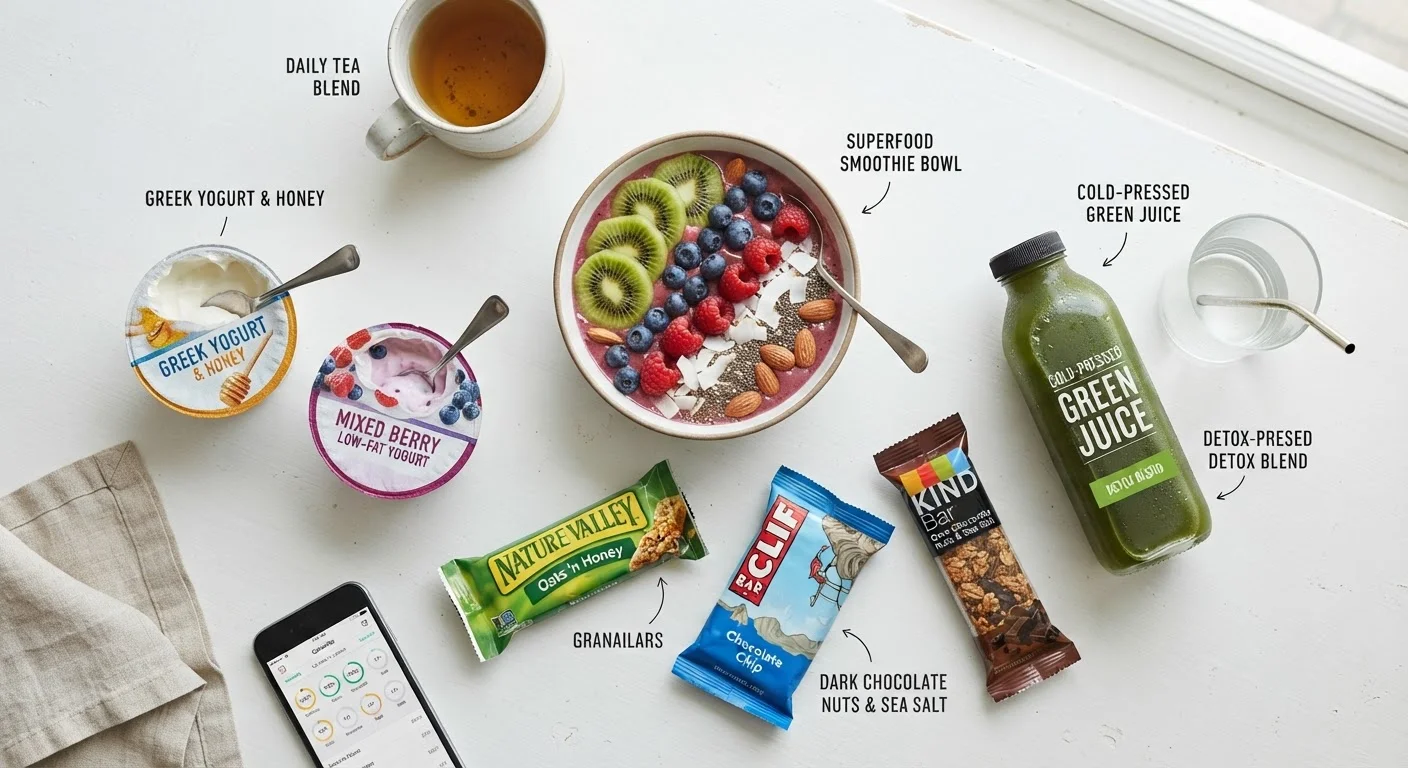
Flavored yogurt can rival desserts in added sugar despite its health-food image.
Granola and Granola Bars
Granola often earns its wholesome reputation from oats, nuts, and seeds - genuinely nutritious ingredients. The issue is the binding agents: honey, brown rice syrup, cane sugar, or chocolate chips added to create clusters or chewy bars. Many commercially produced granola bars contain as much sugar as a candy bar and may include oils and syrups that push the calorie density higher than expected.
Portion size is another complicating factor. Granola is calorie-dense, and a typical "serving" marked on a package is often smaller than what people pour into a bowl. Reading the label for added sugars and checking the serving size before eating can help you use granola as a complement rather than a dietary cornerstone.
Granola's wholesome ingredients can be offset by significant amounts of added sugars and oils.
Smoothies and Smoothie Bowls
Blending fruits and vegetables sounds like a clear nutritional win, and it can be - but smoothies and smoothie bowls assembled at home or purchased ready-made frequently contain far more sugar and calories than they appear to. Fruit is naturally sweet, and large quantities used to fill a blender cup or bowl add up quickly. Add sweetened nut butters, honey drizzles, granola toppings, fruit juice as a base, or flavored protein powders, and a "health bowl" can exceed 600-800 calories with a high sugar load.
Blending also removes the intact fiber structure of whole fruit, which may affect how quickly sugars enter the bloodstream compared with eating fruit whole - though research on this is still evolving and individual responses vary.
A smoothie bowl's fruit-forward appeal can mask surprisingly high calorie and sugar totals.
Plant-Based Processed Foods
The plant-based food category has expanded rapidly, and with it, a wide range of ultra-processed products - burgers, sausages, nuggets, and deli slices - that carry a health halo primarily because they contain no animal products. Many of these items are high in sodium (sometimes exceeding 400-600 mg per serving) and may contain saturated fats from coconut or palm oil, along with long ingredient lists of binders, flavors, and starches.
Plant-based eating can offer meaningful health benefits, but the research tends to support whole or minimally processed plant foods most strongly. Our editorial on the benefits and trade-offs of plant-based eating takes a grounded look at what the evidence actually shows.
Plant-based labels don't automatically signal low sodium, minimal processing, or nutritional completeness.
Fruit Juice
Whole fruit and fruit juice are nutritionally quite different despite sharing the same source. Juice concentrates the natural sugars of multiple pieces of fruit into a single glass while stripping out most of the fiber that helps moderate sugar absorption and supports satiety. An 8-ounce glass of orange juice, for example, may contain the sugars from three or four oranges without the fiber those oranges would provide.
"No added sugar" labels on juice are accurate but can be misleading - naturally occurring sugars are still present in significant amounts. Major health organizations generally recommend limiting juice consumption and favoring whole fruit instead, particularly for children.
Fruit juice concentrates natural sugars while eliminating the fiber that makes whole fruit filling.
Multigrain and Whole Wheat Breads
"Multigrain" means a product contains more than one type of grain - it says nothing about whether those grains are whole or refined. A multigrain bread can be made primarily from refined white flour with a small percentage of other grains added. Similarly, "wheat bread" or "made with whole wheat" language doesn't necessarily mean whole grains dominate the formula.
To identify a genuinely whole grain product, look for "100% whole grain" or "100% whole wheat" on the label, and check that a whole grain flour appears as the first ingredient. Understanding this distinction matters because whole grains carry fiber, vitamins, and minerals that refined versions lose in processing - as explored in our piece on whole grains vs. refined grains.
Multigrain doesn't mean whole grain - the ingredient list is the only reliable way to check.
Reading Past the Front of the Package
Navigating nutrition claims takes a bit of practice, but the nutrition facts panel - combined with the ingredient list - gives you far more useful information than front-of-package language ever will. Look at serving sizes first, since many products list a surprisingly small serving that makes the numbers look better than they are in practice. Then scan for added sugars (listed separately on current U.S. labels), sodium, and the position of sweeteners in the ingredient list.
A Simple Label-Reading Habit
Flip the package over before placing it in your cart. Check the serving size first, then look at added sugars and sodium. Finally, scan the first three ingredients - they make up the bulk of the product. This takes under 30 seconds and gives you a far more accurate picture than any front-of-package claim.
For a deeper look at how natural and added sugars differ in the body, our piece on added sugar vs. natural sugar is a useful next step. And if you're sorting through broader claims about what constitutes a healthy diet, common nutrition myths, fact-checked addresses some of the most persistent misconceptions head-on.
This article is for general informational and educational purposes only and does not constitute medical or dietary advice. Please consult a qualified healthcare professional or registered dietitian for guidance tailored to your individual health needs.