

Key Takeaways
- Flexibility refers to how far a muscle can passively lengthen; mobility adds active muscular control to that range.
- You can be flexible without being mobile - passive range doesn't guarantee usable, controlled range.
- Mobility training typically includes flexibility work, but also requires strength and neuromuscular coordination.
- For most everyday Americans, training both qualities produces the greatest functional benefit.
- Always consult a qualified health or fitness professional before starting a new movement program.
Option A
Flexibility
The passive capacity of a muscle to lengthen.
Best for: People looking to reduce muscle tightness and improve range of motion through static stretching.
Option B
Mobility
The active ability to control movement through a joint's full range.
Best for: People who want functional movement quality, injury resilience, and strength through full ranges of motion.
If your primary goal is reducing muscle tension and improving posture
Flexibility
Static and passive stretching directly targets the muscle's ability to lengthen, which can ease everyday tightness in areas like the hamstrings and hip flexors.
If you want to move better in daily life, sports, or strength training
Mobility
Mobility training builds the active control needed to use your full range of motion safely and effectively during real movement demands.
If you are returning from injury or managing joint stiffness
Mobility
Regaining controlled movement around a joint - not just passive tissue length - is typically the clinical priority; work with a physical therapist for guidance.
If you have very limited time and want a simple starting point
Flexibility
Short daily stretching routines have a low barrier to entry and can meaningfully improve range over time when performed consistently.
What Each Term Actually Means
The words flexibility and mobility appear constantly in fitness content, often as if they mean the same thing. They don't - and confusing them can lead to training gaps that affect how you feel and move every day.
Flexibility is a property of muscle tissue. It describes how far a muscle - or the connective tissue around it - can passively lengthen when an external force is applied. Think of a seated hamstring stretch: your hands or the floor provide the force, and the muscle is a largely passive participant. High flexibility means the tissue tolerates that lengthening without significant resistance.
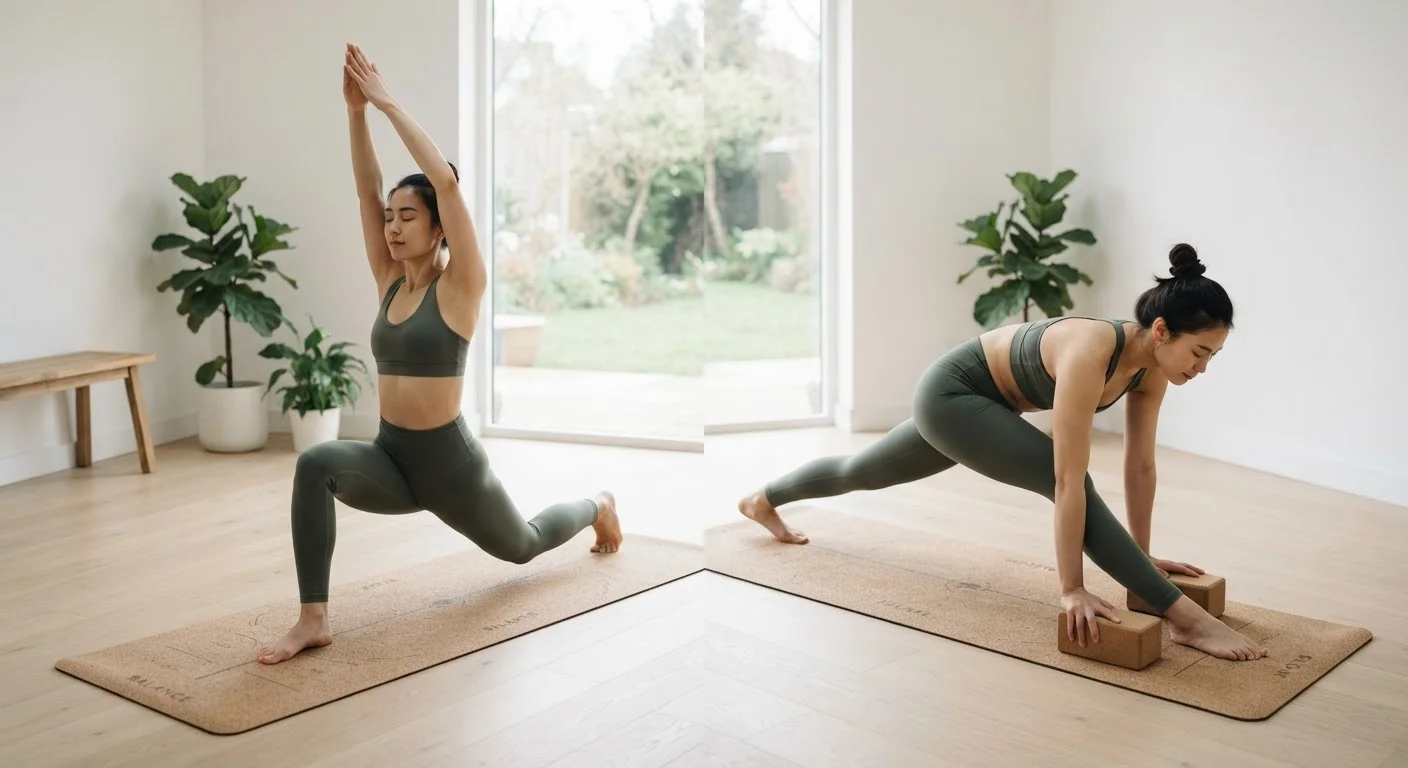
Mobility is a property of a joint and the neuromuscular system controlling it. It describes how far you can actively move a joint through its available range - and how much strength and control you maintain throughout that movement. A deep bodyweight squat is a mobility task: your muscles must actively stabilise and drive the movement the entire way down and back up.
For a plain-language breakdown of these and other commonly misused fitness terms, see Common Fitness Terms Explained in Plain English.
| Criterion | Flexibility | Mobility |
|---|---|---|
| Definition | Passive muscle lengthening capacity | Active, controlled joint range of motion |
| Primary system involved | Muscle and connective tissue | Joints, muscles, and nervous system |
| Type of effort | Passive (external force assists) | Active (muscular control required) |
| Common training methods | Static and passive stretching | Dynamic drills, end-range strengthening, joint circles |
| Functional carry-over | Moderate - range may not transfer to movement | High - directly supports real-life and athletic tasks |
| Can exist without the other? | Yes - flexible but not mobile is common | Rarely - mobility usually requires some baseline flexibility |
Why the Difference Matters in Practice
A useful way to understand the gap: imagine someone who can lie on their back and pull their leg nearly vertical using a strap (high flexibility), but cannot lift that same leg to the same height under their own muscular control (limited mobility). The tissue length is there; the active control is not. In everyday movement - climbing stairs, bending to pick something up, reaching overhead - it's the active, controlled version that counts.
This distinction shapes how training should be structured. Stretching alone addresses flexibility but may not translate into usable movement range. Mobility work typically incorporates stretching plus strength exercises performed at end ranges, joint circles, and movement drills that teach the nervous system to own the new range rather than simply visit it passively.
~80%
Adults reporting low back pain at some point
Research consistently estimates that around 80% of adults experience low back pain during their lifetime, a condition often linked to poor movement quality and limited hip or thoracic mobility.
2-3×
Weekly sessions recommended for mobility work
Exercise science guidelines generally suggest that two to three dedicated movement-quality sessions per week are sufficient to produce meaningful improvements in joint mobility over time.
Neither quality is superior - they work together. Adequate flexibility gives a joint the raw range to work with; mobility training converts that range into something functional and resilient. For most people, a well-rounded movement routine addresses both, something equally true whether you're walking or running as your primary cardio activity.
This article is for general informational and educational purposes only and is not a substitute for professional medical or fitness advice. Consult a qualified healthcare or fitness professional before beginning any new exercise program, particularly if you have an existing injury or health condition.